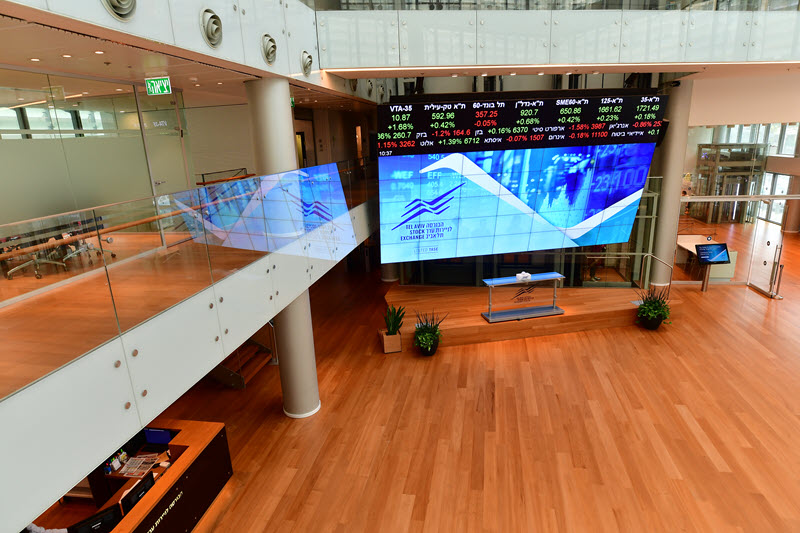
Brent rose 3.08% to $110.69/bbl and WTI (May) gained 3.35% to $98.66, while April gold futures plunged 6.24% (-$305.35) to $4,590.85/oz. Tel Aviv's TA-35 closed up 0.23%; Tower Semiconductor jumped 11.54% to 48,900 (5-year high) and Navitas Petroleum added 6.74% to 14,410 (all-time high), though breadth was negative with 281 decliners vs 189 advancers. FX moves were modest: USD/ILS +0.22% to 3.13, EUR/ILS +0.74% to 3.60, and the US Dollar Index futures fell 0.32% to 99.56. Geopolitical inflation concerns tied to the Iran conflict are cited as a driver for commodity volatility.
Central banks telegraphing tighter policy in response to a geopolitically driven commodity shock creates an unusually binary environment: real yields can rise quickly on hawkish messaging, which historically inflicts 1–3% short-term downside on gold for every ~10–20bp move higher in real yields, even while tail-risk flows should support precious metals on any escalation. That dynamic compresses safe-haven and long-duration growth multiples simultaneously, amplifying dispersion within tech: capital-intensive AI infrastructure winners will still command premium multiple resiliency, while ad/monetization dependent names become vulnerable to multiple compression.
Energy-led supply shocks act like a regressive tax on high-power, high-heat manufacturing — fabs and AI-server integrators face margin pressure via higher electricity, gas and specialty chemicals costs; that creates a two-tier outcome over 3–12 months where out-of-cycle, defense-linked semiconductor demand (mature nodes, RF) outperforms hyperscaler AI server demand if capex budgets are reallocated. FX moves in small open economies will amplify equity moves: persistent commodity-driven currency weakness increases local input costs and raises the probability of fiscal/monetary interventions that can quickly rotate flows out of cyclicals.
Positioning and momentum matter more than fundamentals in this volatile regime: names with recent strong technical leadership can gap higher on reallocated risk capital, producing short squeezes that are independent of bookings trends. Key catalysts to watch over the next 4–8 weeks are central bank minutes and forward guidance, US real yield trajectory, semiconductor supplier lead-time reports and corporate booking commentary; each can flip sentiment rapidly and invalidate short-term directional bets.
Primary risks are a rapid diplomatic de-escalation that collapses energy risk premia (weeks) and an unexpectedly aggressive central bank tightening cycle that triggers synchronized growth concerns (quarters). Manage both with defined-risk option structures and pairs to isolate idiosyncratic alpha from macro beta — treat positions as event-driven over the coming 1–6 months, not buy-and-hold longer than 12 months without booking profits or re-assessing macro exposures.
AI-powered research, real-time alerts, and portfolio analytics for institutional investors.
Request DemoOverall Sentiment
neutral
Sentiment Score
0.00
Ticker Sentiment
