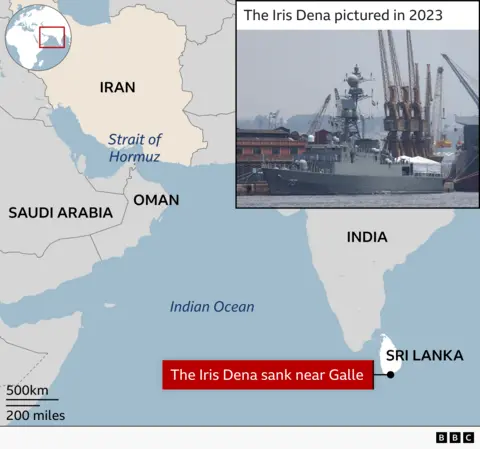
84 Iranian sailors killed in a US submarine torpedo strike will be repatriated after the Iris Dena was sunk on 4 March about 40km off Sri Lanka; ~130 were believed aboard and 32 survivors remain in Sri Lanka. The sinking in international waters marks a significant escalation during the broader US-Israeli conflict with Iran and has prompted Iranian retaliatory strikes across the Middle East, raising regional security risks and prompting a likely risk-off reaction in energy and broader markets.
This episode meaningfully raises the probability of sustained maritime risk premia — not a one-day spike. Expect immediate increases in war-risk insurance and bunker/freight surcharges that transmit into higher transportation costs for container and tanker operators; a 5-15% lift in effective per-voyage costs is plausible within weeks if routing around contested sea lanes becomes normalized.
On a 3–12 month horizon, defense-capex re-allocation is the clearest durable effect: naval platforms, ASW (anti-submarine warfare) systems, and torpedo/munition replacement cycles have multi-year lead times and large fixed-order books, so suppliers with submarine/shipyard exposure will see order visibility extend into FY+2. Congressional/ally emergency appropriations are the most likely near-term catalyst to convert rhetoric into booked revenue.
Financial flows will bifurcate: safe-haven assets and hard-asset commodities will likely outperform EM carry and tourism-exposed credits. Ports and logistics hubs one node away from the risk corridor (Gulf, UAE, Oman) should capture diverted volumes over 6–36 months, while smaller regional ports and tourism-dependent sovereigns will face balance-of-payments and FX stress.
Tail risks are asymmetric: rapid de-escalation removes most near-term price premia but leaves multi-year procurement cycles intact; full regional conflagration would amplify insurance, energy, and credit shock transmission, making liquidity and option protection paramount across portfolios.
AI-powered research, real-time alerts, and portfolio analytics for institutional investors.
Request DemoOverall Sentiment
strongly negative
Sentiment Score
-0.85
