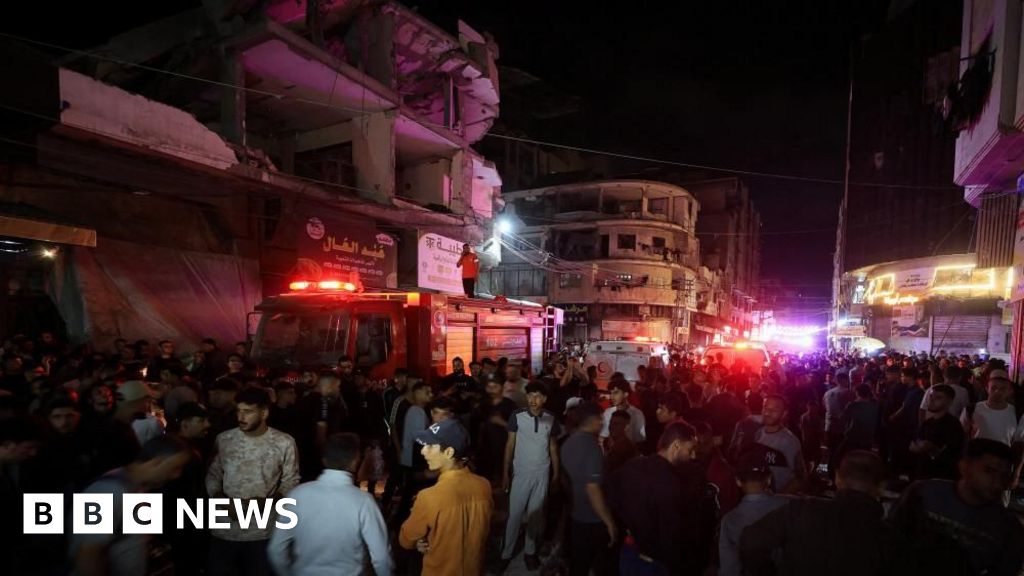
Israel said it killed Mohammed Odeh, commander of Hamas's military wing, in a strike in Gaza City that also killed at least three Palestinians and injured dozens. The attack comes despite the October ceasefire and follows the earlier killing of his predecessor, underscoring a renewed escalation in the Israel-Gaza conflict. The broader backdrop includes more than 72,800 deaths in Gaza and rising regional tension after 31 people were killed in Israeli strikes in Lebanon.
This is not an isolated tactical strike; it is evidence that the conflict is re-entering an attritional phase where leadership decapitation and ceasefire violations coexist. The market implication is a higher floor for regional risk premia, not a one-time spike: each escalation increases the probability that the current pause unravels over the next 1-3 months, especially if retaliatory actions broaden beyond Gaza and into Lebanon or maritime channels. That matters because the transmission mechanism is less about direct commodity disruption today and more about persistent defense urgency, supply-chain friction, and intermittent risk-off flows into havens.
The second-order winner is the defense ecosystem, but the larger opportunity is in the contractors with exposure to missile defense, ISR, munitions, and secure communications rather than legacy platform builders. If Israel is simultaneously targeting multiple theaters, replenishment cycles for interceptors, precision-guided weapons, and battlefield sensors should stay elevated for several quarters, creating a revenue tailwind with better visibility than headline geopolitics suggests. Aerospace primes should benefit, but the cleaner expression is through suppliers and names with backlog leverage and pricing power.
The contrarian angle is that the market may already discount broad Middle East tension, while underpricing the policy consequence of a fragile ceasefire: repeated breaches can force Washington into a less permissive stance, raising the odds of sanctions, aid restrictions, or a diplomatic push that caps further escalation. That would hurt defense beta in the very near term but potentially reduce the tail-risk premium embedded in oil and shipping. The key catalyst to watch is whether strikes stay localized over the next 2-6 weeks or whether Hamas/Hezbollah response cycles widen into infrastructure or logistics targets.
AI-powered research, real-time alerts, and portfolio analytics for institutional investors.
Request DemoOverall Sentiment
extremely negative
Sentiment Score
-0.85
