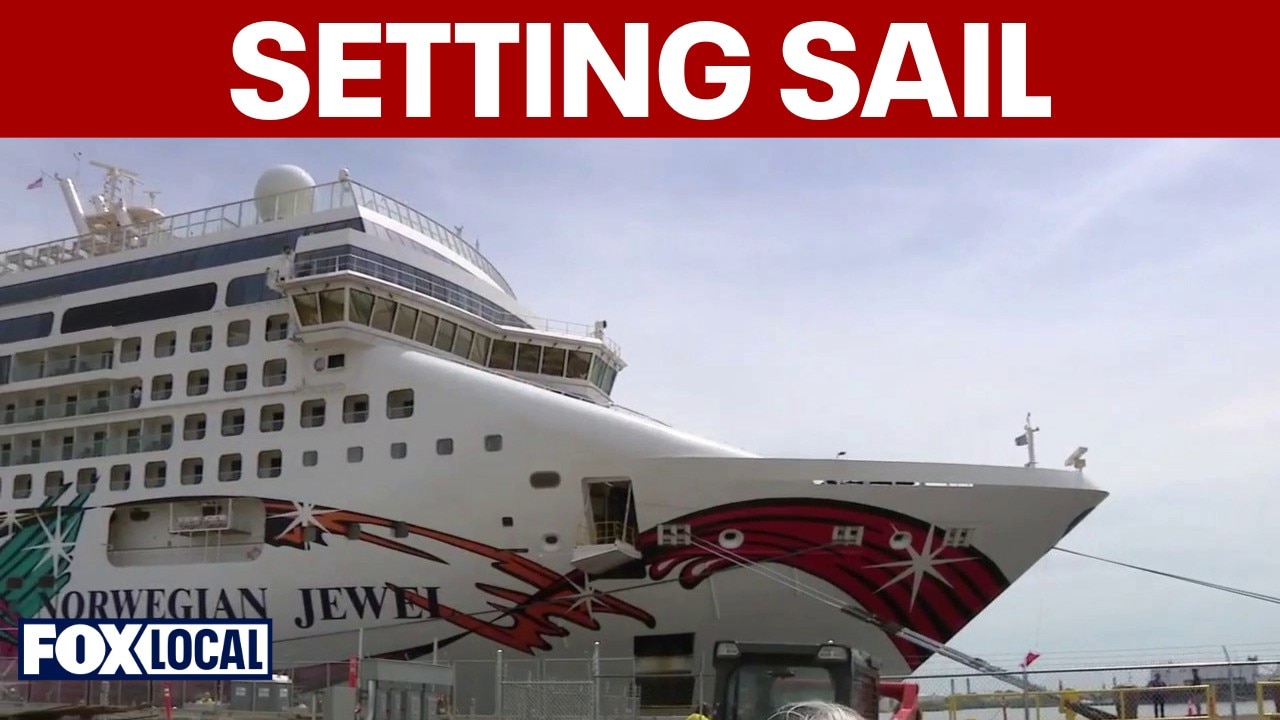
Norwegian Cruise Line is restarting Philadelphia sailings in April 2026, its first departure from the city in over 15 years, with Norwegian Jewel offering 7-day Bermuda and 11-day Canada/New England itineraries from $829 per person. Norwegian Pearl will add 5- to 12-day cruises from November 2026 through April 2028 starting at $889, with select Bahamas sailings including Great Stirrup Cay. The partnership is projected to support 2,185 direct and indirect jobs and generate about $300 million in annual economic output statewide.
This is a modestly positive demand signal for NCLH, but the bigger implication is network repositioning: Philadelphia becomes a lower-friction embarkation point for the mid-Atlantic drive market, which tends to be less price-sensitive than fly-to-cruise customers. That should improve load factors and give NCLH incremental pricing power on shoulder-season itineraries, especially if the company can convert first-time local cruisers into repeat purchasers across the next 12-24 months.
The second-order beneficiary is SBUX, but only at the margin. A Starbucks concession inside a cruise terminal is not a material earnings driver; the real read-through is that premium-branded retail/food operators can monetize dwell time in newly built transportation nodes, which supports the broader thesis on airport, port, and rail concession economics. The more important catalyst is whether the new terminal becomes a durable regional travel hub; if throughput scales, ancillary spend per passenger can rise faster than the ticketing revenue base.
The main risk is that this looks better as a narrative than as an earnings step-function. Cruise demand can be highly localized and seasonal, and the Philadelphia origin point is a convenience win more than a structurally new TAM, so the market may overestimate the revenue contribution relative to a single-sailing deployment. If the new terminal opens with any operational friction—turnaround delays, customs bottlenecks, or weak repeat booking conversion—the sentiment lift could fade within one or two booking cycles.
Contrarian view: this is less a pure NCLH story than a proof-of-concept for underutilized secondary port infrastructure. If successful, peers with flexible deployment assets and strong brand recognition can replicate the model at other drive-to markets, which may compress the advantage over time. For investors, the setup is more attractive as a tactical sentiment trade than a long-duration fundamental rerating unless management signals that Philadelphia materially improves yield or occupancy versus alternative homeports.
AI-powered research, real-time alerts, and portfolio analytics for institutional investors.
Request DemoOverall Sentiment
mildly positive
Sentiment Score
0.35
Ticker Sentiment
