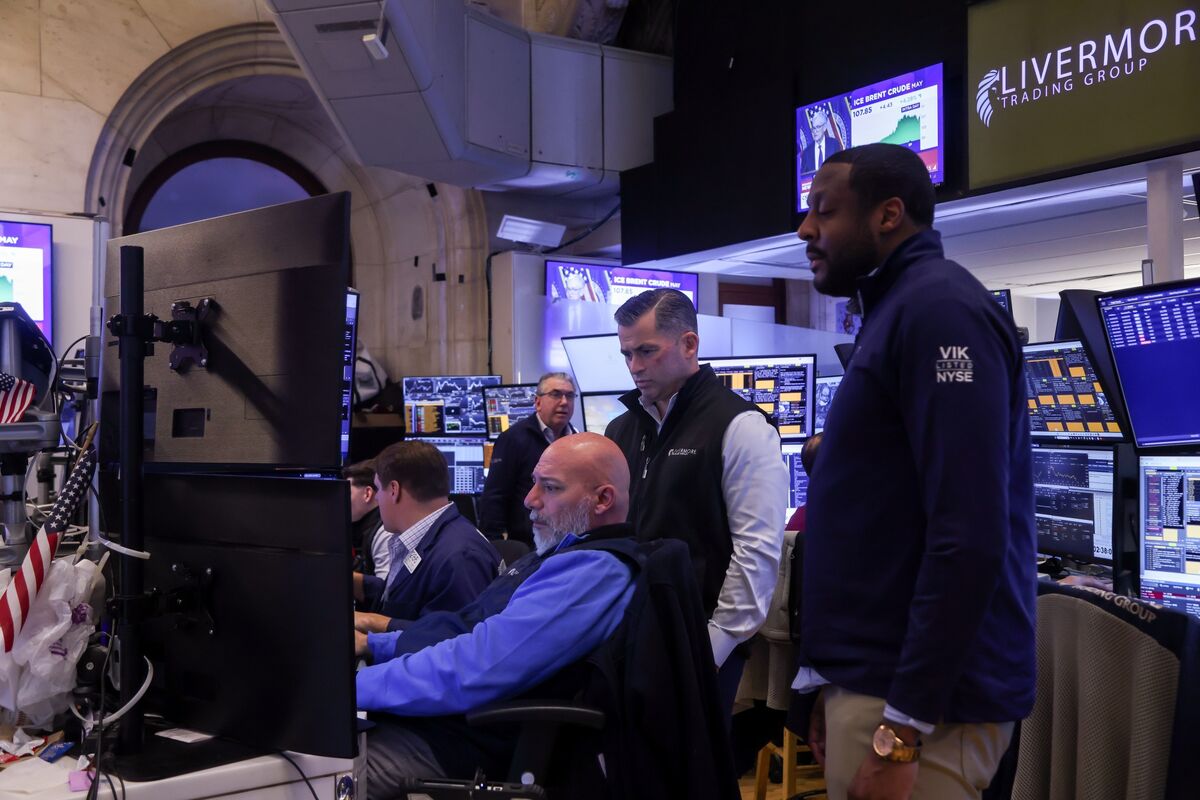
The S&P 500’s rally to new highs has been driven by a very narrow group of stocks, with four of the last five closing records occurring even as decliners outnumbered gainers. In April, only 23% of S&P 500 members outperformed the index, the fourth-lowest monthly reading in BofA Global Research’s database going back to 1986. The setup is raising dot-com bubble comparisons and signals increasingly fragile market breadth.
This is less a “bull market” signal than a market-structure warning: breadth deterioration at new highs usually means index returns are being carried by a small set of duration-sensitive mega-caps, which makes the tape more fragile to any wobble in rates, regulation, or earnings revisions. The second-order effect is that passive inflows mechanically reinforce concentration, while active managers underweighting the leaders are forced to chase, further suppressing breadth until something breaks.
The immediate winners are the largest liquidity magnets and their suppliers into index-linked ownership flows; the losers are the median large-cap and cyclicals that need broad participation to keep multiples expanding. That creates a hidden risk: if leadership narrows further, correlation rises beneath the surface and portfolio diversification becomes illusory. In that regime, even modest disappointment from one or two market darlings can trigger a fast de-risking across crowded growth exposure.
The key catalyst is not a recession headline but any change in the rate path or earnings expectations for the dominant constituents over the next 1-3 months. If yields back up or AI/mega-cap capex returns are questioned, the “everything is fine” breadth regime can unwind quickly, because the index is already priced for continuation rather than diffusion. Conversely, sustained breadth improvement would require either a broadening of EPS revisions or a durable easing in financial conditions, not just a few more records.
Consensus is probably too complacent about the durability of index-level gains because headline performance masks internal deterioration. The more interesting contrarian stance is that this setup can persist longer than bears expect, but it also means bearish bets on the index are lower quality than bets against concentrated excess. In other words, the trade is not “short the market,” it is “fade concentration and own dispersion.”
AI-powered research, real-time alerts, and portfolio analytics for institutional investors.
Request DemoOverall Sentiment
mildly negative
Sentiment Score
-0.15
