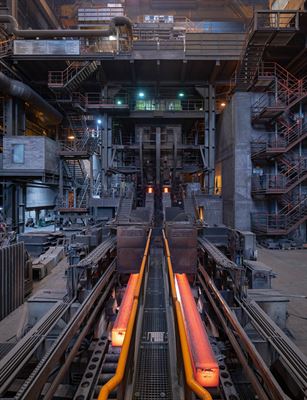
Ovako’s Imatra mill achieved a historic low of 231 kg CO2 per ton of steel in 2025, with reductions attributed to targeted investments (mechanical vacuum pump in 2019, reheating furnace burner upgrade in 2023) and a spring 2025 switch to fossil‑free district heating that enabled shutdown of the site steam plant and significantly cut natural gas use; the reported figures cover the mill’s process emissions under the EU Emissions Trading System. Ovako — a Sanyo Special Steel/Nippon Steel subsidiary with ~EUR 1.1bn in sales and ~2,600 employees — plans continued emissions reductions via the national Energy Efficiency Agreement (2026–2030) and operational yield and efficiency improvements.
Market structure: Ovako Imatra’s 231 kg CO2/ton result (0.231 tCO2/ton) directly benefits specialty, high-recycle steelmakers and vendors of decarbonization CAPEX (combustion retrofits, vacuum systems, district heating). Incumbent high-emission flat-steelmakers and regional gas suppliers are relatively disadvantaged as lowered process emissions reduce EU ETS exposure and natural gas burn; every 0.1 tCO2/ton avoided at an EUA price of EUR 60–80 equals ~EUR 6–8/ton cost relief, materially improving margins on thin-margin steel products. Risk assessment: Tail risks include rapid regulatory tightening (GHG standards forcing immediate retrofit capex), an operational setback at Imatra reversing gains, or a collapse in district heating fuel supply (long-term). Short-term (weeks–months) market moves likely muted; medium/long-term (6–36 months) valuation effects accrue through lower carbon cost volatility and roll-out risk of similar projects. Hidden dependency: scaling requires grid/district heating availability and policy incentives—without those, improvements are plant-specific, not sector-wide. Trade implications: Direct longs: specialty steel/industrial-equipment suppliers and infrastructure funds financing district heating; shorts: high-ETS-exposure commodity steel names. Relative trades: long Sanyo/Nippon Steel exposure (5401.T) or specialty steel ETFs vs short bulk steel like ArcelorMittal (MT) or SLX exposure hedged with EUA shorts. Use conservative sizes (1–3% NAV) and staggered execution over 3–9 months to let emission data and regulatory signals crystallize. Contrarian angles: Consensus may underprice the speed of incremental efficiency gains—small modular upgrades can deliver 5–15% CO2/ton cuts quickly, pressuring EUA demand and gas hubs (TTF) over 12–24 months. Reaction may be underdone in specialty steel and overdone in carbon shorts if retrofits are capital-constrained; historical parallel: 2010–15 efficiency waves cut marginal coal/gas demand without collapsing commodity prices, suggesting selective, not broad, dislocations.
AI-powered research, real-time alerts, and portfolio analytics for institutional investors.
Request DemoOverall Sentiment
moderately positive
Sentiment Score
0.40
