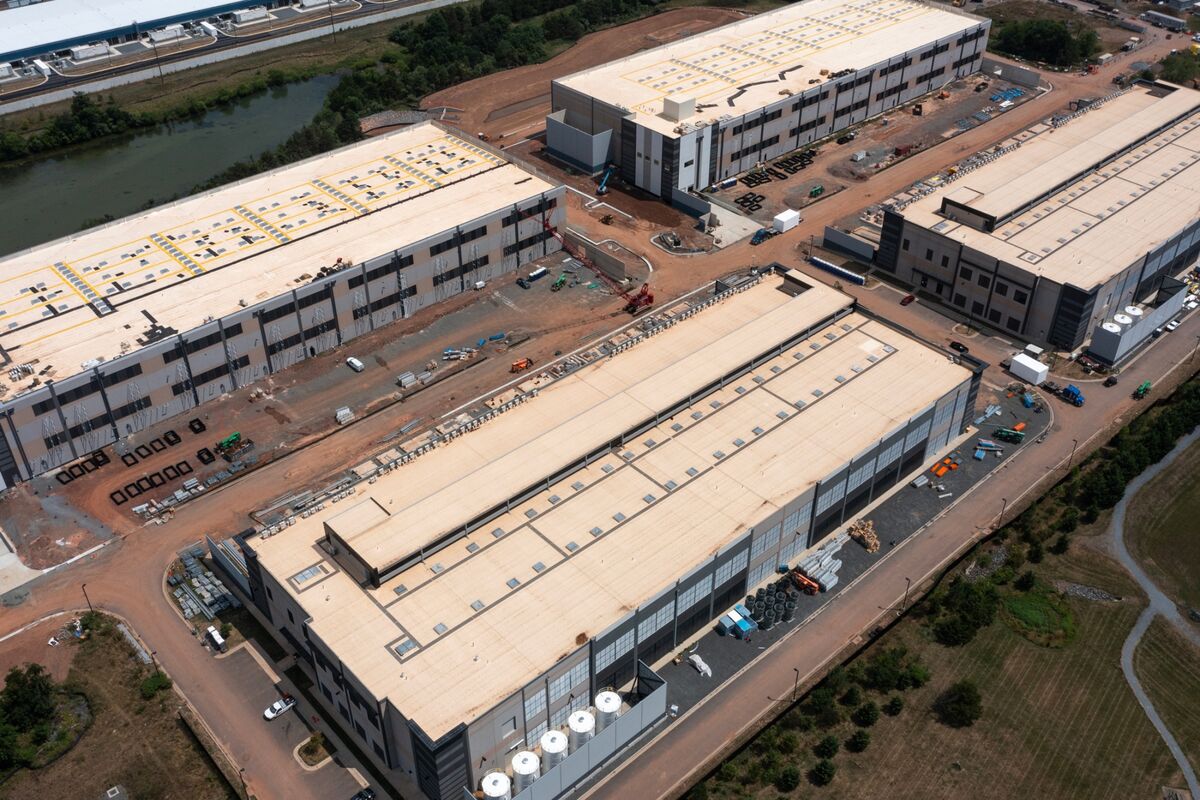
Amazon Web Services operates a far larger global footprint than commonly understood — more than 900 data center facilities across 50+ countries — with conventional hyperscale hubs augmented by hundreds of colocation sites that supplied roughly 20% of its computing power last year. The disclosure underscores AWS’s substantial infrastructure scale and its ability to flexibly expand capacity to support AI workloads, a factor that could influence AWS competitive positioning, capital spending expectations and investor views on Amazon’s cloud growth trajectory.
Winners concentrate on AWS (AMZN) and the upstream AI stack: GPU vendors and colo landlords capture steady, high‑margin demand (expect incremental demand to lift GPU consumption by 20–40% year/year in peak quarters). Smaller cloud competitors and on‑prem incumbents face margin pressure as AWS converts opex via colocation instead of heavy new‑build capex, compressing their pricing power over the next 12–24 months.
Primary tail risks are regulatory (antitrust fines or forced divestitures) and export controls on AI chips that could cut GPU supply by >30% within 6–12 months; operational risks include concentrated third‑party colo outages and local grid constraints that can impose >5% incremental cost on deployments. Near term (days/weeks) sentiment will drive volatility; in 3–12 months look for capex guidance changes and supplier earnings (NVDA, AMD, INTC) to act as catalysts.
Tradeable implications: tilt portfolios toward AMZN and select colo REITs (EQIX, DLR) and semis (NVDA) while trimming legacy enterprise software exposure; favored instruments are 6–18 month call spreads on NVDA and AMZN to capture upside with defined risk. Execute pair trades (long AMZN, short MSFT) to express relative cloud share shifts over a 3–9 month horizon and size to 1–3% net exposure per position.
Contrarian view: the market underestimates margin dilution from sustained colo reliance — AWS’s gross margin improvement may be smaller than consensus, leaving room for disappointment if colocation share rises >5 percentage points. Historical parallels (outsourcing waves) show revenue growth can outpace margin gains for several quarters; if energy costs or geopolitics spike, expect >10% negative re‑ratings for exposed names.
AI-powered research, real-time alerts, and portfolio analytics for institutional investors.
Request DemoOverall Sentiment
mildly positive
Sentiment Score
0.25
Ticker Sentiment
