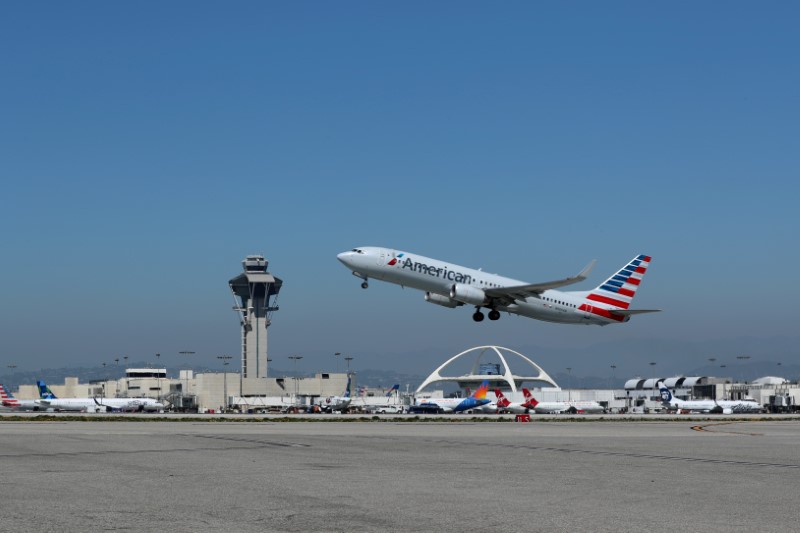
Delta Air Lines posted Q1 2026 EPS of $0.64, ahead of the $0.61 estimate, on revenue of $14.2 billion versus $13.97 billion expected, with sales up 9.4% year over year. However, Delta also faces a $2.5 billion increase in jet fuel costs this quarter tied to the Iran conflict, partly offsetting the earnings beat. Separately, Bernstein reiterated an Outperform rating and $20 price target on American Airlines while noting a potential United-American combination would be a difficult but not impossible antitrust lift.
The market is starting to price an industry-wide capacity reset rather than a simple headline-driven rally. A credible AAL takeover discussion, even if unlikely, matters because it signals that equity holders may finally get a path to rationalized domestic capacity and better pricing discipline; the second-order winner is the network-carrier group as a whole if management teams respond by slowing growth, not just the acquirer. The key nuance is that the antitrust burden itself can become a near-term overhang on the buyer while still being medium-term bullish for the surviving airlines if it forces concessions that reduce capacity overlap rather than killing the strategic logic outright.
DAL’s earnings strength plus fuel pressure creates a more interesting setup than the headline suggests: the stock is being pulled between margin resilience and an input-cost shock that can’t be fully hedged away. The near-term risk is that the conflict-driven fuel spike hits a lagged booking base, meaning ticket pricing may not adjust quickly enough to protect Q2/Q3 margins; that’s a 1-2 quarter issue, not a structural thesis break. If management can pass through even half of the incremental fuel burden, the bigger earnings lever becomes capacity discipline, not fuel, and that tends to favor the large network carriers over ULCCs and weaker balance-sheet names.
The contrarian view is that merger chatter may be less about a real transaction and more about a signal that the industry is closer to coordinated scarcity pricing. If investors over-rotate on consolidation probability, AAL can outperform on optionality, but the better trade may actually be on the basket through DAL because it benefits from both stronger fundamentals and any tightening in domestic capacity. Conversely, if fuel prices mean-revert quickly, the market may be overestimating how much of the current upside is durable; the main risk to this trade is a sharp reversal in crude that removes the catalyst before capacity discipline is reflected in pricing.
For EVR, the direct impact is minimal, but its role here is as a financing/strategic adviser proxy: if airline M&A rhetoric gains traction, advisory volumes and restructuring mandates can improve across sectors, though that is a slow-burn effect. The more actionable read-through is that capital markets will reward credible scale/efficiency stories while punishing subscale operators, which argues for being selective rather than bullish on the entire transport complex.
AI-powered research, real-time alerts, and portfolio analytics for institutional investors.
Request DemoOverall Sentiment
mildly positive
Sentiment Score
0.20
Ticker Sentiment
