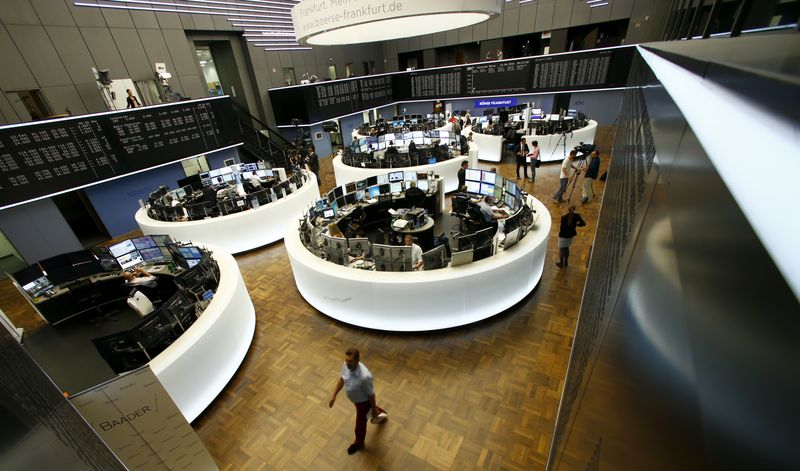
Trump said the U.S. will pause its "Project Freedom" escort operation in the Strait of Hormuz for a short period, citing progress toward a ceasefire and possible Iran deal, which helped ease geopolitical risk. Brent crude fell 1.5% to $108.22 a barrel, though the strait remains effectively closed and tensions remain elevated. European equities opened up 1.2% to 1.3%, while Novo Nordisk, Diageo, BMW and Equinor moved on company-specific quarterly updates.
The immediate read-through is not just lower headline risk for Europe; it is a regime shift in transport insurance and freight pricing. If the shipping corridor remains intermittently constrained but not militarized, tanker rates can stay elevated without a full panic spike, which is a better setup for selective winners in insurers, commodity shippers, and downstream refiners than for outright crude beta. The market is likely underpricing the lagged benefit to Asian importers if diplomatic de-escalation holds, because a partial reopening would compress the geopolitical risk premium faster than physical barrels can normalize.
The bigger second-order effect is dispersion inside consumer and healthcare names. For premium branded consumer goods and obesity/pharma leaders, a lower oil impulse supports discretionary spend and margin stability, but the more relevant catalyst for NVO is that capital rotates back toward secular growth when energy tail risk fades. If this is a true détente rather than a tactical pause, defensive cash-flow stocks that were bid on conflict fears should mean-revert over 2-6 weeks, while high-quality compounders can re-rate on multiple expansion over 1-3 months.
Contrarianly, the market may be too optimistic on how fast flows normalize. Even if rhetoric improves, tanker owners, marine insurers, and port operators will keep pricing in corridor disruption until escort patterns and attack frequency clearly decline for several sessions; that can keep freight costs sticky for 1-2 quarters. So the right setup is not a blanket risk-on trade, but a spread trade: long beneficiaries of lower energy volatility and short the names whose current pricing assumes a persistent shipping crisis.
On the single-stock side, NVO is the cleaner expression than broad Europe because its earnings are driven by execution, not macro beta, and any easing in input-cost pressure plus improved risk appetite helps the stock absorb competition from here. DEO is more tactical: if consumers have been panic-buying into uncertainty, that demand front-load can reverse quickly once the fear premium fades, making the upside more limited than the headline suggests. The best opportunities are therefore in asymmetry around normalization, not in chasing the initial relief rally.
AI-powered research, real-time alerts, and portfolio analytics for institutional investors.
Request DemoOverall Sentiment
mildly positive
Sentiment Score
0.20
Ticker Sentiment
