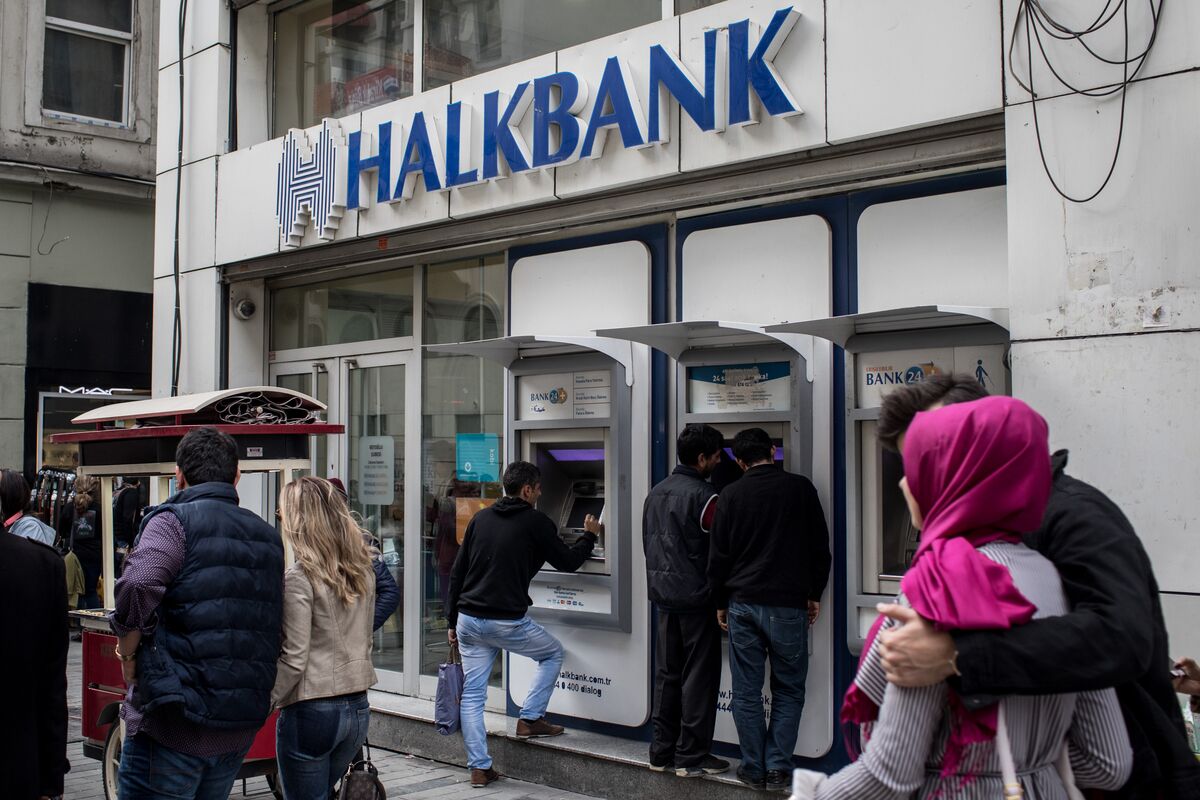
A U.S. federal judge granted the Justice Department’s request to formally dismiss the long-running criminal case against Turkish state-owned Halkbank over alleged Iran sanctions violations. The ruling follows Halkbank meeting the conditions of a deferred prosecution agreement signed in March. The news is legally significant but likely limited in direct market impact.
This removes a meaningful overhang for Turkish sovereign-linked credit and, more importantly, for any counterparties that were implicitly pricing a non-zero probability of further US extraterritorial escalation. The immediate read-through is lower tail risk on Turkey’s funding channels and a modest tightening impulse for state-owned bank paper, but the bigger second-order effect is political: it reduces one source of friction in the US-Turkey relationship at a time when Ankara still needs external funding and swap access more than Washington needs a concession.
The key market implication is not a broad banking rerating; it is a normalization of risk premia around any institution with legacy sanctions exposure. If investors had been using this case as a template for future enforcement against other state-linked banks, that premium should compress over the next several weeks. The flip side is that sanctions enforcement credibility can become more selective and less predictable, which may actually widen dispersion across EM financials rather than lift the whole sector.
The contrarian point is that the dismissal may be read as legally idiosyncratic rather than geopolitically lenient. That limits the chance of a sustained rerating and argues against chasing a broad Turkey beta move. The better expression is in relative value: names with heavy international funding needs and lower sanctions ambiguity should outperform, while banks dependent on opaque state support may still trade with a persistent governance discount.
Catalyst-wise, the risk is not reversal of this specific dismissal but a fresh enforcement action elsewhere that re-prices the whole sanctions regime within days. Over a 3- to 6-month horizon, the more durable channel is improved sentiment toward Turkish external financing and a slightly lower cost of capital for state-adjacent issuers, provided bilateral relations do not deteriorate again.
AI-powered research, real-time alerts, and portfolio analytics for institutional investors.
Request DemoOverall Sentiment
neutral
Sentiment Score
-0.10
