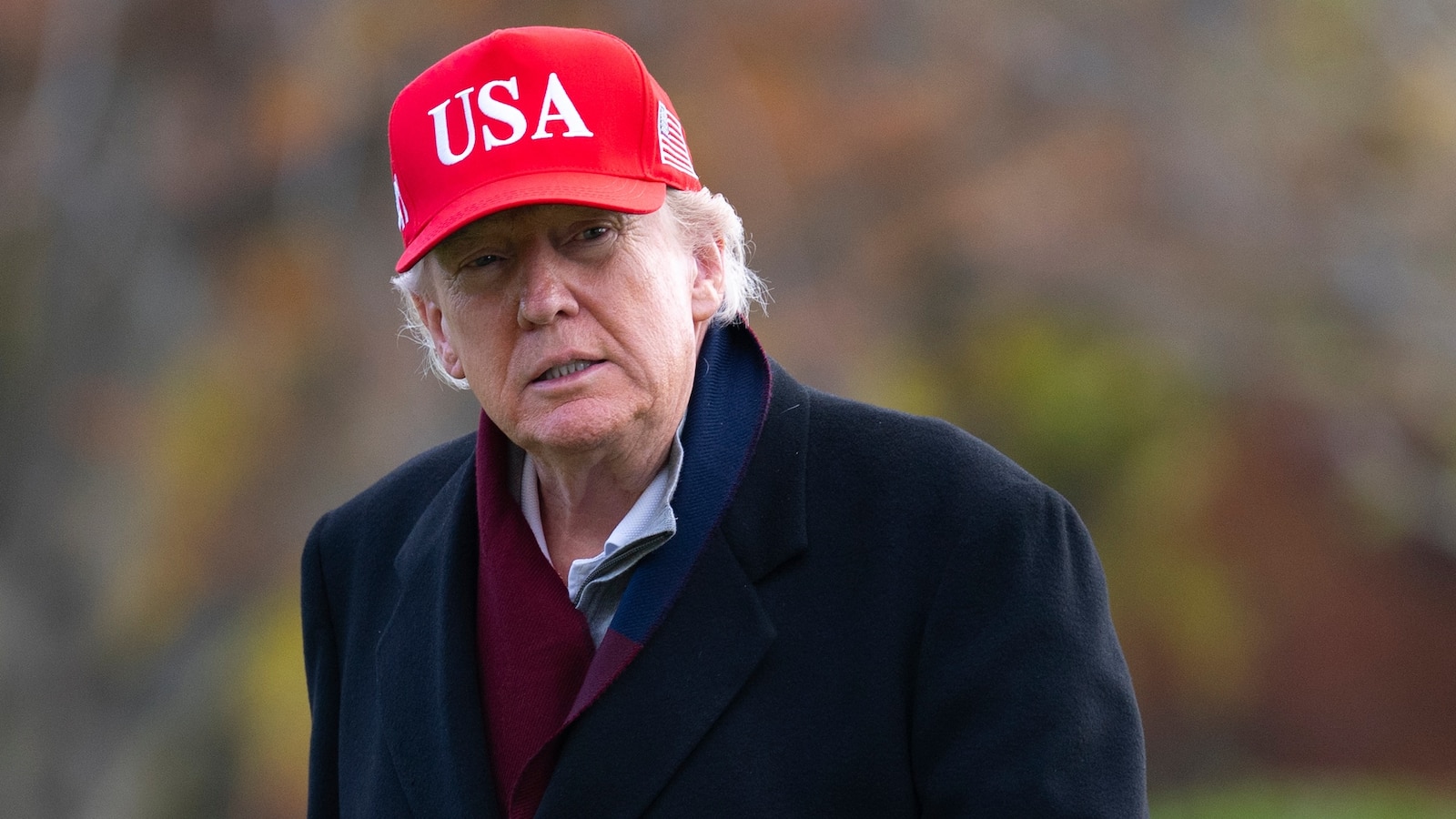
President Trump announced that the U.S.-drafted "original 28-Point Peace Plan," refined with input from both Russia and Ukraine, has only a few remaining points of disagreement and that he has directed special envoy Steve Witkoff to meet President Vladimir Putin in Moscow while Secretary of the Army Dan Driscoll will meet Ukrainian officials; no timing was provided. Trump said he and senior advisers (including VP JD Vance, Secretary of State Marco Rubio and Defense Secretary Pete Hegseth) will be briefed on progress and that he would only meet Zelenskyy and Putin once a deal is final — a development that, if achieved, could materially reduce geopolitical risk tied to the Russia-Ukraine conflict.
Market structure: A credible near-term Russia–Ukraine peace process would be a clear near-term negative for defense contractors (LMT, RTX, GD — risk of multiple compression 5–15% if procurement rhetoric cools) and for commodity-risk premia (Brent/WTI down 5–12% in first 30–90 days if Russian barrels re-enter markets). Beneficiaries: European cyclicals, construction/materials (CAT, CRH, FCX for copper/steel exposure) and carry/EM FX (RUB appreciation vs USD if sanctions ease). Cross-asset: expect USD to soften by 1–3%, 10y UST yields to rise 10–30bps as risk premium falls, gold (GLD) to drift lower 3–8% and oil vol to compress — trade spreads and vols accordingly.
Risk assessment: Tail risks include deal collapse or partial agreement that leaves sanctions intact (low probability but high impact — oil spike 15%+, defense rerating), U.S. Congressional blockage of sanctions relief, and banking/insurance de-risking that prevents rapid Russian export normalization. Immediate (days): rumor-driven vol; short-term (weeks–3 months): position unwinds and flows; long-term (6–24 months): reconstruction demand could lift metals/industrial capex. Hidden dependency: commercial re-entry into Russia requires insurer/shipping reopening and counterparty credit — without it physical flows won’t normalize.
Trade implications: Direct: establish a 2–3% tactical long in EU cyclicals (IEUR or STOXX 600 ex-UK) and a 2% long in FCX (copper exposure) for 6–12 months; reduce core defense exposure by 20% and hedge remaining by buying 3–6 month ITM put spreads on RTX/LMT sized to cover 50% notional. Pairs/options: long IEUR vs short RTX (equal notional) for 3 months; buy 1–3 month Brent put spreads (via BNO or CL options) to capture near-term de-risking with defined downside. Entry: stage into positions on first formal confirmation or on 10–15% rally in risk assets; exits at 6–12 month mark or on Congressional votes reversing deal.
Contrarian angles: Consensus assumes sanctions will be lifted quickly; that’s underpriced — market may overreact to “peace” headlines then re-price when legal/insurance frictions persist, creating 5–12% dislocations. Historical parallels (Balkans/Cold War detentes) show initial optimism then long tail of political wrangling — favor option-defined downside (put spreads) over naked shorts. Unintended consequence: a deal could spark inflation via reconstruction capex, supporting cyclicals and commodity miners longer term; be ready to flip short energy positions to long miners if Brent falls <10% and stays there for 3 months.
AI-powered research, real-time alerts, and portfolio analytics for institutional investors.
Request DemoOverall Sentiment
neutral
Sentiment Score
0.12
