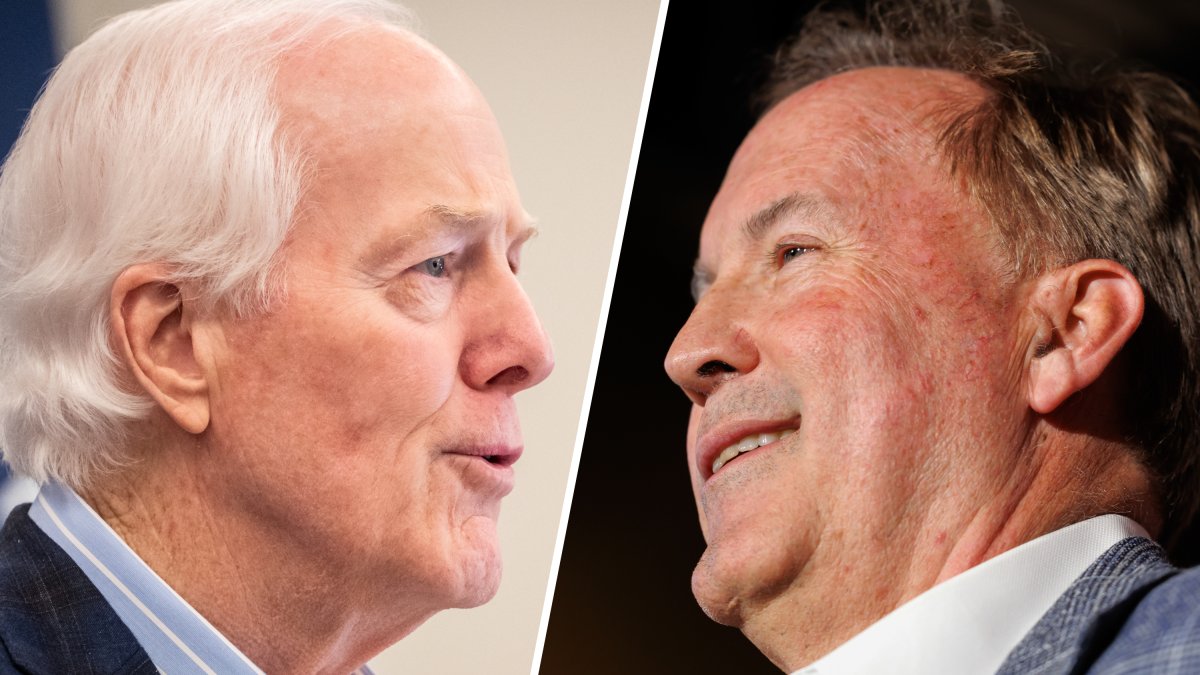
Texas GOP Senate runoff campaigning is down to heavy advertising rather than public events, with spending topping $109 million and Cornyn-backed groups outspending pro-Paxton efforts by nearly 9-to-1 over the year. Trump reaffirmed his endorsement of Ken Paxton on Sunday and called John Cornyn “VERY disloyal,” while Cornyn emphasized that 99.3% of his Senate votes aligned with Trump. The article is primarily political and has limited direct market relevance.
The key market signal here is not the runoff itself but the marginal power of presidential endorsement in a low-turnout, high-salience primary. That makes the lesson transferable: in deeply polarized districts, brand loyalty can overwhelm local fundamentals, but only when the electorate is sufficiently small and self-selected. The second-order implication is that incumbency protection is weakening faster than many donors expected, which raises the probability that other GOP officeholders with latent Trump friction become tradeable political risk assets over the next 1-3 election cycles.
For markets that care about governance, the more important angle is that Texas remains structurally important for energy, financials, and defense-adjacent contracting, so a Senate outcome that shifts toward a more insurgent, grievance-driven faction could modestly raise policy uncertainty around regulatory staffing, committee behavior, and federal spending priorities. That doesn’t create an immediate macro shock, but it can alter the discount rate investors apply to Texas-heavy names if the runoff is read as a broader proof-of-concept for anti-establishment primaries. The biggest loser is not Cornyn per se; it is the class of Republican incumbents who rely on institutional credibility, because the market is now reminded that donor spend alone may not be sufficient insulation.
Contrarian view: the consensus may overstate the general-election relevance of a runoff built for a tiny, ideologically dense electorate. If the nominee is Paxton, the headline risk spikes, but the actual Senate seat may still remain red under a polarized turnout environment, meaning the main effect is more noise than seat flip probability. The underappreciated risk is reputational contagion for national GOP fundraising: donors may conclude that expensive, late-cycle persuasion campaigns are lower-ROI than earlier, cheaper identity shaping, which could shift money flows away from traditional Senate committees and toward super PACs and outside groups.
AI-powered research, real-time alerts, and portfolio analytics for institutional investors.
Request DemoOverall Sentiment
neutral
Sentiment Score
0.00
Over the next 24-72 hours, the cleanest trade is to treat any post-runoff volatility as a sentiment event rather than a fundamentals event. The real catalyst window is the next 2-6 weeks, when the winner’s viability narrative is tested by polling and donor responses against the Democratic general-election nominee.
