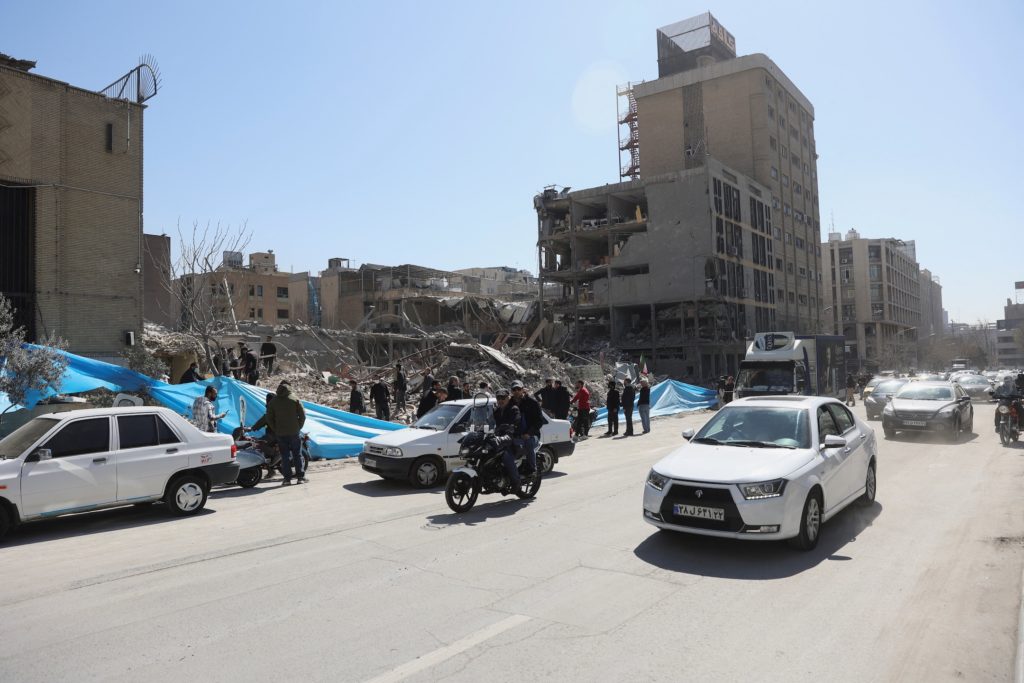
Tehran endured a fourth consecutive day of intense U.S. and Israeli airstrikes with heavy overnight and daytime raids, while Iranian state media report funeral and burial plans for the slain supreme leader in Mashhad. Public reaction has been mixed—pockets of celebration but widespread mourning and uncertainty—and authorities are braced for potential protests with armed security forces likely to respond. The sustained strikes and leadership shock elevate regional geopolitical risk, increasing downside pressure on emerging-market assets and raising upside risks for oil and safe-haven instruments, supporting a risk-off stance for portfolio positioning.
Market structure: Immediate winners are defense contractors (Lockheed LMT, Northrop NOC, Raytheon RTX) and commodities (Brent/WTI oil, gold) via safe-haven/inflation hedges; losers are regional EM equities, airlines (AAL, UAL, IAG) and tourism-linked leisure names. Pricing power shifts to integrated oil majors (XOM, CVX) and insurers re-pricing marine/shipping risk; expect 5–15% near-term risk premia added to crude and 10–30% to aerospace/defense order book valuations over 3–12 months if conflict widens.
Risk assessment: Tail risks include closure of the Strait of Hormuz (low probability, high impact — +$20–$40/bbl shock), wider regional war drawing in proxies, and retaliatory cyberattacks on energy infrastructure. Time horizons: days — volatility spike and FX dislocations; weeks–months — sustained commodity repricing and capex reallocation; quarters/years — higher baseline defense budgets and restructured supply chains. Hidden dependencies: insurance/freight cost pass-through to inflation, China/Russia diplomatic moves, and bank exposures to EM sovereigns.
Trade implications: Favor tactical longs in high-quality defense (2–4% portfolio) and gold/real assets (1–3%), paired with shorts in global airline ETF JETS or names AAL/UAL (1–2%). Use options to buy 1–3 month call spreads on XOM/CVX if Brent closes >$95 for five consecutive sessions; buy VIX or VXX exposure (0.5–1%) as an immediate hedge. Rotate out of EM debt/equities (underweight BRL/ZAR) and add duration hedges (TLT 1–2%) if equity drawdowns exceed 5%.
Contrarian angles: Consensus underestimates differentiated defense winners — prime contractors with exportable systems (LMT, NOC) will re-rate faster than smaller suppliers; travel sell-off may be overdone if conflict remains geographically contained (3–6 month mean reversion). Historical parallels (Gulf War/2019 tanker incidents) show oil spikes reverse within 3–6 months absent supply cuts; therefore scale into energy longs on confirmed supply disruption, avoid one-off knee-jerk buys. Unintended consequence: sustained higher energy leads to accelerated US shale capex — monitor Permian rig count (+10% from trough) as a mean-reversion signal.
AI-powered research, real-time alerts, and portfolio analytics for institutional investors.
Request TrialOverall Sentiment
strongly negative
Sentiment Score
-0.70
