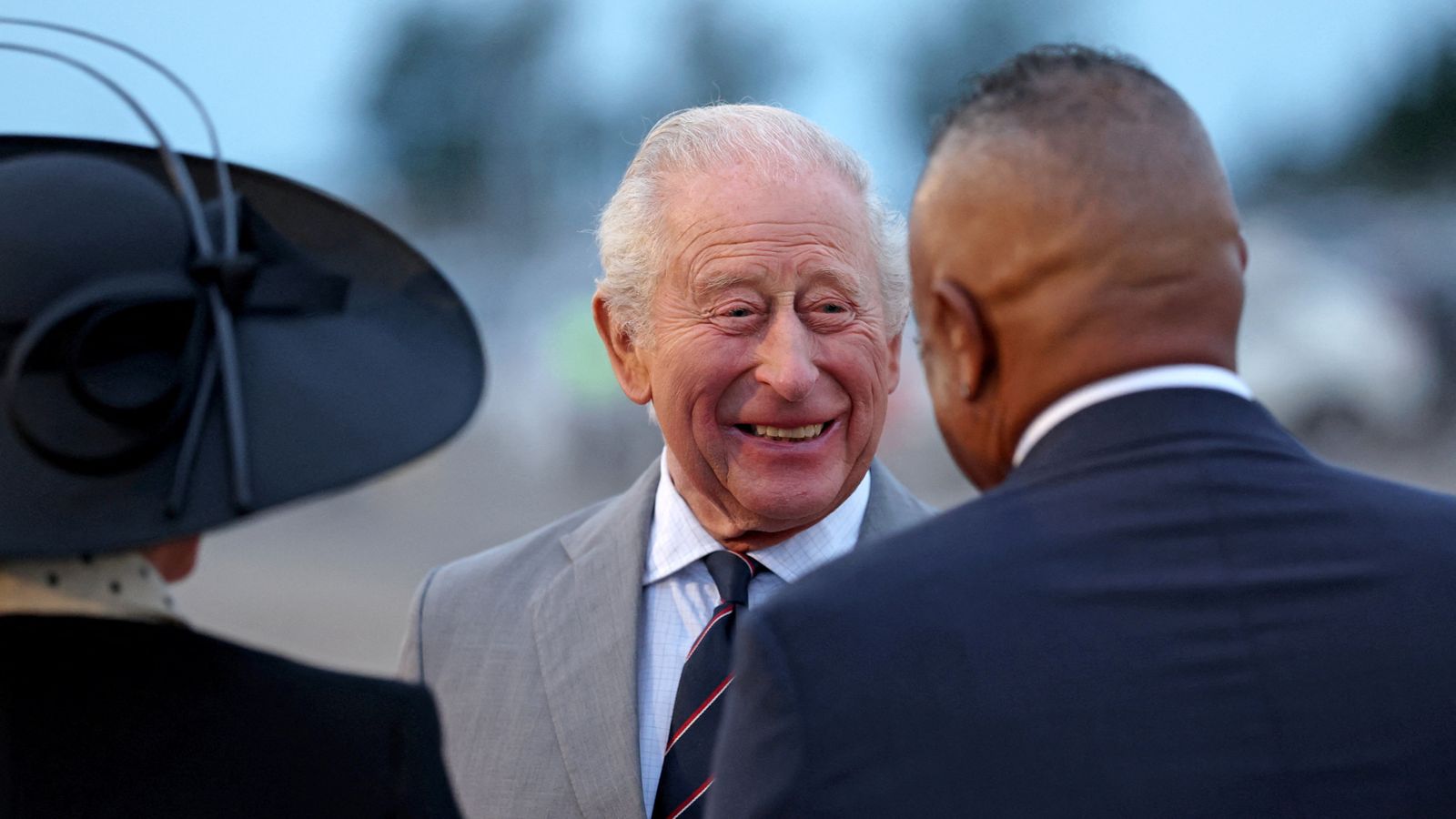
Donald Trump announced the removal of tariffs on Scottish whisky, saying it was done 'in honour' of the King and Queen, which could support Scottish distillers and related UK-US trade sentiment. The article is otherwise largely ceremonial, covering Charles's first visit to Bermuda as monarch and broader remarks on UK-US relations. Market impact is likely limited, though the tariff shift is a modest positive for the whisky trade.
The immediate market read is not the royal optics; it is that a symbolic tariff concession can be used as a low-cost signaling device when broader trade negotiation bandwidth is constrained. The whisky move modestly improves near-term sentiment for UK spirits exporters and importers with premium pricing power, but the bigger second-order effect is on expectation-setting: if a headline concession can be granted without a full framework deal, markets may start pricing a sequence of selective, sector-specific tariff relief rather than a broad normalization.
The beneficiaries are likely to be concentrated in premium Scotch, US specialty importers, and hospitality channels that rely on higher-end spirits mix. The loser is less obvious: domestic US bourbon and substitute brown-spirits producers could face a relative margin headwind if Scottish whisky regains shelf-share, but only at the margin because the category is premium and not purely price elastic. The more durable impact may be on UK consumer and tourism sentiment if the visit is framed as thawing transatlantic trade friction; that supports short-cycle discretionary names more than it moves macro beta.
The contrarian view is that this is probably over-interpreted as a durable policy shift. A single concession tied to diplomacy is easy to reverse, narrow in scope, and likely to matter more for headline momentum than for earnings estimates over the next 1-2 quarters. The real catalyst risk is that if US-UK relations deteriorate again, the tariff relief becomes a bargaining chip rather than a structural change, so the trade should be expressed with limited premium and clear stop-loss discipline.
For portfolios, the key is to separate sentiment from fundamentals: the best risk/reward is in pairs and optionality around names with direct exposure to cross-border premium spirits demand, not broad UK equity index exposure. If this is the first of several tariff gestures, the rerating could extend over months; if not, the move should fade within days as investors refocus on earnings and FX.
AI-powered research, real-time alerts, and portfolio analytics for institutional investors.
Request DemoOverall Sentiment
mildly positive
Sentiment Score
0.15
