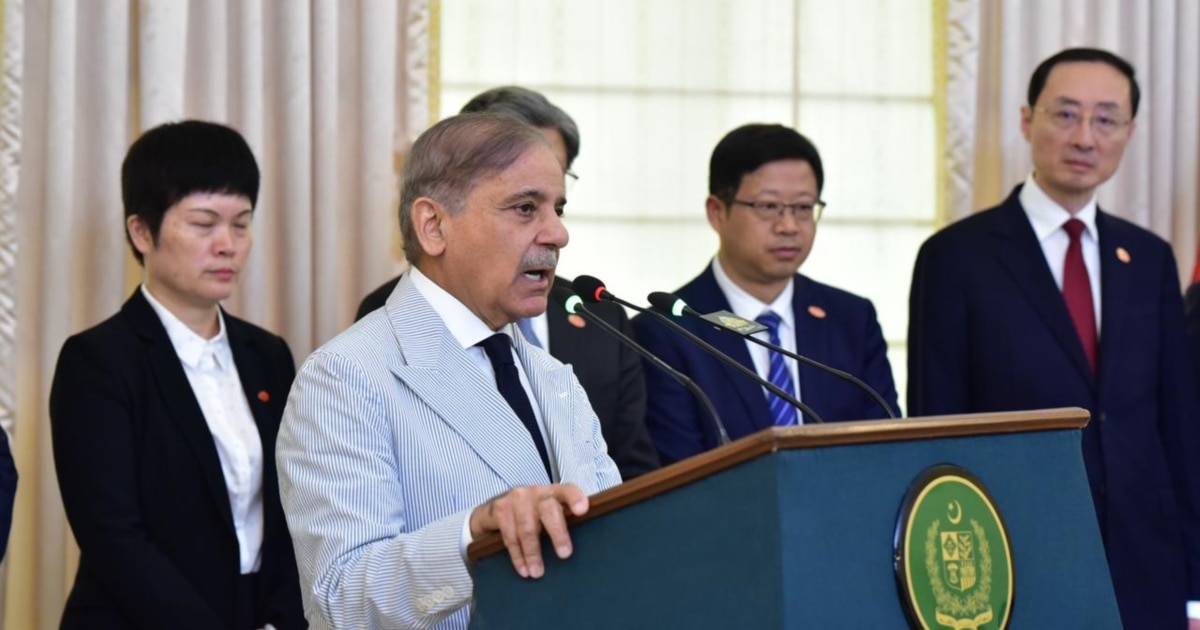
Pakistan's Prime Minister Shehbaz Sharif is traveling to Beijing for a three-day visit to seek Chinese backing on mediation in the US-Iran standoff, deeper defense cooperation, and fresh investment. The article highlights elevated geopolitical and energy risk from the Strait of Hormuz disruption, which affects roughly 40% of China's oil and 30% of its LNG imports and raises Pakistan's exposure to energy shortages, supply-chain disruption, and regional security spillovers. While no concrete policy outcome is reported, the visit signals intensified diplomacy with potential implications for Middle East stability and energy markets.
The market is underpricing the optionality embedded in Pakistan’s shuttle diplomacy because the immediate economic channel is not just "peace" versus "war"; it is whether Hormuz-related disruption becomes a months-long tax on Asian growth or a brief headline shock. China is the key swing state here: even modest Beijing signaling can change Tehran’s incentives faster than Washington’s pressure campaign, which means the real catalyst is not the next round of talks but any public Chinese endorsement of de-escalation over the next 1-3 weeks.
For equities, the first-order loser is anything exposed to shipping, energy input costs, and South Asia credit; the second-order loser is Chinese export demand if Hormuz stays impaired long enough to squeeze Gulf-to-Asia energy flows and raise delivered freight costs. Pakistan itself is a fragile transmission node: sustained conflict would worsen FX pressure, fertilizer availability, and domestic security, which raises sovereign spread risk and could tighten funding conditions for banks and import-dependent corporates within 1-2 months.
The contrarian angle is that the cease-fire headline may be too optimistic for markets that need uninterrupted flows, not just absence of airstrikes. Even if active combat stays contained, a semi-closed Strait of Hormuz still supports a higher floor for oil/LNG and insurance/freight premia, so the trade is less about directional crude beta and more about dispersion between energy winners and Asia importers. The key risk to the bullish energy/defensive basket is a fast diplomatic breakthrough driven by Beijing, which could reverse risk premia in days rather than weeks.
A more subtle second-order effect is defense and security spending in Pakistan: deeper China ties and regional instability argue for higher procurement urgency, but that benefits Chinese defense-adjacent names more than Western primes. If Islamabad feels pressured to provide any security guarantees around the Gulf, the market should expect more volatility in sovereign and quasi-sovereign funding needs than in headline FX alone.
AI-powered research, real-time alerts, and portfolio analytics for institutional investors.
Request DemoOverall Sentiment
neutral
Sentiment Score
-0.10
Ticker Sentiment
