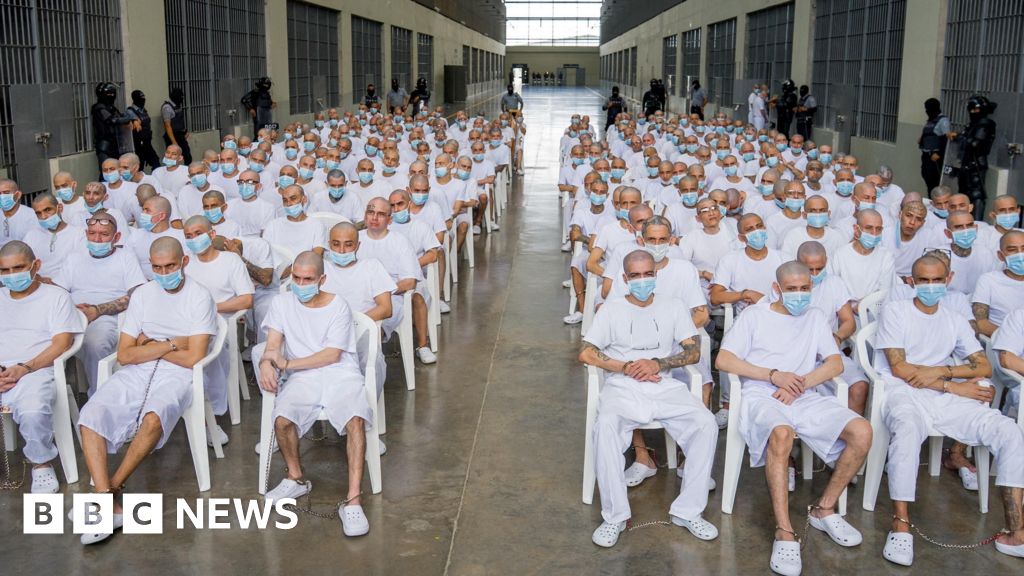
A mass trial of 486 alleged MS-13 members has begun in El Salvador, with the suspects collectively accused of more than 47,000 crimes, including murder, extortion, drug and arms trafficking. The case underscores ongoing legal and human rights concerns around President Bukele's state of emergency, which has been in force since March 2022 and enabled tens of thousands of arrests. The article is primarily political and judicial in nature, with limited direct market impact.
This is less about El Salvador’s near-term domestic politics than about the investability of its “security premium.” A sustained show of force can compress local sovereign risk spreads and support anything exposed to remittances, tourism, and dollarized consumption, but the second-order issue is legal durability: if the trial process is viewed externally as rights-violating, the country’s lower headline crime can be offset by higher medium-term legal/ESG friction in capital markets. That matters because frontier inflows are highly reflexive; even a modest reputational downgrade can widen financing costs faster than improved public-order data can tighten them.
The more interesting catalyst is not the trial itself but the next 3-12 months of governance signal. If the state of emergency becomes normalized, you get two opposing effects: lower street-level violence supports retail activity and construction, while arbitrary-detention concerns raise the probability of softer multilateral engagement, delayed concessional funding, and reduced appetite from EU/US-linked allocators. In that setup, local winners are dollarized consumer, telecom, and property-exposed names; losers are any issuer dependent on external financing, development-bank support, or tourism-sensitive flows.
From a risk perspective, the tail event is a procedural shock: a high-profile due-process challenge, sanctions chatter, or a mass-casualty incident that forces further emergency powers. That would likely hit over a days-to-weeks horizon by widening CDS and weakening the currency carry trade through broader EM risk-off. The consensus may be underpricing how much of the “crime victory” is already in the price; if courts or external institutions constrain the crackdown, the market can quickly re-rate from security story to institutional-risk story.
AI-powered research, real-time alerts, and portfolio analytics for institutional investors.
Request TrialOverall Sentiment
moderately negative
Sentiment Score
-0.35
