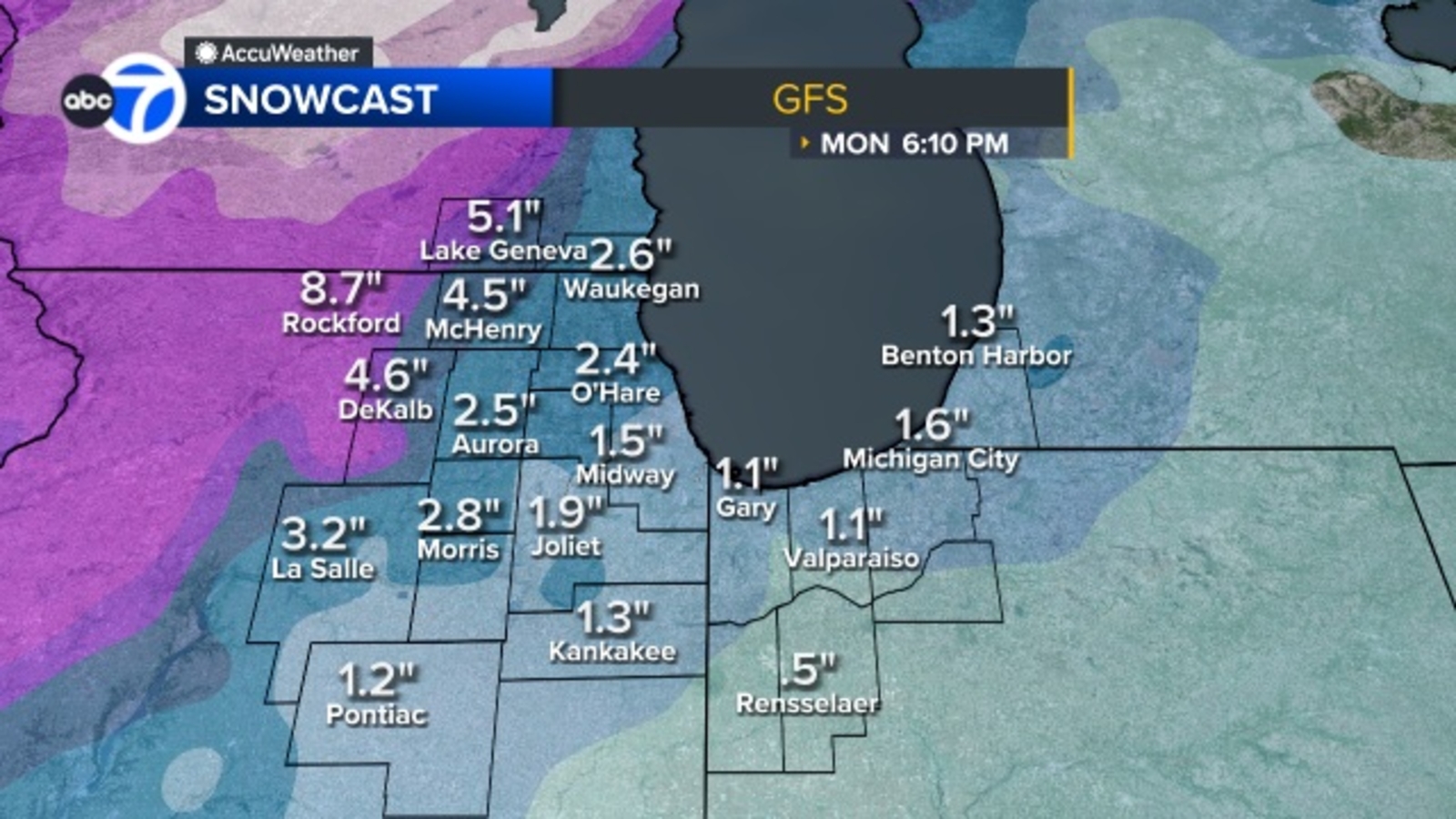
Expect 1–4 inches of snow Monday morning with wind gusts up to ~60 mph; thunderstorms expected Sunday into overnight with a third round starting ~1 a.m. A Winter Weather Advisory is in effect for multiple Chicago-area counties from 10 p.m. Sunday to noon Monday, and a High Wind Warning covers Kankakee County and NW Indiana (10 a.m.–9 p.m.). Weather has already disrupted air travel: 662 cancellations at O'Hare and 105 at Midway as of 12:11 p.m., creating localized operational and travel disruptions.
Operational knock-on effects will concentrate over the next 48-72 hours: aircraft mispositioning and crew duty-time constraints typically shrink effective seat supply by ~2-5% out of a major hub, forcing higher re-accommodation costs and incremental fuel/overnight expenses that hit unit revenue before any demand recovery. Cargo flows shift to surface modes; spot truck rates historically jump 8-20% in the immediate 24-72 hour window when sizable airlift corridors are disrupted, creating short-term margin tailwinds for freight brokers and truckers but capacity strain for rental fleets.
Airline P&L lines most exposed are ancillary revenue, irregular operation (IRROPS) costs, and maintenance/crew overtime — effects that show up as measurable EPS variance over the next 1-2 quarters if disruptions cluster. Airport retail, parking, and concession cashflows are lumpy and can underperform consensus in the same near-term window; conversely, ground-transportation providers with flexible fleets can see outsized near-term utilization gains but are capped by fleet availability.
Insurance and municipal service vectors matter: concentrated wind or property damage in hotspot corridors can create localized insurance loss pools, pressuring regional carriers and municipal budgets if claims aggregate — a tail risk that unfolds over weeks as losses are reported. The market’s mean-reversion horizon is short: if flight schedules normalize within 72 hours, much of the price-impact is likely to reverse; a second storm or systemic crew shortages would extend disruption to multiple weeks.
Key live indicators to watch for trade timing are real-time cancellation rates (FlightAware/OAG), DAT spot truck indices, jet-fuel crack spreads, and rental-fleet utilization metrics; these will determine whether this is a transitory tactical shock or the start of a multi-week logistics squeeze.
AI-powered research, real-time alerts, and portfolio analytics for institutional investors.
Request DemoOverall Sentiment
neutral
Sentiment Score
0.00
