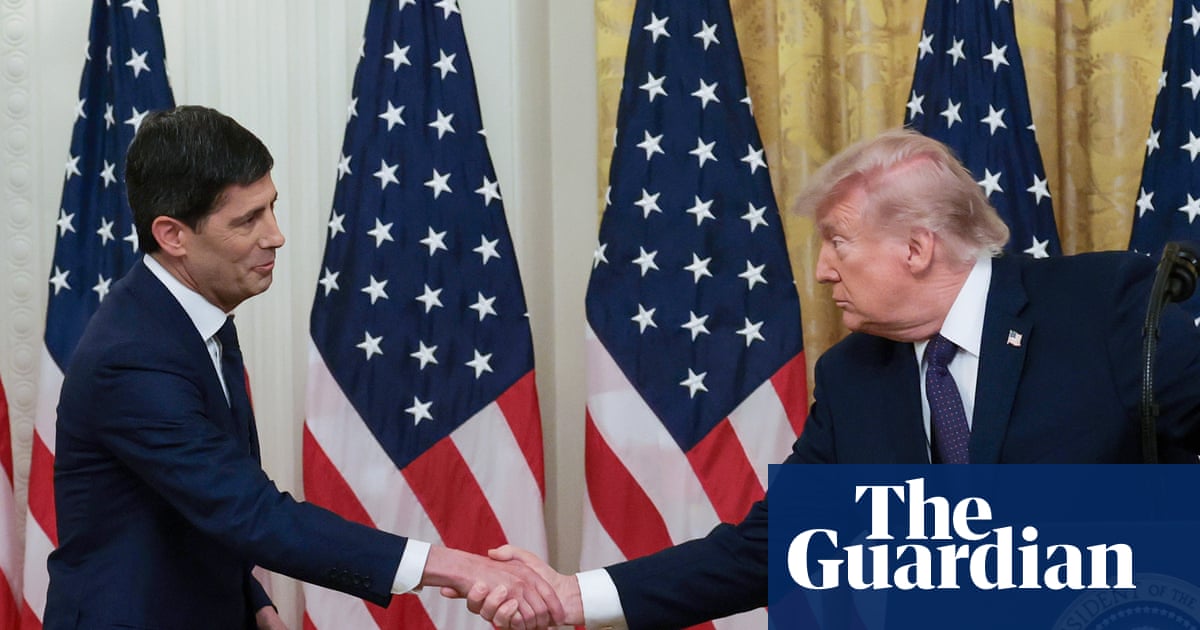
Kevin Warsh has been sworn in as Federal Reserve chair amid intense White House pressure to cut rates, even as inflation ran at a three-year high of 3.8% in April and U.S. fuel prices averaged $4.55 a gallon, up $1.35 year over year. The article highlights rising political backlash over the economy, immigration, and the Iran war, plus renewed concerns about Fed independence. Markets may focus on the implication for policy direction, inflation expectations, and broader risk sentiment.
The immediate market implication is not simply “lower rates,” but a regime shift in term-premium dynamics: a chair perceived as politically aligned raises the probability of policy being eased before inflation is fully tamed, which can steepen the front end while leaving the long end vulnerable to credibility leakage. That is a bad mix for duration-heavy assets if investors begin to price a higher inflation risk premium rather than just a lower policy rate path. The second-order beneficiary is not high-beta growth per se, but real-asset and pricing-power exposures that can pass through higher nominal demand without needing pristine macro stability.
Energy is the cleanest transmission channel. Elevated fuel prices plus geopolitical shock risk create a near-term inflation impulse that limits how aggressively the Fed can cut, but politically the pressure will be to signal accommodation anyway; that tension tends to support breakeven inflation and commodity-linked equities over nominal duration. The more important watchpoint is whether households start to retrench on discretionary and travel spend over the next 1-2 months, which would shift the market from “higher inflation” to “stagflation-lite,” penalizing cyclicals, transport, and small-cap domestics first.
The governance angle is underpriced. Once the Fed’s independence is perceived as compromised, foreign reserve managers and domestic institutions may demand a larger risk premium on Treasuries, which would show up first in 10s/30s steepening and pressure rate-sensitive financial intermediaries with long-duration asset books. That also raises the odds that any equity relief rally on dovish rhetoric fades quickly unless it is accompanied by a credible de-escalation in geopolitics and a visible rollover in fuel inflation.
Consensus is likely overestimating the positive equity effect of easier policy and underestimating the negative effect of higher inflation uncertainty. In this setup, the best risk/reward is to own inflation protection and avoid assets that need both lower rates and stable credibility to work; those two conditions are now in tension.
AI-powered research, real-time alerts, and portfolio analytics for institutional investors.
Request DemoOverall Sentiment
moderately negative
Sentiment Score
-0.35
