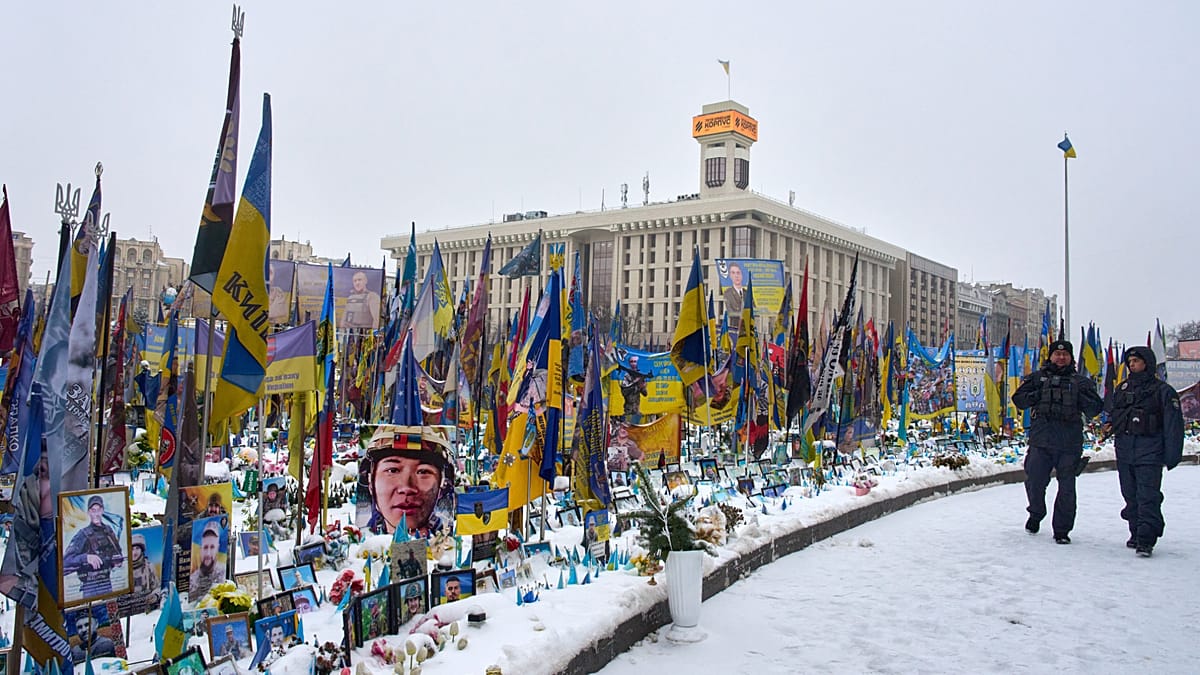
Ukraine’s President Volodymyr Zelenskyy said a bilateral US security-guarantee document is essentially ready for President Trump’s approval, envisaging a NATO Article‑5‑style obligation, a high‑tech ceasefire monitor and a multinational force led by France and the UK that would require national parliamentary ratification. Russia condemned the Paris discussions, branded Kyiv and its partners an “axis of war,” and warned that any European peacekeepers or Western military infrastructure in Ukraine would be treated as legitimate targets, while recent Russian strikes have left two regions and about 1 million people without power and water. The developments raise near‑term geopolitical risk, heightening prospects for military escalation, political friction over ratification processes, and potential market volatility in defense, energy and European risk assets.
Market structure: Escalation rhetoric around European peacekeepers and Moscow’s “legitimate target” warning is a clear positive shock for global defense contractors (LMT, NOC, RTX) and energy exporters (XOM, CVX, TOT) and a negative shock for EM/European credits and regional equities with Russia exposure. Expect near-term risk-premium widening: oil/gas up 5–15% if flows are curtailed, gold +5–10% as a safe haven, and equity volatility (VIX) to test +5–10 vol points. Sovereign/EUR debt will underperform USTs on safe‑haven flows, putting downward pressure on EUR/USD (target 1.02–1.08 in stressed scenarios). Risk assessment: Tail risks include direct strikes on NATO personnel or marked escalation triggering broader sanctions and Russian energy cutoff to Europe (low‑probability 5–15% but high impact). Immediate window (days) = volatility spikes and FX dislocations; short term (weeks–months) = defense order acceleration and energy price pressure; long term (quarters–years) = persistent rearmament, supply‑chain reshoring, and higher European energy costs. Hidden dependencies: NATO/US Congressional ratification risk (could fail or be delayed by 30–180 days) and logistical production caps at prime contractors delaying revenue recognition by 6–18 months. Key catalysts: Congressional votes (US), EU parliamentary approvals, and Russian operational responses. Trade implications: Direct plays: establish tactical 1.5–3% long positions in LMT/NOC/RTX over 6–12 months funded by reducing EM Russia exposure (RSX) and short EWG (Germany ETF) 1–2% because of energy vulnerability. Options: buy 6‑month call spreads on LMT (e.g., 5–10% OTM) to cap premium; buy 3‑6 month call spreads on XOM/CVX and a 3‑6 month long GLD call to hedge stagflation. Use pair trade long LNG exporters (TGP/TRGP or TOT) vs. short European utility/retail names sensitive to power prices. Entry window: act within 1–4 weeks; trim if Brent > $90 or VIX >30 or Congress signals de‑escalation. Contrarian angles: Consensus assumes defense names rally instantly to sustained earnings upgrades; that’s only realized if parliamentary ratifications and budget appropriations occur—delay risk of 3–9 months may cause reversion. Historical parallels (2014/2022) show initial energy spikes then mean reversion as supply substitutes emerge in 6–12 months; therefore prefer option-defined risk or staggered buys. Unintended consequences include accelerated EU energy diversification boosting renewables/engineering capex (buy ENR/industrial suppliers on dips) and insurance/liability shocks to contractors operating in theater — avoid standalone small-cap defense suppliers with single-factory concentration.
AI-powered research, real-time alerts, and portfolio analytics for institutional investors.
Request DemoOverall Sentiment
strongly negative
Sentiment Score
-0.65
