





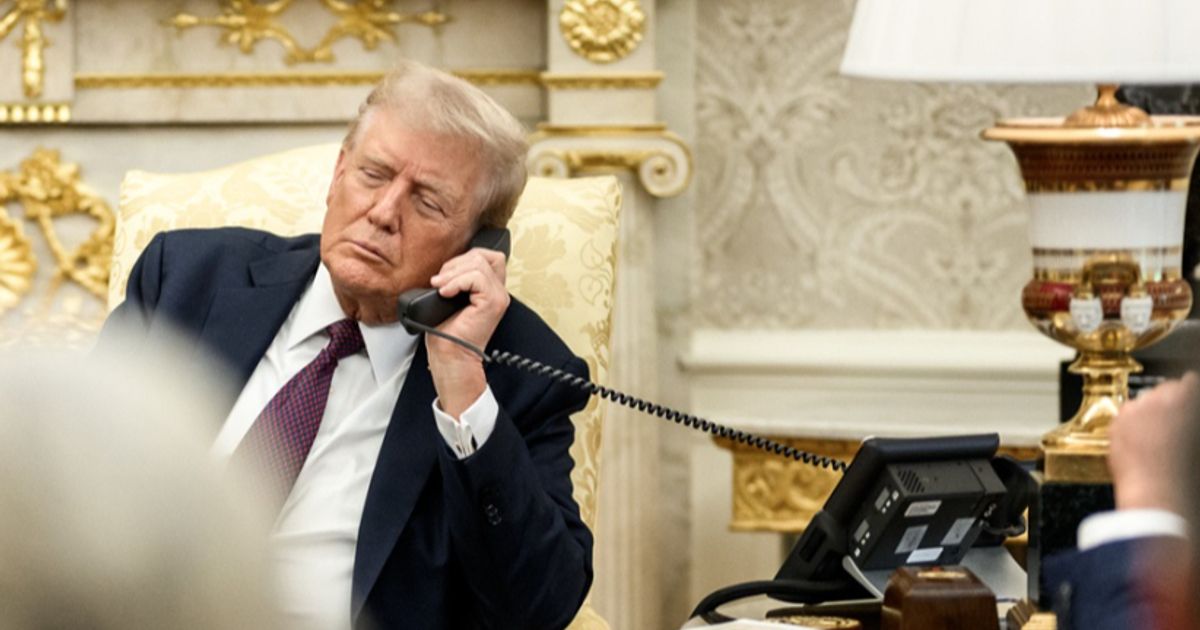
US-Iran tensions drove WTI crude sharply higher, with futures jumping 7.1% to above $93.65 a barrel intraday after Iran walked away from talks and reported escalation in the Middle East. US equities started the day weaker, with the Dow down 0.15% and energy-driven risk sentiment deteriorating even as May ISM Manufacturing PMI rose to 54.0, a four-year high, and Anthropic confidentially filed for a US IPO. The article also highlights a broad AI-led market backdrop, with the Dow, S&P 500 and Nasdaq still near record highs after a strong May.
The immediate market reaction is less about one headline and more about an exogenous inflation shock hitting a tape that was priced for disinflation and broader participation. A sustained move in crude above the low-90s tightens the odds of a summer growth scare, because it acts like a tax on consumers exactly when small-cap and cyclically exposed parts of the market have been outperforming. That makes the recent breadth rally more fragile than index levels imply: leadership can still look healthy while downstream margin pressure starts showing up first in transport, retail, and discretionary names.
The key second-order effect is that higher energy prices may force a re-rating of July–September earnings assumptions across airlines, shippers, package delivery, and lower-tier consumer names before the macro data even turns. If oil remains elevated for 2-3 weeks, the market is likely to shift from treating this as a geopolitical headline to pricing a slower Fed path or even renewed hike risk, which would hit duration-sensitive growth and leveraged financial assets simultaneously. That is why the selloff in HOOD and QCOM matters more than the index move: those are the kinds of high-beta proxies that usually absorb liquidity first when rates and risk premia reprice together.
The manufacturing print complicates the bearish energy impulse by suggesting the real economy has enough momentum to absorb a short-lived oil spike, but that only delays the damage; it does not neutralize it. The more important catalyst over the next week is payrolls, because a strong labor report plus firmer oil would create a stagflationary mix that the current rally is not positioned for. Conversely, if crude fails to hold the spike and diplomacy reopens quickly, the market will likely snap back into AI/large-cap tech leadership, making this a short-duration dislocation rather than a regime change.
Anthropic’s IPO filing is a reminder that AI remains the only durable source of multiple expansion, but it also raises the bar for public-market AI beneficiaries: investors will start benchmarking revenue quality, capital intensity, and model differentiation more explicitly. That favors the highest-quality infrastructure winners and penalizes names with weaker monetization or supply-chain exposure. In other words, the AI trade is not over, but it is becoming a relative-value trade rather than a blanket long-beta expression.
AI-powered research, real-time alerts, and portfolio analytics for institutional investors.
Request TrialOverall Sentiment
mildly negative
Sentiment Score
-0.15
Ticker Sentiment
