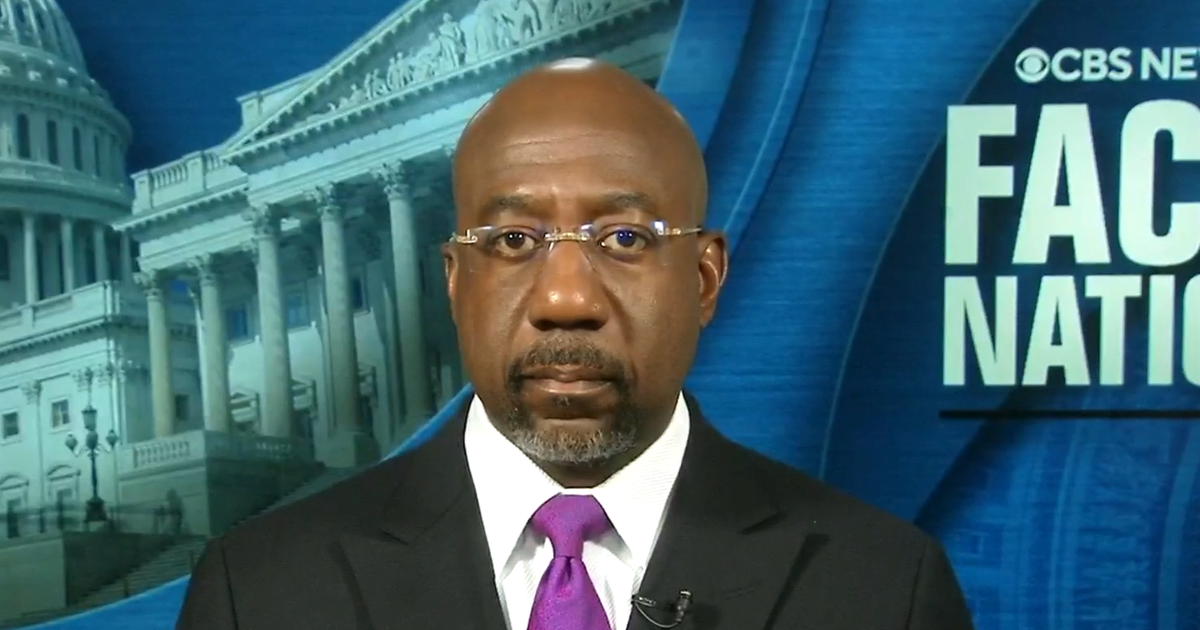
Sen. Raphael Warnock called the Supreme Court’s 6-3 Louisiana redistricting ruling a major setback for democracy and the Voting Rights Act, warning it will make racial discrimination lawsuits harder to win and could weaken Black representation. He argued Congress should restore preclearance protections and ban partisan gerrymandering, citing growing turnout gaps and new redistricting efforts in several states. The piece is primarily a political and legal commentary with limited direct market impact.
The market implication is less about the headline legal doctrine and more about the acceleration of state-level map churn. That creates a medium-term incumbent advantage for whichever party already has superior mapmaking, data, and litigation teams, while increasing uncertainty for swing-district names and any issuer whose valuation depends on stable district-based turnout. The second-order effect is a higher probability of policy whiplash in the House, which can change the odds of tax, spending, antitrust, and healthcare legislation without changing the presidential forecast.
The near-term winner is political consulting, election tech, and legal services tied to redistricting, but the bigger tradeable effect is on state-specific and district-sensitive equities: utilities, hospitals, defense, and local media in newly engineered districts can see a temporary rise in policy risk premia. Over months, the more important channel is turnout composition; if maps become more efficient for one party, marginal turnout investments may yield less incremental House control than expected, making polls and fundraising less informative than redistricting litigation calendars.
The contrarian view is that the market may overestimate how quickly this translates into durable national power. Courts, state constitutions, and ballot measures can blunt aggressive map changes, and the public backlash can re-randomize outcomes in 2026/2028. That means the tradable edge is in volatility, not direction: the event increases dispersion across districts and states more than it creates a clean multi-year party-premium trade.
Tail risk is a fast escalation into copycat redistricting in multiple states, followed by injunctions that create headline risk but little immediate economic effect. The better catalyst window is the next 1-3 quarters, when filing deadlines, special elections, and court rulings convert abstract constitutional debate into concrete seat counts; if the legal backstop weakens further, expect a second wave of corporate lobbying on state ballot access, ESG, and government-contract exposure.
AI-powered research, real-time alerts, and portfolio analytics for institutional investors.
Request DemoOverall Sentiment
mildly negative
Sentiment Score
-0.35
