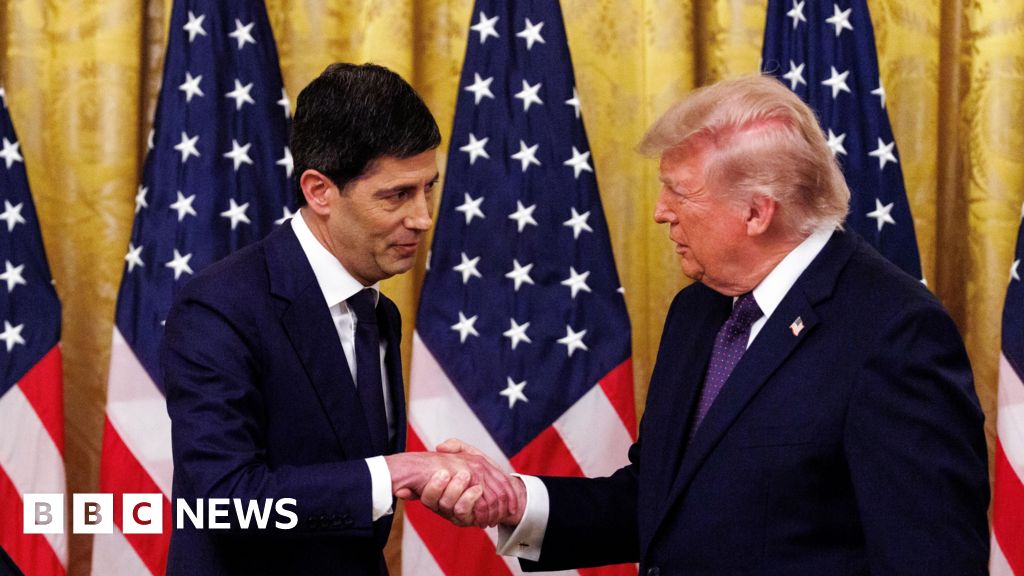
Trump said incoming Fed Chair Kevin Warsh should be "totally independent" while also pressing for lower rates, underscoring continued political scrutiny of monetary policy. The Fed has held rates at 3.5%-3.75% and economists now expect them to stay there through 2026, with some even forecasting an increase, as policymakers weigh inflation risks tied to the US-Israel war in Iran. The article is market-relevant because it highlights Fed independence, rate expectations, and the policy path for borrowing costs.
The market implication is less about the headline appointment and more about the narrowing of the Fed’s reaction-function credibility premium. If investors believe the chair is politically constrained, the long end should price a higher inflation risk premium and a steeper term structure even if the front end stays anchored for a few meetings. That is a classic setup for curve steepening trades, but the bigger second-order effect is tighter financial conditions for rate-sensitive credit and levered balance sheets, which tends to show up first in small caps, housing, and private credit before spilling into broader equities.
A truly independent chair under political pressure also raises the odds of policy error in both directions: easing too late into a growth slowdown or being forced to stay tight into a supply-driven inflation shock. That ambiguity matters because the market is currently struggling to separate transitory geopolitically-induced price pressure from demand weakness; if the Fed waits on clarity, volatility in front-end rates can remain suppressed while recession odds creep higher. The beneficiaries are cash-rich mega-cap equities and quality balance sheets that can self-fund, while the losers are duration-sensitive sectors that depend on refinancing and cheap leverage.
The contrarian read is that this may be more rhetoric than regime change. A chair who starts with explicit White House blessing to be independent could actually overcompensate by sounding hawkish, which would flatten the short end narrative and punish consensus reflation trades. In that scenario, the easier trade is not a directional bet on cuts or hikes, but on relative positioning versus policy-sensitive sectors: long high-quality defensives, short domestic cyclicals that rely on lower rates and softer credit spreads.
AI-powered research, real-time alerts, and portfolio analytics for institutional investors.
Request DemoOverall Sentiment
neutral
Sentiment Score
-0.05
