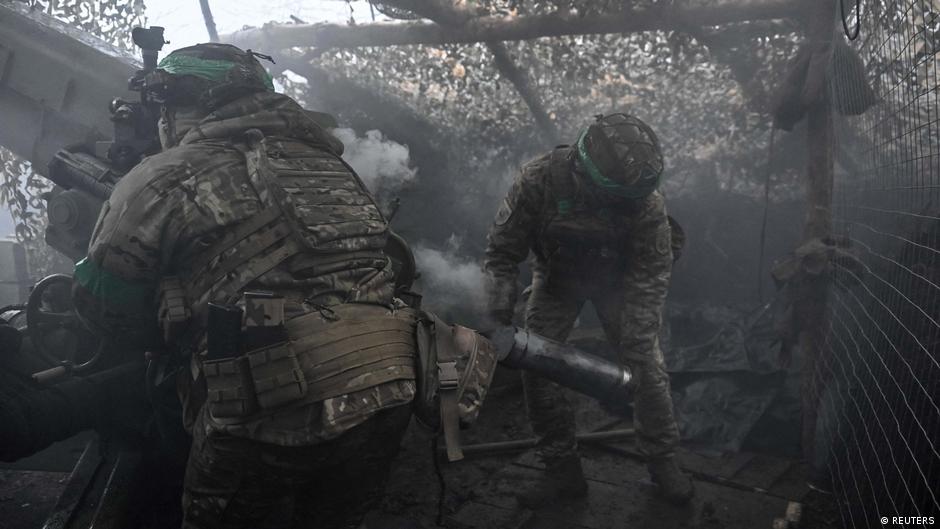
Heavy fighting around Pokrovsk has led to conflicting claims: the Kremlin announced capture while US-based ISW found no evidence of complete seizure, though a senior NATO official said over 95% of the city is under Russian control. Ukrainian forces retain pockets in the northern rail area and nearby Myrnohrad (≈7 km away) remains at risk; analysts warn capture of Pokrovsk would be used for logistics and as a springboard for further attacks in Donetsk, though NATO and ISW judge a broader regional collapse unlikely in the near term.
Market structure: A localized Russian advance around Pokrovsk elevates demand for defense and logistics services while depressing regional EM risk premia. Winners: large-cap defense primes (Lockheed LMT, Raytheon RTX, General Dynamics GD) and energy midstream exporters; losers: Ukrainian/neighboring EM equities (EEM, Poland EWP) and regional logistics providers. Cross-asset: expect a ~25–75bp compression in core European bond yields into safe-haven USTs, a 2–4% knee-jerk rise in Brent/TTF on supply-risk repricing, and ~1–2% upside in gold per episode of confirmed territorial gains.
Risk assessment: Tail risks include rapid escalation (NATO entanglement or broad sanctions) that could spike oil 20%+ and freeze European liquidity lines; low-probability but high-impact within 30–90 days. Immediate (days): volatility spikes and FX dislocations; short-term (weeks–months): defense reorder guidance and energy rerouting; long-term (quarters+) the strategic reallocation of NATO procurement. Hidden dependencies: U.S. political calendar, supply-chain lead times for munitions (6–12 months), and winter energy storage levels that could amplify commodity moves.
Trade implications: Favor tactical longs in large-cap defense (ITA ETF or LMT/RTX/GD basket) sized 1–3% per fund, and tactical oil exposure (BNO/XLE or Brent futures) 1–2% for a 3-month horizon. Use pair trades (long LMT vs short BA) to isolate defense demand from civil aerospace cyclical risk. Options: buy 3-month call spreads on LMT/RTX and 1–3 month call butterflies on Brent; buy tail puts on EEM (30–60 day put spread) to hedge EM exposure.
Contrarian angles: Consensus assumes persistent Russian follow-through; monitor logistics consolidation signals (troop rotations, open supply corridors) — if Russia merely holds Pokrovsk without wider breakthroughs, defense re-rating could be overdone by 10–20%. Historical parallel: localized urban gains in 2014–15 produced temporary asset shocks but limited strategic collapse; unintended consequence: overshoot in defense equities and energy could reverse within 6–12 weeks if NATO increases materiel but not boots-on-ground.
AI-powered research, real-time alerts, and portfolio analytics for institutional investors.
Request DemoOverall Sentiment
strongly negative
Sentiment Score
-0.60
