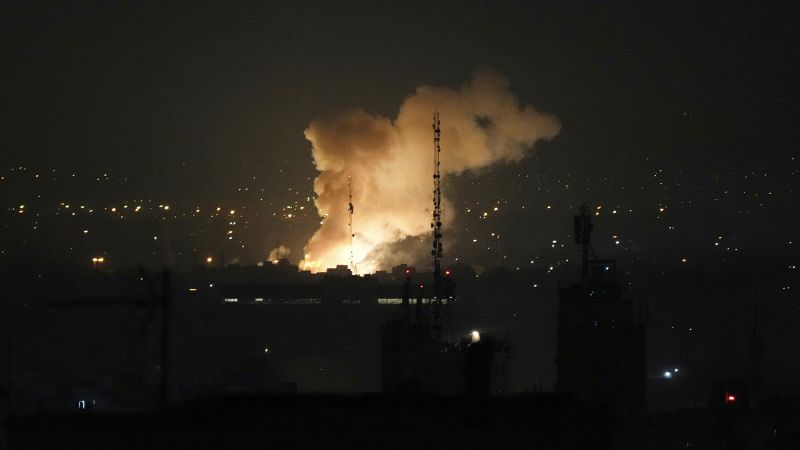
Israel's recent strikes on Iran have heightened concerns about potential disruptions to Middle East oil supplies, causing crude oil prices to surge, with U.S. crude rising as much as 14% overnight before settling up 6% midday Friday and up 12% for the week. Analysts warn that a significant Iranian response, particularly targeting the Strait of Hormuz, could lead to a substantial supply shock and push oil prices above $100 a barrel, while a more limited response may result in a contained and temporary market reaction; potential mitigating factors include increased OPEC production and the release of emergency oil stockpiles, though OPEC has downplayed the need for the latter.
Israel's recent attack on Iran has injected significant volatility into energy markets, exemplified by an immediate spike in US crude oil prices, which rose as much as 14% overnight before settling at a 6% increase midday Friday, contributing to a 12% surge for the week – the largest since October 2022. This geopolitical escalation raises concerns over potential disruptions to Middle East oil supplies, particularly ahead of the summer driving season. Analysts, such as Patrick De Haan from GasBuddy, anticipate a consequent rise in US gasoline prices by 10 to 25 cents per gallon from the current national average of $3.13, despite prices being lower than a month ago ($3.16) and year-ago levels ($3.46). The primary risk centers on Iran's response, with a severe retaliation potentially targeting critical infrastructure like the Strait of Hormuz, through which approximately 21 million barrels of oil (one-fifth of global daily consumption) transit. Such an event, while considered unlikely by Goldman Sachs, could push oil prices past $100 a barrel. However, Goldman Sachs maintains a base case of no major supply disruptions and only slightly adjusted its summer oil price forecast. Rystad Energy suggests a limited Iranian response focusing on military targets could result in a contained market reaction. Potential mitigating factors include increased production from OPEC, with Goldman Sachs estimating OPEC+ could cover half of a hypothetical 1.76 million bpd Iranian export shortfall, potentially leading Brent crude above $90 before declining. Additionally, the International Energy Agency (IEA) holds over 1.2 billion barrels in emergency stockpiles and has indicated readiness to act, though OPEC disputes the current necessity of such measures.
AI-powered research, real-time alerts, and portfolio analytics for institutional investors.
Request DemoOverall Sentiment
strongly negative
Sentiment Score
-0.65
Ticker Sentiment
