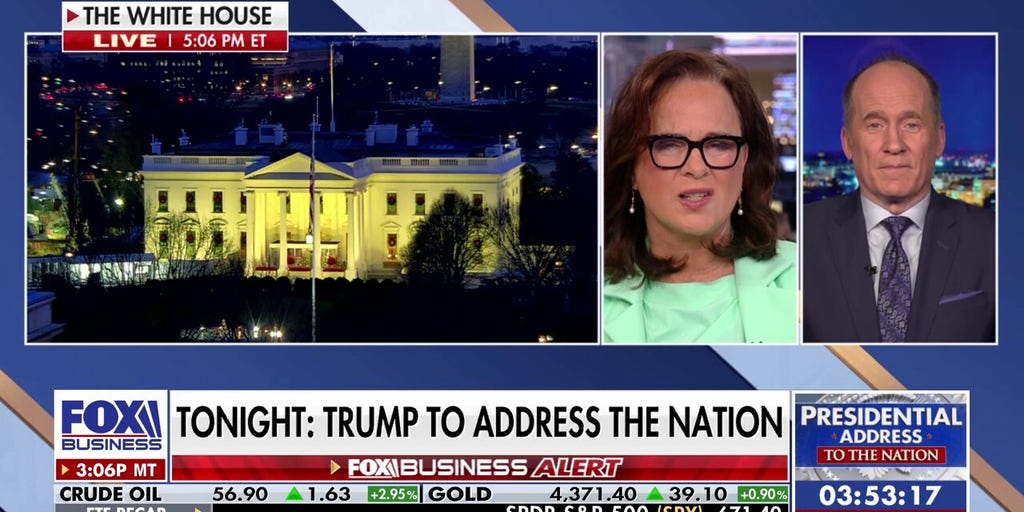
The text consists solely of television programming and channel listings and contains no financial news, company data, economic indicators, policy announcements, or market-moving information. There are no revenues, earnings, percentages, or events to assess for investment decision-making, and no actionable intelligence for hedge funds. Recommend no market action based on this content.
Market structure: The TV schedule (Fox linear prime-time + news windows) highlights persistent value in live, appointment viewing—direct winners are ad-supported broadcasters (FOX A/FOX) and regional broadcasters (NXST) who monetize political/live inventory; losers are pure-play streamers (NFLX) whose ad-free models and long-tail content are less valuable for time-sensitive advertisers. Limited premium live inventory tightens CPMs during political cycles—expect +10–30% CPM variance in election quarters vs baseline, improving near-term free cash flow for ad-heavy owners.
Risk assessment: Tail risks include advertiser boycotts, regulatory action on media ownership, or an accelerated cord-cutting shock that removes live audiences; each could remove 15–40% of projected incremental ad dollars. Immediate (days) risk: ratings surprise leading to share moves; short-term (weeks–months): quarterly ad sales cadence and upfronts; long-term (quarters–years): secular cord-cutting and streaming monetization. Hidden dependency: ad revenue trajectory is lumpy and highly correlated to political calendar and demo composition (skew older), so small viewership shifts magnify revenue swings.
Trade implications: Tactical idea—capitalize on election-driven CPM upside: establish a 2–3% long in FOXA (or 6–month call spread ATM+10%) to cap cost and capture a 6–12 month ad cycle; pair this with a 1–2% short in NFLX to express cyclical ad vs secular subscription divergence. Options: buy 6-month call spreads on FOXA to limit cash outlay and sell 1–3 month calls on NXST if implied vol rich around earnings. Rotate modestly into Communications Services (+3–5% overweight) and reduce Pure Streaming exposure by similar amounts.
Contrarian angles: Consensus underweights the persistence of monetizable live news; if CPMs remain +10% post-upfronts, broadcasters could surprise earnings estimates by 5–10% next two quarters. Conversely, the market may be underpricing boycott/regulatory tails—use event triggers (CPM QoQ <+2% or FOXA decline >7%) to flip or hedge. Historical parallels: 2016/2020 election ad spikes produced low-double-digit revenue bumps but also elevated volatility, suggesting constrained position sizing and option overlays.
AI-powered research, real-time alerts, and portfolio analytics for institutional investors.
Request DemoOverall Sentiment
neutral
Sentiment Score
0.00
