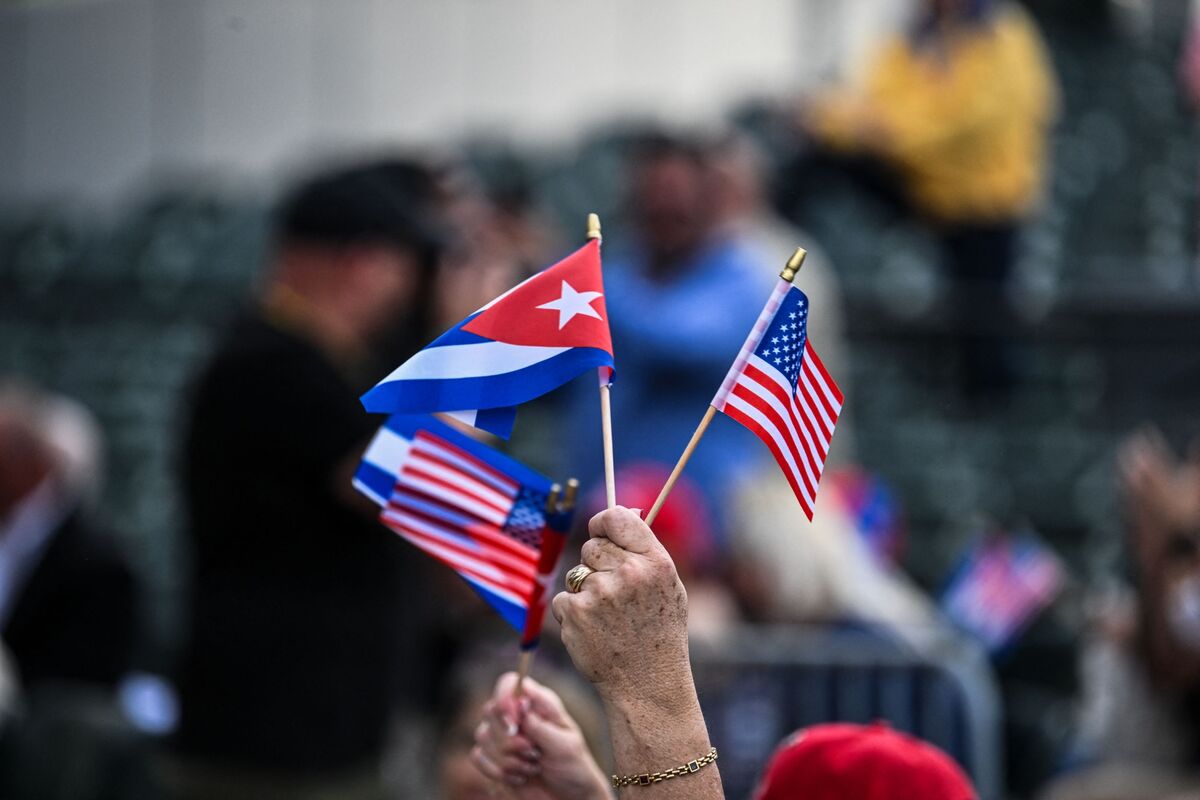
The Trump administration is stepping up pressure on Cuba, including indicting former President Raúl Castro, deploying additional military assets to the region, and releasing a message blaming Havana’s government for the country’s economic troubles. The piece frames Venezuela as a potential blueprint for future US intervention in Cuba, signaling elevated geopolitical and policy risk for the region. While no direct market data is provided, the escalation could affect regional risk assets and defense-related sentiment.
The important read-through is not a near-term regime change in Havana, but a higher-probability tightening of the coercive perimeter around the island. That tends to hit the most policy-sensitive channels first: tourism booking flow, remittance rails, fuel access, and any logistics or transport names with Caribbean exposure. The second-order effect is that pressure on Cuba often spills into broader Latin America risk premia, because investors reprice the odds of a more aggressive US posture toward left-leaning governments and state-owned systems elsewhere.
A Venezuela-linked blueprint matters because it suggests the administration is testing a playbook that combines sanctions signaling, military posturing, and elite-targeted legal pressure. That usually creates a fast market reaction in local sovereign spreads and FX, but the economic damage shows up with a lag of weeks to months through imports, fuel, and consumer shortages. The key catalyst to watch is whether rhetoric turns into enforcement: tighter maritime interdiction, financial sanctions on third-country facilitators, or explicit secondary-sanctions threats would be the regime-stress accelerants.
The market is probably underpricing the asymmetry for regional service providers and overpricing the durability of the status quo in Cuba-linked cash flows. Even without direct public equities to short, the cleaner expression is through Latin America EM risk hedges and defense beneficiaries tied to southern-command activity. The contrarian view is that sanctions fatigue and humanitarian blowback can blunt follow-through; if the administration stops at signaling, the trade decays quickly and any spike in geopolitical risk premia should mean-revert within 1-3 months.
AI-powered research, real-time alerts, and portfolio analytics for institutional investors.
Request DemoOverall Sentiment
moderately negative
Sentiment Score
-0.35
