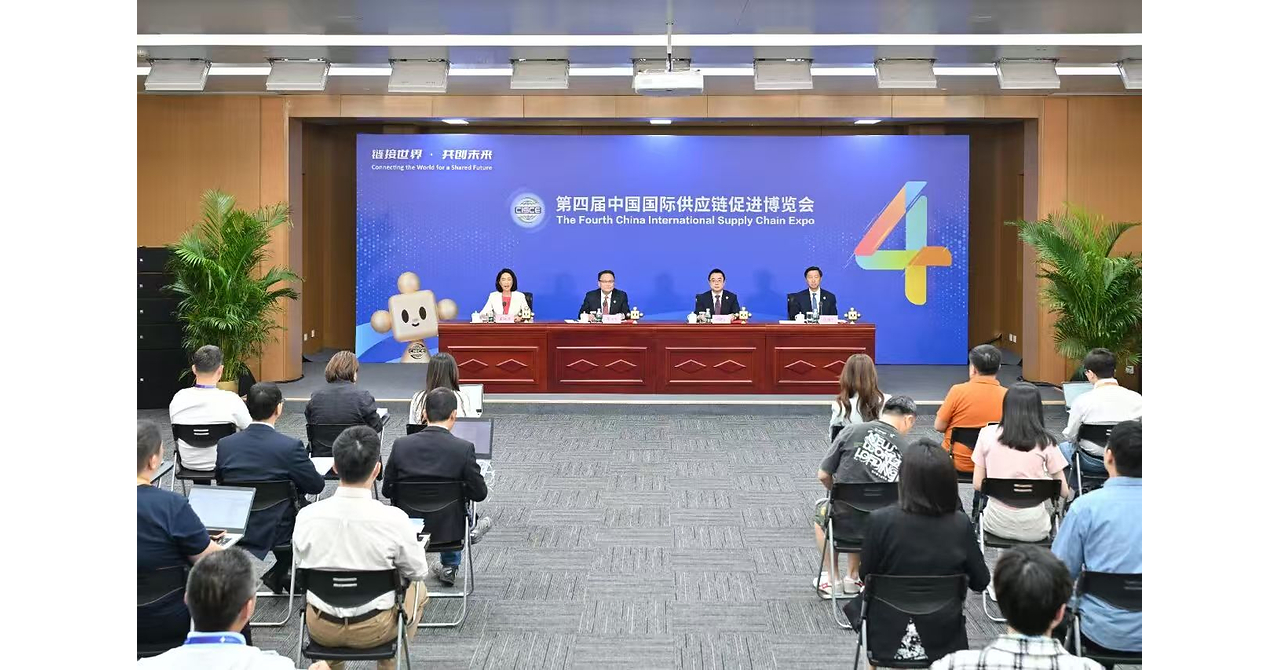
Die 4. China International Supply Chain Expo (CISCE) in Beijing endete mit Rekordzahlen: 676 Aussteller aus 85 Ländern, 1.200+ Aussteller/Partner insgesamt sowie ein Plus bei Vor-Ort-Fachbesuchern von +22%. Die Veranstaltung verzeichnete 223 ausländische Unternehmensdelegationen (+29,7%) und 62 Mio. Live-Stream-Views, während 43.000 Partnerkontakte geknüpft wurden und Frühbucher für CISCE 2027/5. Ausgabe um +12,7% auf 115 stiegen. Mit dem Start der Initiative „Digital and Intelligent CISCE“ und dem Ausbau der „Digital and Intelligent Technology Chain“ (inkl. eigenem KI-Bereich) sowie 161 neuen Produkt-/Technologie-Debüts setzt die Messe einen klaren Fokus auf digitale und innovative Supply-Chain-Lösungen.
This reads more like a policy/positioning signal than a direct earnings catalyst. The main market mechanism is sentiment: China is trying to reinforce itself as an indispensable node in global trade flows while attaching a digital/AI wrapper to that message. That is mildly supportive for China-exposed industrial automation, logistics, and enterprise software names, but the effect is too soft to change near-term fundamentals without evidence of actual procurement, capex, or export-order conversion.
Second-order, the real benefit may accrue to firms that help Chinese manufacturers optimize throughput and inventory, not to broad China beta. If the digital-supply-chain theme gains budget allocation, the winners are likely automation, machine vision, warehouse software, and industrial robotics; the losers are the “decoupling” trade, because this is a reminder that multinationals are still willing to keep optionality in China. But this does not negate tariffs/export controls, so any rally in China cyclicals should be treated as tactical rather than structural.
The contrarian view is that the market may overread a high-visibility conference as evidence of demand recovery. The falsifier is simple: if next 1-2 quarters of China export orders, PMI new orders, or industrial capex do not improve, the narrative fades quickly. Time horizon matters: day-1 reaction may be positive for China proxies; the 1-3 month trade is about whether this shows up in hard data; the 6-18 month view depends on whether AI-enabled supply-chain investment becomes an actual budget line rather than a slogan.
AI-powered research, real-time alerts, and portfolio analytics for institutional investors.
Request DemoOverall Sentiment
mildly positive
Sentiment Score
0.25
