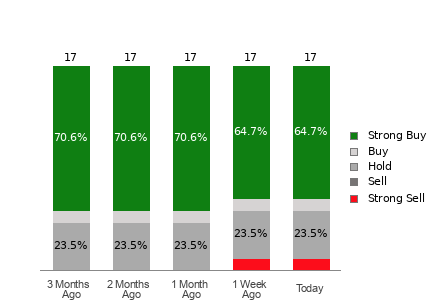
e.l.f. Beauty (ELF) shows a disconnect between sell‑side recommendations and earnings revisions: the stock's average brokerage recommendation (ABR) is 1.74 based on 17 firms (11 Strong Buy, 1 Buy — 64.7% and 5.9% respectively), yet the Zacks Consensus Estimate for the current year fell 31.3% over the past month to $2.93. The magnitude and unanimity of downward EPS revisions have produced a Zacks Rank #5 (Strong Sell), suggesting materially weaker near‑term fundamentals and potential downside pressure despite broker optimism; investors should weigh the consensus estimate deterioration more heavily than the favorable ABR.
Market structure: The sharp 31.3% one‑month cut in ELF’s FY EPS consensus to $2.93 and Zacks Rank #5 signals demand softening in discretionary beauty—direct losers are ELF and other digitally native beauty brands; winners are incumbents with scale (Ulta/Estee Lauder) and private‑label/discount channels that can win share via promotions. Pricing power is likely to erode near term (next 1–3 quarters) as ELF liquidates inventory or increases promotions, compressing GM by an estimated 200–400bps if trends persist.
Risk assessment: Tail risks include a large inventory write‑down (>$50–100m) or a liquidity covenant breach if sales decline >20% YoY; operational risks include supply chain destocking accelerating into Q4. Immediate horizon (days–weeks) expects elevated equity volatility; short‑term (1–3 months) risk is earnings/guidance misses; medium term (3–12 months) depends on cyclical consumer recovery and cost actions.
Trade implications: Direct play: prioritize short/put exposure to ELF into the next earnings window (30–90 days) and rotate proceeds into secular tech winners—NVDA for AI/quantum optionality (3–9 months). Use pair trades to isolate consumer weakness: short ELF vs long NVDA (or MSFT) to hedge macro beta; consider options (3‑month put spread on ELF 10–20% OTM to cap cost, and 3–6 month outright calls on NVDA funded by selling short‑dated calls).
Contrarian angles: Consensus misses corporate actions—ELF could announce SKU cuts, cost saves, or buybacks that create a short‑squeeze; if consensus recession risk fades, ELF shares may recover sharply (20%+). The market may be overpricing permanent share loss; size positions small (1–3% of book) and watch inventory/gross margin inflection points and management commentary at next quarter for reversal signals.
AI-powered research, real-time alerts, and portfolio analytics for institutional investors.
Request DemoOverall Sentiment
moderately negative
Sentiment Score
-0.60
Ticker Sentiment
