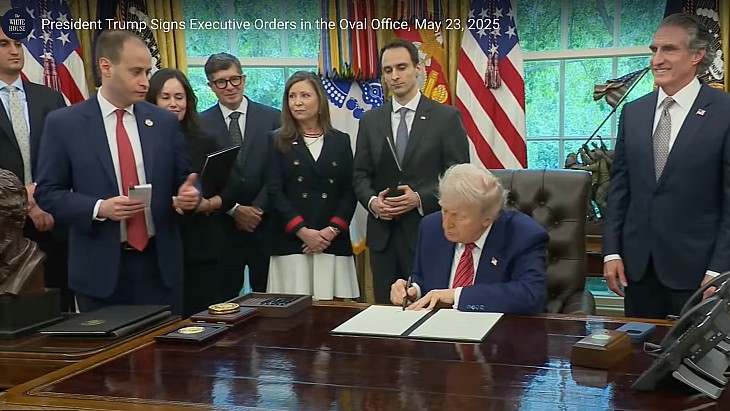
President Trump signed executive orders aimed at revitalizing the US nuclear energy sector, targeting a quadrupling of nuclear capacity to 400GW by 2050. The orders include measures to expedite reactor licensing decisions to within 18 months, incentivize the construction of new reactors and upgrades to existing facilities, and strengthen the domestic nuclear fuel cycle. This initiative seeks to re-establish the US as a leader in nuclear energy, driven by concerns over energy independence, national security, and competition in advanced technologies.
The Trump administration has announced a significant strategic pivot towards revitalizing the U.S. nuclear energy sector through a series of executive orders, aiming to quadruple domestic nuclear capacity from 100GW to 400GW by 2050. This ambitious plan includes Department of Energy (DOE) prioritization for 5GW in power uprates to existing reactors and the construction of 10 new large reactors with complete designs by 2030. A core component of this initiative is regulatory reform, mandating the Nuclear Regulatory Commission (NRC) to make licensing decisions for new reactor construction and operation within a maximum of 18 months, alongside a reorganization and potential staff reductions at the NRC to expedite processes. The orders are driven by objectives to re-establish U.S. global leadership in nuclear energy, enhance energy independence, ensure national security through uninterruptible power supplies, and counter foreign dominance in reactor design, noting that 87% of reactors installed worldwide since 2017 use non-U.S. designs. Furthermore, the directives aim to strengthen the entire domestic nuclear fuel cycle, calling for plans within 120-240 days to expand uranium conversion and enrichment capabilities, manage spent fuel, develop advanced fuel cycle capabilities including recycling, and end the 'surplus plutonium dilute and dispose' program in favor of reprocessing for advanced reactor fuel. The initiative also seeks to expedite the deployment of advanced reactors, including SMRs and microreactors, with goals for DOE-facilitated test reactors to be operational within two years of application and a pilot program for three commercial advanced reactors to reach criticality by July 4, 2026. Workforce development programs are also slated for expansion. The Nuclear Energy Institute has expressed strong support for these measures, viewing them as essential for national security and energy goals.
AI-powered research, real-time alerts, and portfolio analytics for institutional investors.
Request DemoOverall Sentiment
strongly positive
Sentiment Score
0.80
