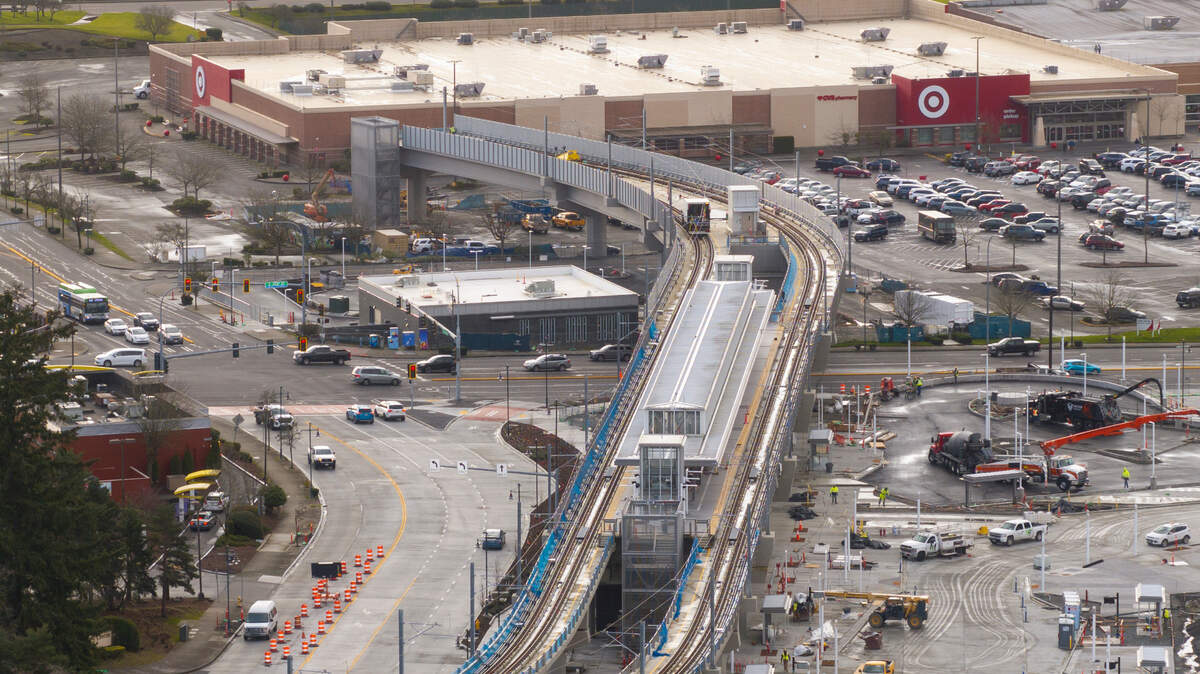
Sound Transit approved an updated ST3 plan that keeps the Tacoma Dome Link Extension on schedule for 2035 completion and fully funds the $6.6 billion project. The $1.7 billion T Line expansion to Tacoma Community College is also fully funded, while the Sounder extension south from Lakewood remains funded only for planning, with $865 million still needed for design and construction. The board also approved a 1.372% car-rental sales tax increase, raising the rate to 2.172% and expected to generate about $300 million over the life of the plan.
The key market read-through is not about transit demand today; it is about a multi-year reordering of public capex certainty across the Puget Sound corridor. By de-risking the largest South Sound projects while pushing the funding gap into later phases, the board has improved visibility for design, utility work, right-of-way acquisition, and engineering consultants, even though the ultimate construction curve remains back-ended. That should matter more for local contractors and engineering firms than for headline transit operators, because the early spend is where fee revenue and backlog recognition begin.
The second-order effect is competitive allocation: projects that remain fully funded will likely pull permitting, labor, and materials capacity away from partially funded corridors once they move from planning into execution. In practice, that can support pricing power for civil contractors and rail systems integrators in the region, while also worsening schedule risk for the unfunded pieces that are now effectively waiting behind a tighter labor and permitting stack. The board’s willingness to extend the financial plan also reduces near-term political pressure, which lowers the probability of a disruptive reset but raises the risk of slower, more incremental award flow.
The contrarian view is that investors may overestimate the sign of the vote. A project being “on schedule” in a public plan does not translate into de-risked cash flows for years, and the real catalyst is still the transition from policy approval to funded construction packages. For stocks sensitive to municipal infrastructure spend, the trade is less about near-term revenue and more about backlog optionality in 2028-2035, which means current price reactions should be muted unless a company has unusually high regional exposure.
The main downside risk is that inflation in labor, concrete, and rolling-stock supply chains reopens the funding gap before shovels hit ground, forcing scope reductions or further deferrals. If that happens, the losers are likely the smaller subcontractors and local suppliers most dependent on Washington transit work, while the board can still preserve the narrative by shifting timelines rather than canceling projects outright.
AI-powered research, real-time alerts, and portfolio analytics for institutional investors.
Request DemoOverall Sentiment
mildly positive
Sentiment Score
0.18
