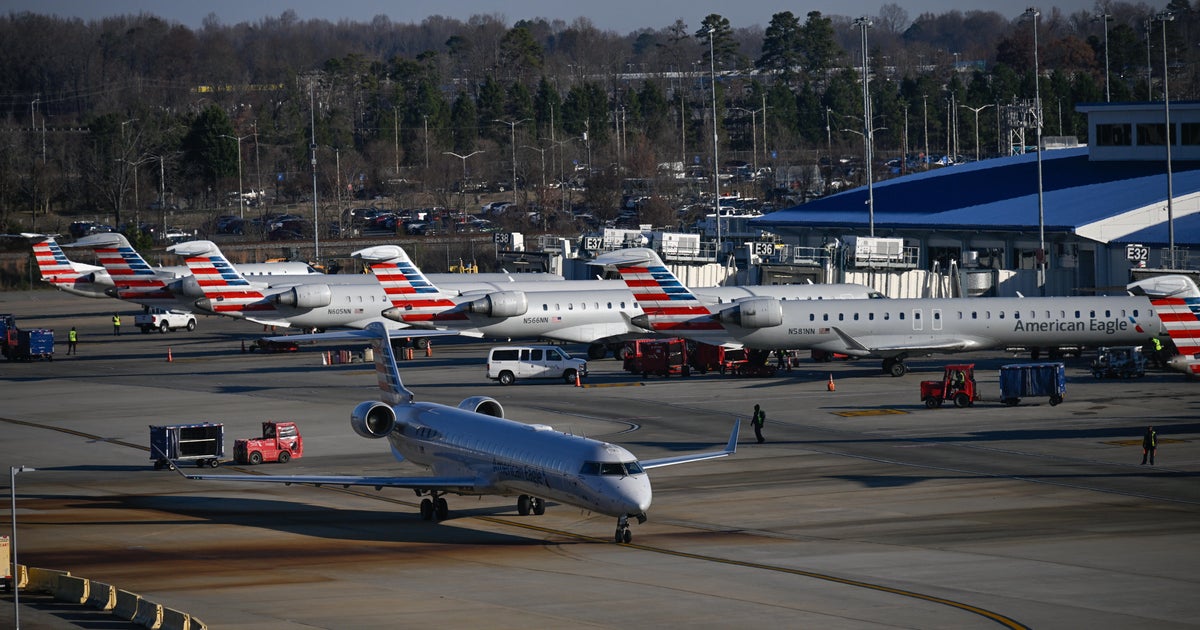
An American Airlines Flight 1197 pilot reported nearly colliding with a CLT ground vehicle while taxiing at Charlotte Douglas International Airport, prompting an FAA review and an airport investigation. The incident is a safety lapse for airport operations but appears isolated, with no reported damage or injuries. American said the truck was not affiliated with the airline and praised the crew's response.
This is less about a one-off near miss and more about a visible stress test of airport ground-ops reliability at a time when regulators are already primed to scrutinize ramp safety. The second-order effect is that operational incidents of this type tend to increase procedural friction: more slowdowns, more conservative taxi handling, and more inspections, which can raise block times and modestly degrade airline on-time performance even when no true accident occurs. That matters because network carriers are already selling reliability as part of the product; any incremental erosion pushes revenue management teams toward more padding and can pressure unit costs.
For AAL specifically, the direct earnings impact is likely negligible, but the asymmetry is in headline risk: repeated safety-adjacent events can widen the gap between “cheap because cyclical” and “cheap because fragile.” In the near term, this is a days-to-weeks sentiment overhang rather than a fundamental demand shock. The more important question is whether the FAA response becomes policy memory, leading to tighter ramp-vehicle controls and slower airport throughput across the system, which would be a modest negative for all hub-dependent airlines and a relative positive for carriers with better operational track records.
The market is probably underpricing how quickly a cluster of ground-incident headlines can translate into insurance, compliance, and vendor-management costs for airports and carriers, even if none of those costs hits the income statement immediately. The contrarian view is that these incidents can also accelerate procurement of better transponders, geofencing, and ground-vehicle telemetry, benefiting aviation tech and airport-systems vendors more than airlines. In that sense, the trade is not to fade AAL aggressively on a single event, but to look for a relative-value short in the most operationally stretched names if this becomes a pattern.
AI-powered research, real-time alerts, and portfolio analytics for institutional investors.
Request DemoOverall Sentiment
mildly negative
Sentiment Score
-0.25
Ticker Sentiment
