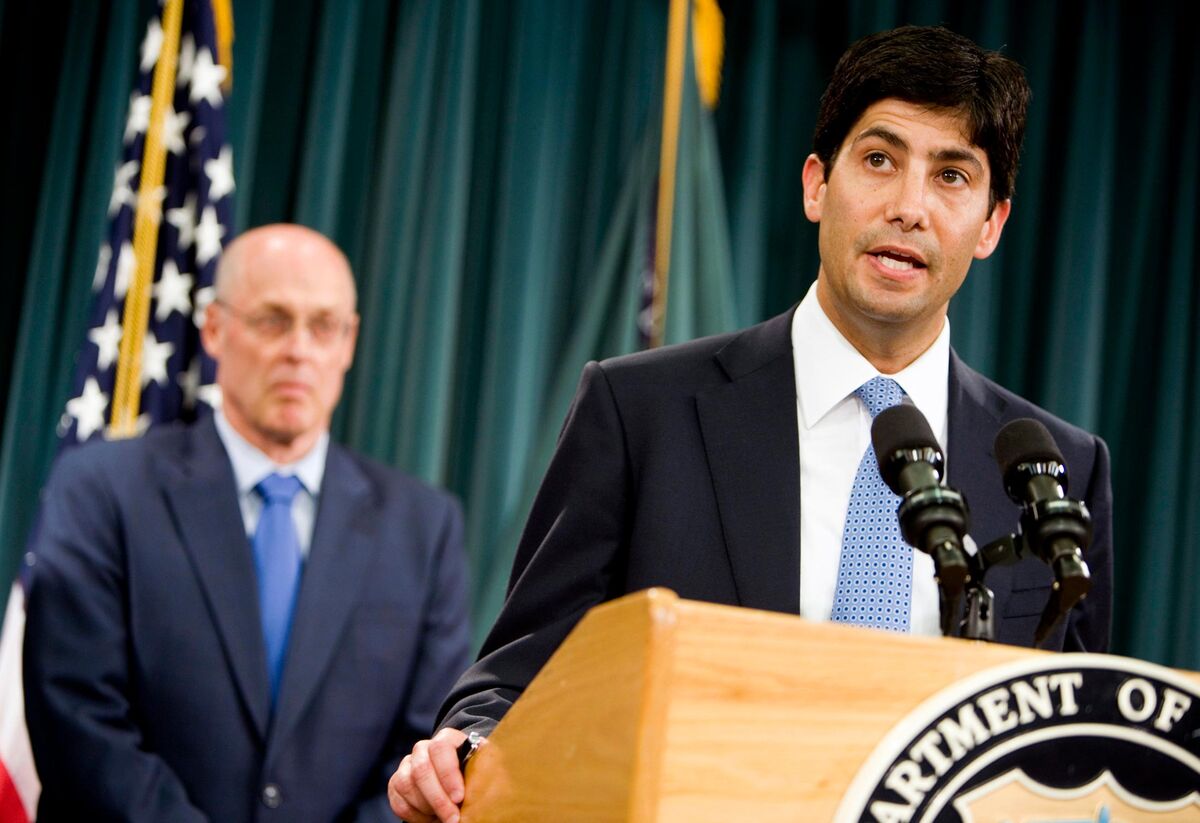
Kevin Warsh, Trump’s nominee to succeed Jerome Powell as Fed chair, is being scrutinized for his long-standing hawkish stance on inflation and rate policy. The article highlights that he supported emergency rate cuts in 2008 but warned about inflation risks, underscoring uncertainty around how he would balance rate cuts with price stability if confirmed. Market impact is moderate because the Fed chair nomination could influence expectations for interest rates, inflation, and central bank independence.
The market is underpricing the regime risk embedded in a chair who may prioritize inflation credibility over growth stabilization. That tends to steepen the front end volatility curve first, but the bigger second-order effect is on duration-sensitive assets that have been trading off the assumption of a cleaner disinflation path; if policy reaction functions skew hawkish, the repricing is less about the next meeting and more about the next 6-18 months of real-rate expectations.
The clearest beneficiaries are short-duration cash flows and balance-sheet quality: banks with sticky deposit franchises, insurers, and energy names with self-funded capex. Losers are the usual long-duration leverage pockets, but the more interesting knock-on is to private equity and venture valuation marks, where a higher terminal rate assumption can compress exit multiples even if nominal GDP stays decent. That creates a lagged earnings headwind for IPO pipelines, credit comp, and anything financed off cheap duration.
The political overlay matters because the biggest risk is not just higher rates, but a loss of policy coherence that widens term premia. If investors start demanding an independence discount, the move can propagate into mortgage rates, housing turnover, and small-business credit within quarters, not years. The reversal trigger is a fast growth scare or labor-market deterioration that forces the Fed to pivot back to insurance cuts; otherwise, the path of least resistance is a sticky higher-for-longer narrative.
Consensus is likely too focused on whether cuts come sooner or later, missing that a hawkish Fed chair can raise volatility without delivering a clean directional shock. In that setup, outright bearish duration trades can be crowded, while volatility and curve-steepener structures may offer better risk/reward than simple shorts. The best expression is to be paid for convexity rather than linear rate exposure.
AI-powered research, real-time alerts, and portfolio analytics for institutional investors.
Request DemoOverall Sentiment
neutral
Sentiment Score
-0.05
