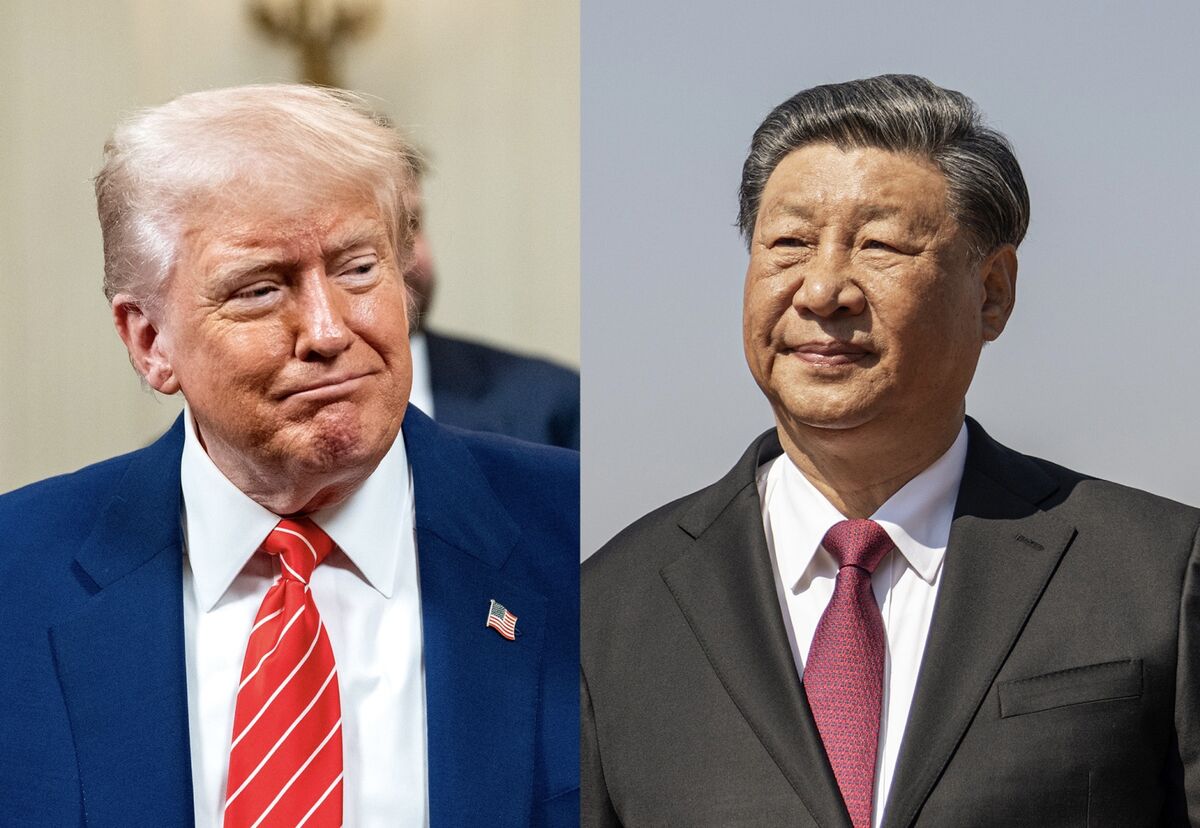
A Trump administration official indicated that a phone call between President Trump and Chinese President Xi Jinping is likely this week amidst ongoing trade tensions between the US and China. While the official did not confirm a specific date or guarantee that the call would occur, the potential dialogue suggests a possible effort to address the current trade dispute.
A Trump administration official has indicated a potential phone call between US President Donald Trump and Chinese President Xi Jinping is likely this week, a development occurring while the world's two largest economies remain entrenched in significant trade turmoil. While this prospect of high-level dialogue, reported by CNBC as an administration expectation, offers a glimmer of potential de-escalation, the official provided no specific date and did not guarantee the call would materialize, underscoring the prevailing uncertainty reflected in the "uncertain" tone signal. The market's "mildly positive" sentiment (score 0.15) and moderate impact score (0.6) suggest that investors are cautiously optimistic about any move towards resolution, though the lack of confirmation tempers expectations. This situation directly impacts key themes such as "Trade Policy & Supply Chain" and "Tax & Tariffs," with broader geopolitical implications.
AI-powered research, real-time alerts, and portfolio analytics for institutional investors.
Request DemoOverall Sentiment
mildly positive
Sentiment Score
0.15
