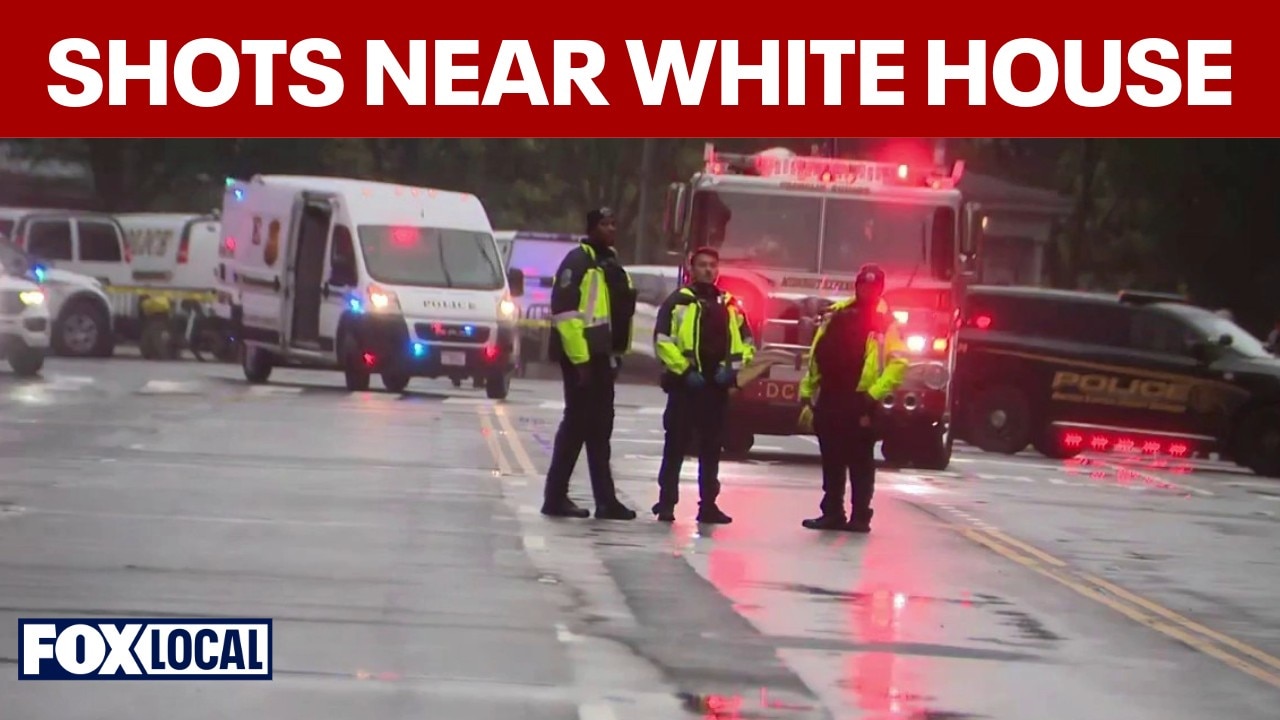
Gunshots were reported near the White House around 6 p.m. ET on Saturday, prompting a lockdown and a response from D.C. police, the Secret Service, and the FBI. Reports say a gunman fired three times at the White House, though details remain unconfirmed and the story is still developing. The incident is negative from a security and political-risk perspective but is likely to have limited direct market impact unless the situation escalates.
The immediate market effect is not about direct economic damage, but about a regime shift in perceived tail risk around U.S. domestic stability. In the next 1-3 sessions, the most likely response is a bid for liquid safety trades: front-end rates, USD, gold, and defense-adjacent names, while high-beta cyclicals and consumer discretionary should underperform if media coverage broadens into a security/political narrative. The key second-order effect is that even a failed or contained incident can increase the probability of tighter security protocols and a more visible federal response, which tends to support surveillance, communications, and perimeter-security vendors more than broad defense primes.
The bigger risk is not the event itself but any follow-on escalation in the next 24-72 hours: copycat activity, misinformation, or evidence of a wider domestic security lapse. That would widen the “political instability” discount into Monday trading and could briefly lift implied volatility across equities, especially in rate-sensitive and consumer-facing sectors. If authorities quickly frame this as isolated and there are no additional incidents, the move should fade within days; the market will revert to the pre-event macro tape, but with a small persistent premium in domestic security-related equities.
Consensus will likely overfocus on headline fear and underweight the beneficiaries with recurring budget exposure. The most interesting exposure is not pure defense, but companies tied to secure communications, body cameras, access control, and federal IT/security spend, where one-off incidents often accelerate procurement timelines by quarters rather than years. Conversely, any knee-jerk bid in broad defense ETFs could be overdone if the incident proves isolated, because the revenue impact for primes is usually deferred and diffused through appropriations cycles.
For now, the trade is tactical rather than structural: play the risk-off impulse for 1-5 days, then fade if there’s no escalation or policy response. If the story develops into a broader domestic security investigation, the second-order winner set expands to cybersecurity and federal surveillance, with a longer-duration bid than the initial headline move.
AI-powered research, real-time alerts, and portfolio analytics for institutional investors.
Request DemoOverall Sentiment
moderately negative
Sentiment Score
-0.35
