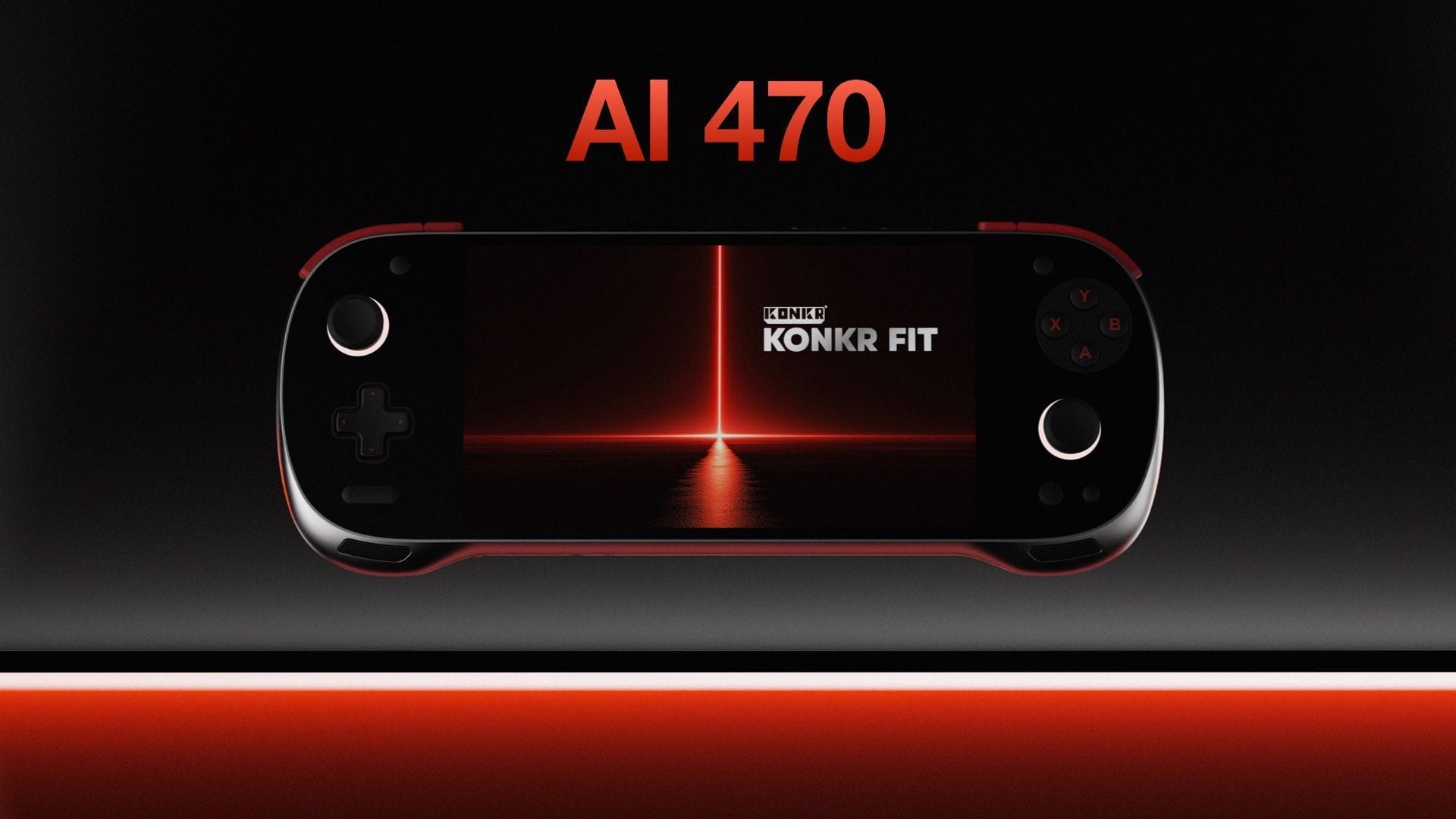
Ayaneo's KONKR FIT, a new Windows gaming handheld in the KONKR sub-brand, is confirmed to use an AMD Ryzen AI 9 HX 470 (4 Zen 5 + 8 Zen 5c cores with RDNA 3.5), a 7-inch OLED display and an approximately 80 Wh battery; AMD lists the HX 470 as scalable between 15–54 W. Key commercial details (price, RAM, storage, TDP configuration and Windows version) remain undisclosed, but the device is positioned to compete with premium handhelds such as the ROG Ally and Legion Go S and may command a higher price given its high-end SoC and expected larger cooling/form factor.
Market structure: AMD is the clear beneficiary (incremental CPU/GPU attach and royalties) but the direct revenue impact is likely modest in the near term—think low tens-to-low hundreds of millions annual incremental revenue if Ayaneo achieves 100k–500k unit shipments; that is <1% of AMD’s topline but positive for segment mix and design wins over 12–24 months. Handheld OEMs with deep cooling/IP (ASUS/Lenovo) face renewed competition which can pressure ASPs in the mid-tier (potential 5–15% downward pressure on sub-$900 devices if Ayaneo prices aggressively). Supply/demand: OLED and 80Wh battery supply tightness could cap near-term ramp and keep component costs elevated through Q3–Q4 2026.
Risk assessment: Tail risks include export controls on AI-capable chips, thermal/TDP failures leading to warranty recalls, or Ayaneo failing to hit price/volume targets—each could create a >20% hit to OEM valuations and 3–6% temporary selloff in AMD if design wins are rescinded. Immediate (days) reaction should be muted; short-term (weeks–months) hinge on MSRP/preorder data and reviews; long-term (quarters) depends on ecosystem (software, peripherals) adoption. Hidden dependencies: Windows licensing, OLED panel yields, and battery cell contracts—if any of these stall, gross margins for handheld makers can compress >200–500bps.
Trade implications: Tactical: play AMD upside via limited-risk option spreads sized 2–3% portfolio (3-month call spreads 8–20% OTM depending on current spot) ahead of pricing/preorder cadence; avoid direct exposure to private Ayaneo until pricing and >50k first-month preorders are confirmed. Relative value: overweight semiconductor capex beneficiaries (ASML, LRCX) by 1–2% to capture higher fab investment for AI-capable mobile SoCs; fund by trimming consumer IT hardware exposure (reduce HPQ by 1–2%).
Contrarian angles: Consensus underestimates the operational risk of packing 54W TDP into a handheld—if reviews reveal thermal/returns >5%, small OEMs could face outsized warranty costs and inventory write-downs, creating short opportunities. Conversely, if Ayaneo proves a hit, design-win momentum could be a multi-quarter positive re-rating for AMD well before revenue scale shows up—this asymmetric outcome favors small, time-boxed long option positions. Historical parallel: niche, high-margin form-factor wins (e.g., Switch-era) initially move valuations more for incumbents with ecosystem leverage than for the small OEM itself.
AI-powered research, real-time alerts, and portfolio analytics for institutional investors.
Request DemoOverall Sentiment
mildly positive
Sentiment Score
0.30
Ticker Sentiment
