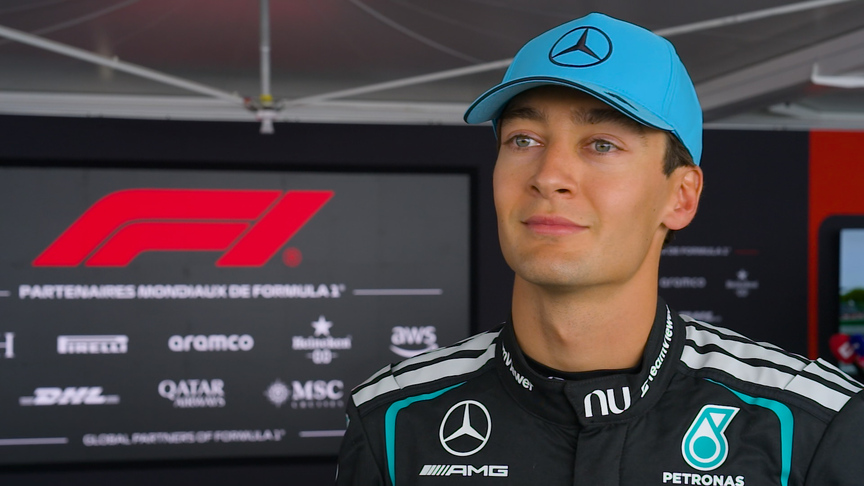
George Russell won the Canada Sprint in 28:50.951, finishing 1.272 seconds ahead of Lando Norris and 1.843 seconds ahead of Kimi Antonelli. McLaren placed two cars in the top four, while Max Verstappen and Arvid Lindblad took the final points in P7 and P8. The article is primarily race coverage with no material corporate or market-moving financial implications.
RACE is a clean sentiment beneficiary here, but the larger edge is that this is a visibility event rather than a fundamental inflection: the company gets a short-lived bump in engagement, not a durable change in earnings power. The more important second-order effect is on sponsor and hospitality demand into the weekend—front-running on premium inventory, local travel, and on-site activation tends to improve when the home team is competitive, even if the balance sheet impact is immaterial. In markets, that supports a modest positive read-through for the event-owner narrative and for adjacent leisure-demand proxies rather than for the racing result itself.
The competitive signal is that Mercedes’ intra-team friction can create incremental headline risk for the team’s commercial story, but not enough to matter unless it spills into points loss over several race weekends. The real medium-term market implication is variance compression for the championship leaders: tighter gaps keep media value elevated and reduce the odds of a runaway season, which is better for season-long fan engagement and sponsor ROI. That effect matters more over months than days and is most relevant if the team continues to secure front-row starts and podium coverage.
Contrarianly, the market may overestimate how much a Sprint result tells us about the true pace hierarchy. Sprint weekends have high noise from tire state, traffic, and setup tradeoffs, so the right way to trade this is on the persistence of the story, not the podium itself. If Mercedes can’t convert this into a strong qualifying and race result, the headline alpha fades quickly; if they do, you get a small but tradable uplift in event-related attention and branded exposure into the next 1-2 race weeks.
AI-powered research, real-time alerts, and portfolio analytics for institutional investors.
Request DemoOverall Sentiment
neutral
Sentiment Score
0.05
Ticker Sentiment
