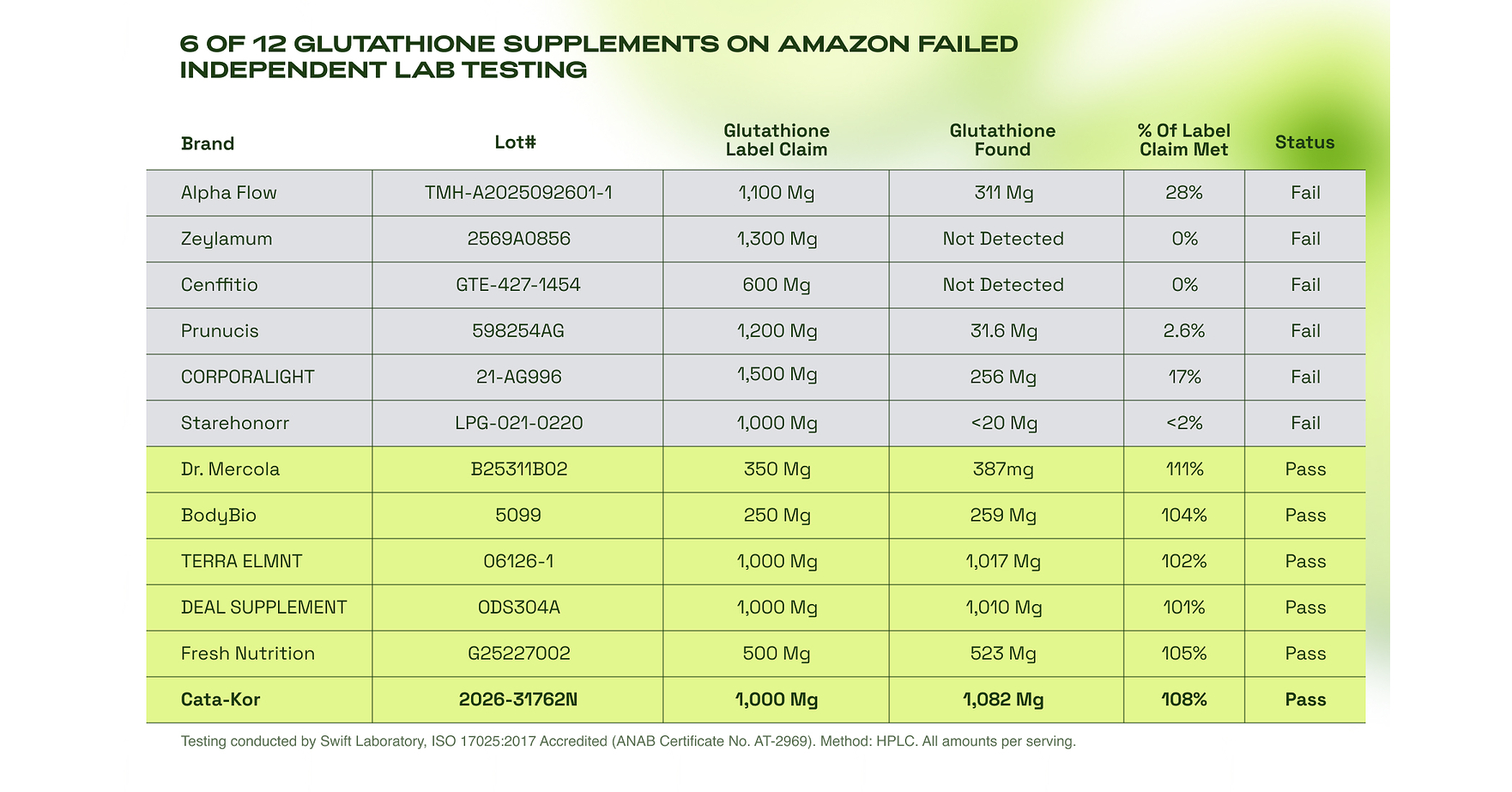
Independent HPLC testing of 12 top-selling glutathione supplements sold on Amazon (Apr–Jun 2026) found only six met or exceeded label claims (101%–111% of stated amounts). The other six came in below label claims, including two with no detectable glutathione and one under 2% of the stated dose, raising consumer protection concerns. Cata-Kor reported its liposomal glutathione met all measured parameters, including 1,082 mg L-Glutathione Complex per serving vs. a 1,000 mg label claim.
This is a reputation-and-governance story, not a near-term revenue story for AMZN. The key market mechanism is whether consumers and regulators start to view Amazon’s third-party marketplace as a recurring quality-control gap in high-margin health categories; if that narrative sticks, the risk is lower conversion and higher compliance friction, not an immediate GMV hit.
Second-order winners are premium, verifiable brands and first-party sellers that can credibly spend on testing and packaging; low-credibility marketplace sellers lose as platforms tighten documentation. For Amazon, stricter enforcement could actually be net positive over 6-18 months if it improves trust, but it may shave assortment and ad inventory in the near term. The bear case only matters if the issue broadens from one product class to a pattern of regulator-driven audits or class actions.
Contrarian view: this is a competitor-funded press release, so the market should discount the framing until there is independent enforcement or repeated cross-category evidence. In the next 30-45 days, the stock reaction should be faded unless we see FTC/FDA/state AG action, Amazon policy changes, or a second wave of negative testing across other consumables. Falsifiers are simple: no follow-through, no seller-policy tightening, and no measurable deterioration in marketplace conversion metrics.
AI-powered research, real-time alerts, and portfolio analytics for institutional investors.
Overall Sentiment
mildly negative
Sentiment Score
-0.25
Ticker Sentiment
