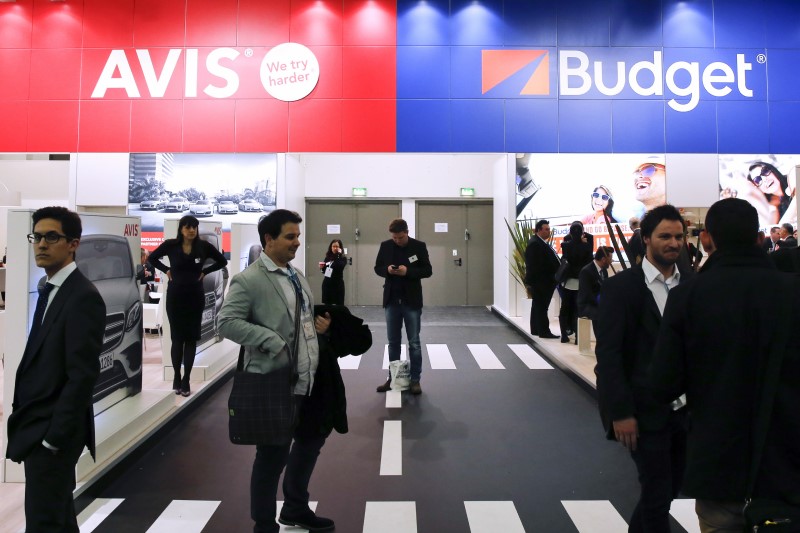
Verra Mobility was downgraded to Neutral from Outperform by Baird, with the price target cut to $8 from $20 after Avis issued a termination notice for a contract representing about 13.5% of 2025 revenue. The company also revised 2026 guidance to revenue of $985 million-$995 million, adjusted EBITDA of $380 million-$385 million, and adjusted EPS of $1.19-$1.25. Q1 2026 results were modestly ahead of expectations, but the Avis loss and risk to other commercial contracts are weighing on the stock.
This is less a single-contract story than a repricing of the entire commercial segment’s terminal value. When one large customer exits, the market starts extrapolating renewal risk across the rest of the book, and the equity de-rates much faster than the P&L because leverage magnifies any modest revenue gap. The key second-order effect is that enterprise value is now being anchored to a much lower confidence interval for 2027 cash flows, which is why comp-based downside can still coexist with a seemingly modest guide cut.
The biggest near-term risk is not the Avis revenue loss itself, but the signaling effect into the 2027 renewals with other concentrated clients. If one more large commercial customer pushes back, the market will likely shift from “temporary setback” to “business model impairment,” and the multiple compresses before earnings have time to fall. That means the stock can remain weak for months even if the company executes on cost actions, because the next catalyst is binary and event-driven rather than gradual.
There is a potential contrarian angle: the selloff may be overshooting if the street is treating all commercial revenue as fungible when the contract economics are more client-specific. If management can demonstrate rapid redeployment of fixed costs and preserve 2026 EBITDA, the market may start to underwrite a cleaner post-termination run-rate by late summer. But the burden of proof is high; in leveraged software-like service models, a small change in renewal probability can have a disproportionate impact on equity value.
Relative value is more interesting than outright heroics. The stock now screens like a stressed cash-flow compounder rather than a growth name, so any long case depends on proving that renewal risk is idiosyncratic, not structural. Until then, the path of least resistance is for the market to price in one or two more negative headlines before stabilizing.
AI-powered research, real-time alerts, and portfolio analytics for institutional investors.
Request DemoOverall Sentiment
strongly negative
Sentiment Score
-0.62
Ticker Sentiment
