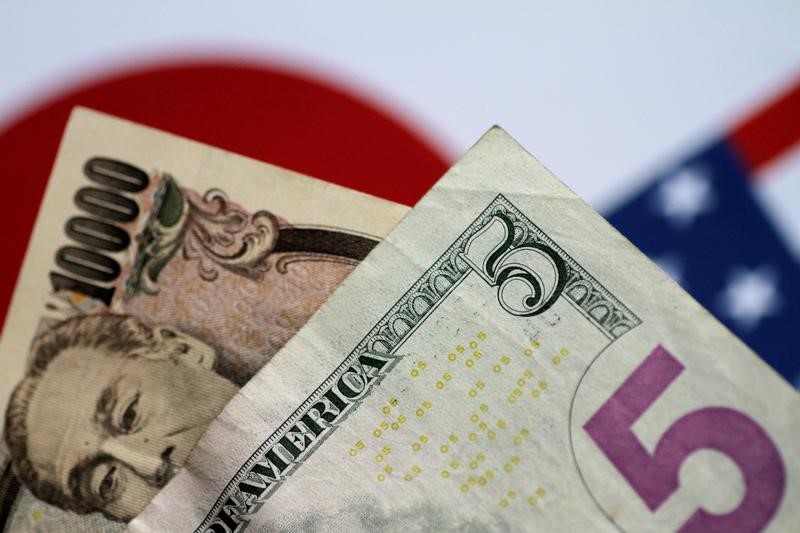
The Bank of Japan held rates at 0.75% but signaled further hikes as it raised inflation expectations, with Capital Economics saying a 25 bps June hike now looks likely. Asian FX weakened broadly as U.S.-Iran tensions persisted and oil prices extended their rally, while markets also await the Fed meeting, Australian inflation data, and April Chinese PMI readings. The yen firmed modestly, with USD/JPY down 0.2% toward 159.
The cleanest second-order trade is not “higher oil” by itself, but a widening dispersion across Asia between energy importers and exporters. Countries with large current-account deficits and sticky domestic inflation will face the worst combination of weaker FX, tighter policy, and margin compression; that tends to hit rate-sensitive cyclicals and domestically leveraged balance sheets first, long before headline GDP shows stress.
The BOJ’s tone matters more for global duration than the modest move in yen spot. If Japan is moving from passive suppression toward even a slow hiking path while domestic inflation is becoming structurally less transitory, the marginal buyer of U.S. Treasuries and global credit may become less price-insensitive. That creates a subtle but important risk of higher term premia over the next 3–6 months, especially if U.S. data stay firm and the Fed resists signaling cuts.
The market is likely underpricing how quickly geopolitical energy shocks can translate into FX policy divergence. A prolonged Strait of Hormuz risk would force more Asian central banks to defend currencies or accept imported inflation, which is bearish for local consumer discretionary, airlines, and industrials; meanwhile, U.S. energy equities and tanker-linked names gain a more durable earnings tailwind than the spot oil move alone implies. The contrarian angle is that the yen rally may be limited unless the BOJ follows through; if it does not, this is a tactical squeeze, not a regime shift.
The key reversal trigger is any de-escalation in the Middle East or a Fed statement that re-anchors real rates lower without a growth scare. In that case, the dollar likely retraces first, and the most crowded short-yen / long-dollar expressions unwind faster than people expect over a 1–2 week horizon.
AI-powered research, real-time alerts, and portfolio analytics for institutional investors.
Request DemoOverall Sentiment
neutral
Sentiment Score
-0.05
