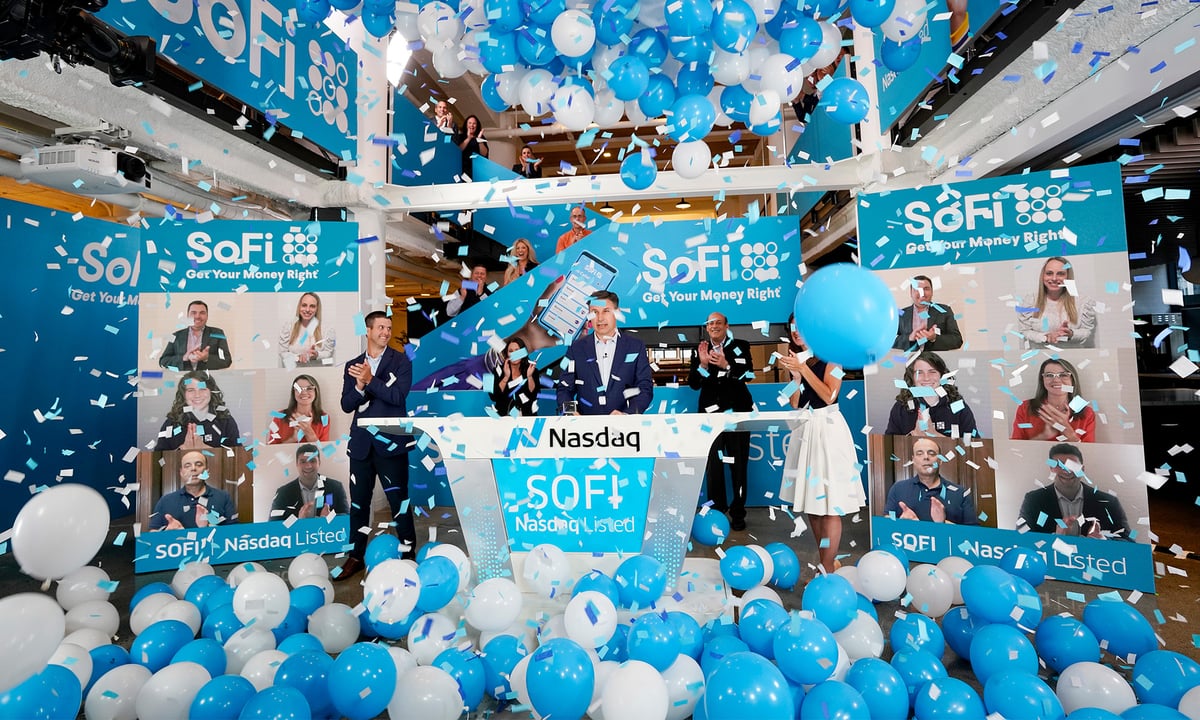
CEO Anthony Noto purchased 56,000 SoFi shares at an average $17.88 (~$1.0M) in early March. SoFi shares are down ~28% YTD and ~35% below November highs, while management is signaling strong guidance for 2026 and the company remains profitable. The buy is presented as a conviction/’buy the dip’ signal for investors, though broader market volatility and sector rotation temper the immediate upside.
An increase in insider alignment has asymmetric market effects beyond signaling: it tightens free float and can mechanically reduce borrow availability, steepening option skew and increasing the odds of episodic squeezes during low-liquidity windows. Monitor hard-to-borrow tags, 30-day borrow rates, and changes in implied vs realized vol over the next 4–12 weeks as early indicators of a supply-driven re-rating rather than fundamentals-driven moves.
On competitive dynamics, the payoff for an integrated fintech comes from cross-sell economics and sticky funding (deposits + cash management), which magnifies marginal returns on originations versus single-product peers. The second-order threat is that incumbent banks can blunt that advantage by repricing deposit offers and accelerating partnerships, compressing NIMs within a 6–12 month horizon and forcing fintechs to either raise marketing spend or accept slower growth.
Key near-term catalysts are earnings cadence and credit vintage prints; losses show up with a lag, so rising unemployment or a consumer liquidity shock would show up in delinquencies 6–18 months out and would be the most direct reversal mechanism. Tail risks include a dilutive equity raise or regulatory action targeting non-bank deposit-like products — both would quickly reset multiples irrespective of product-market fit.
Because the setup is asymmetric (convex upside from execution, concave downside from capital or credit shocks), preferred playability is structured exposure: take leveraged upside while explicitly hedging capital-raise or credit-tail scenarios. Track borrow/flow metrics and insider ownership changes as trade-management triggers rather than narrative confirmations.
AI-powered research, real-time alerts, and portfolio analytics for institutional investors.
Overall Sentiment
mildly positive
Sentiment Score
0.25
Ticker Sentiment
