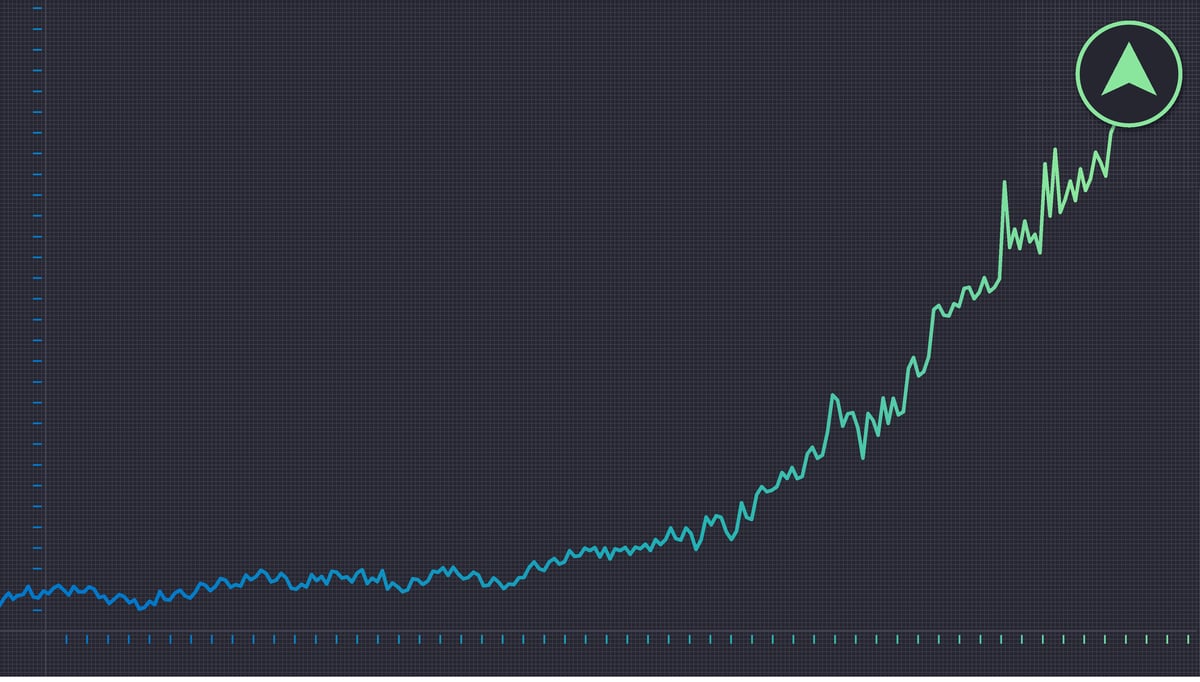
Micron surged about 19% to a record high, pushing its market value above $1 trillion after UBS tripled its price target to $1,625. Fiscal Q2 2026 revenue nearly tripled year over year to $23.86 billion, and management guided Q3 revenue to about $33.5 billion while raising the dividend 30%. The stock’s rerating is being driven by AI-linked DRAM demand and longer-term customer agreements, though the article flags cyclical memory-market risk if supply catches up.
The market is starting to treat memory less like a spot-priced commodity and more like an infrastructure input to AI, which is the real rerating catalyst. If that perception holds, the multiple can stay elevated even with mid-cycle earnings, because the buyer base shifts from cyclical PMs to duration-oriented growth capital. The key second-order effect is on the supply chain: equipment vendors, substrates, advanced packaging, and HBM-adjacent testers should see a longer install cycle as Micron and peers try to lock capacity years ahead rather than chase spot pricing.
The bigger implication is that Micron's capex surge may actually be the tell that the cycle is not dead, just being financialized. Multi-year contracts reduce revenue volatility, but they do not eliminate inventory risk; they simply move the pain point from pricing to utilization if AI demand decelerates. That creates a dangerous asymmetry: upside can persist for quarters, but any sign of lead-time normalization or contract repricing could compress the stock faster than fundamentals roll over.
Consensus is likely underestimating how much of this move is positioning-driven rather than purely fundamental. A stock that has already re-rated massively can keep grinding higher on estimate revisions, but the marginal buyer becomes more fragile as the story shifts from "cheap AI beneficiary" to "must-own AI duration." Conversely, the market may be overconfident that five-year agreements make memory quasi-annuity-like; customers sign long-term deals precisely when they fear shortages, not because cyclicality has disappeared.
For Tesla and Meta, the read-through is valuation relative, not operational: if AI capex keeps absorbing memory demand, it supports the broader AI stack and preserves spending appetite elsewhere. But if memory pricing peaks before capacity comes on, it would be an early warning that hyperscaler budgets are getting normalized faster than the market expects. That is the main contrarian tell to watch over the next 1-2 quarters.
AI-powered research, real-time alerts, and portfolio analytics for institutional investors.
Request DemoOverall Sentiment
strongly positive
Sentiment Score
0.75
Ticker Sentiment
