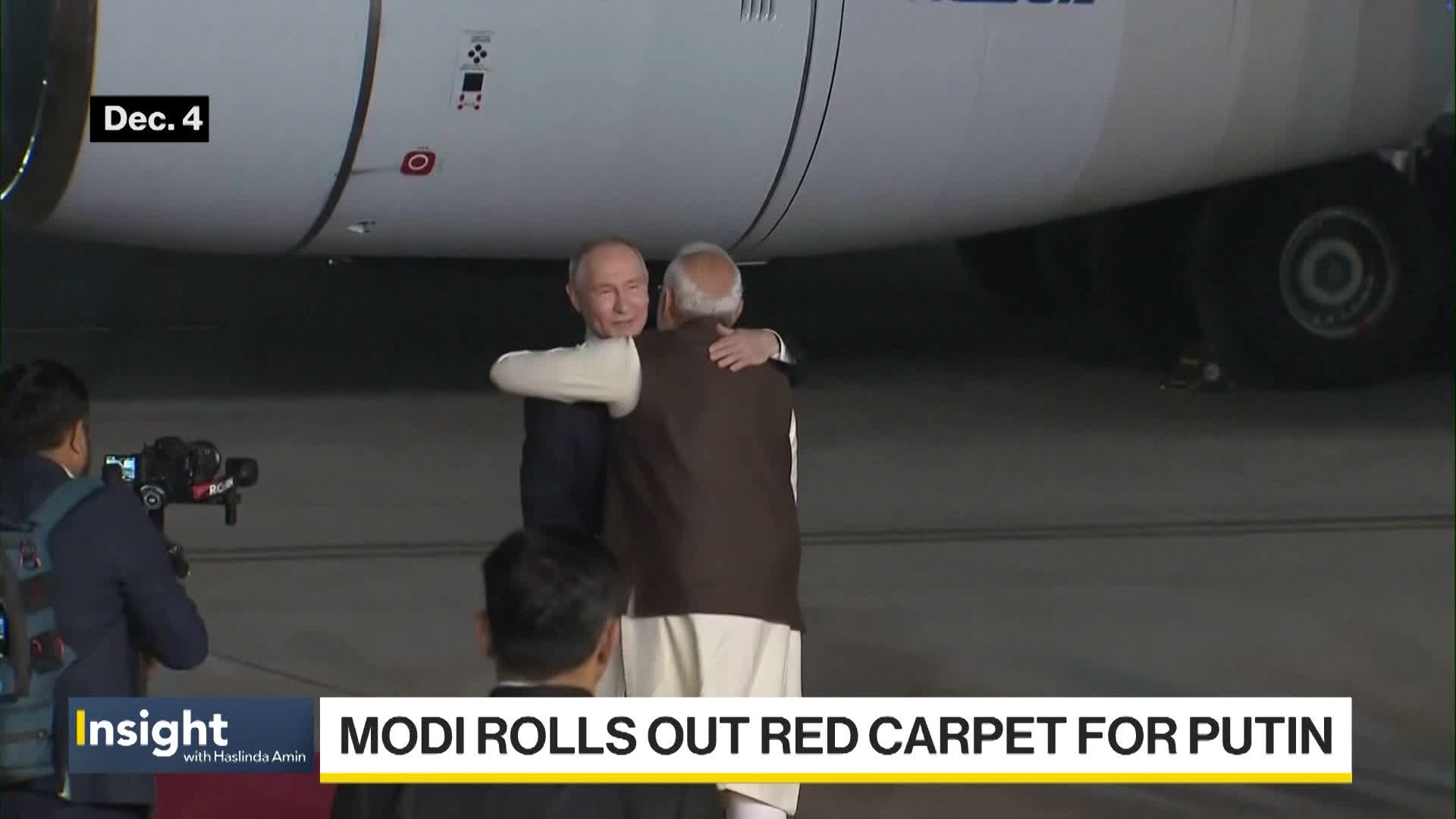
Indian Prime Minister Narendra Modi hosted Russian President Vladimir Putin on his first visit since the full-scale invasion of Ukraine, a display that has drawn U.S. ire and previously triggered hefty trade tariffs. Leaders are due to hold bilateral talks and industry meetings aimed at expanding commerce beyond traditional ties, with defense central to discussions — including reports of a roughly $2 billion submarine deal — even as India diversifies some defense procurement toward the U.S., Germany and France.
Market structure: India’s hospitality to Putin and a potential ~$2bn submarine deal structurally benefits Indian shipbuilders/defence OEMs and intermediaries (domestic engineering, systems integrators) and Russian defence/energy sellers who can offer complex platforms and discounted oil. Western defence exporters (LMT, BAESY, ITA constituents) face slower market-share gains in niche high-end platforms where India still relies on Russia, but may win in areas where Russia cannot provide technology transfer. Cross-asset signals: incremental INR support vs RUB, short-term downward pressure on Brent if India scales discounted Russian crude purchases, and tighter credit premia for firms exposed to sanction risk.
Risk assessment: Tail risks include US/EU secondary sanctions on counterparties trading with Russia or banks facilitating payments — low probability but >10% portfolio hit for exposed names. Immediate (days): headline-driven FX/energy volatility; short-term (1–6 months): contract announcements, tariff responses; long-term (1–3 years): tech-transfer, localization and supply‑chain reorientation. Hidden dependencies: spares, training, and nuclear-submarine lifecycle support that lock India into Russian suppliers and create multi-year annuity cash flows for those vendors.
Trade implications: Tactical opportunities favor India equity/defense exposure and volatility trades on oil and RUB; size and timing should reflect headline risk (scale in over 2–8 weeks). Options: use directional put spreads on Brent to express downside from sustained Russian-to-India crude flows; credit/FX hedges protect against sanction shocks. Relative-value: long India defence/shipbuilding vs short select US defence exposure to capture near-term divergence while keeping macro hedge.
Contrarian angles: Consensus expects India to pivot fully to the West; that is underdone — strategic autonomy suggests India will cherry-pick Russian tech where critical (nuclear subs), creating asymmetric winners among niche domestic suppliers. Reaction risk: a knee‑jerk sell-off in Western defence stocks on these headlines may be overdone; conversely, Indian defence names may be underpriced for multi-year annuity from lifecycle spares. Unintended consequence: sanctions pressure could accelerate India’s indigenization, creating new long-term domestic champions and competitive export opportunities in 3–5 years.
AI-powered research, real-time alerts, and portfolio analytics for institutional investors.
Request DemoOverall Sentiment
neutral
Sentiment Score
0.05
