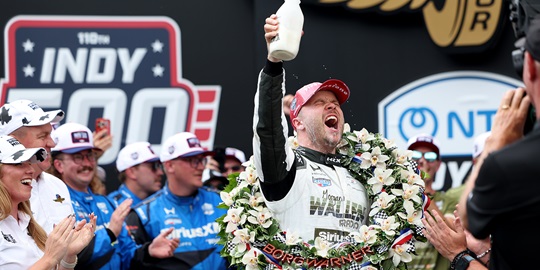
Felix Rosenqvist won the 110th Indianapolis 500 by .0233 seconds over David Malukas, the closest finish in race history, after an event-record 70 lead changes and a final-lap drag race. Meyer Shank Racing earned its second Indy 500 victory, while Rosenqvist secured his second career INDYCAR win and moved into the spotlight after a dramatic fuel-strategy finish. The result is primarily sports/news-driven rather than market-moving.
The cleanest read-through is not on the winner’s sponsor but on event economics: a record-close finish, extreme parity, and repeated late cautions are exactly the mix that maximizes broadcast retention and social amplification. That matters for track operators, sanctioning bodies, and any rightsholder exposed to next-year pricing power; the value uplift is more likely in renewals and hospitality than in a one-day sponsor CTR story. In other words, the commercial winner is the property itself, not the car on the podium.
For transportation and logistics, the race reinforces a more subtle point: drafting-heavy, fuel-window racing is essentially a live stress test for efficiency and pit execution. Teams that consistently optimize aero/tire/fuel strategy create measurable advantages, but the competitive gap is small enough that stochastic cautions can erase it, which is a warning sign for investors extrapolating “best car wins” narratives too far. The market implication is that in motorsports-adjacent names, brand exposure is becoming more event-driven and less sponsor-specific, favoring diversified rights holders over single-team sponsors.
The contrarian angle is that the headline excitement may be over-discounting how fragile the underlying product is. A couple fewer cautions or a cleaner fuel sequence and the finish is materially less dramatic; that means this level of engagement is not a stable baseline but a tail event. The setup is bullish for near-term attention, but not necessarily for durable operating leverage unless management can convert this spike into ticket pricing, premium hospitality, and media rights uplift over the next 6-12 months.
AI-powered research, real-time alerts, and portfolio analytics for institutional investors.
Overall Sentiment
mildly positive
Sentiment Score
0.25
Ticker Sentiment
