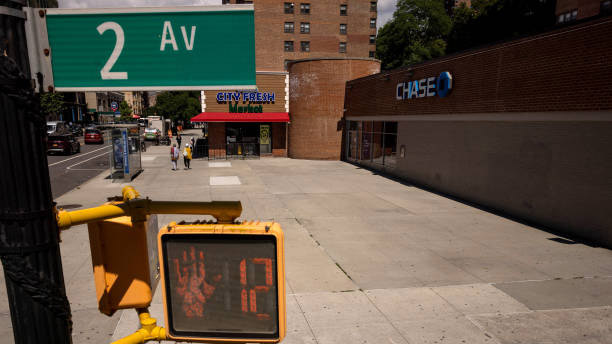
The White House has frozen $18 billion in infrastructure funding for New York City projects, including the Second Avenue Subway and Hudson Tunnel Project, citing concerns over diversity and inclusion practices. Vice President JD Vance indicated that the administration's priority has shifted to essential services following this decision. This significant funding halt could delay critical regional infrastructure development and signals a new federal stance on project funding criteria.
The White House has enacted a significant policy shift by freezing $18 billion in federal funding earmarked for key New York infrastructure initiatives, specifically citing the Second Avenue Subway and Hudson Tunnel Project. The stated rationale for this halt is a review of diversity and inclusion practices, which introduces a new, politically sensitive variable into the federal funding process. According to Vice President JD Vance, the administration's fiscal priority is now redirected toward "essential services," suggesting a potential strategic reallocation of capital away from large-scale infrastructure development. This decision injects substantial uncertainty and execution risk into two of the region's most critical projects, likely causing immediate delays and threatening their long-term viability. The action's "strongly negative" sentiment and high market impact score underscore the financial and logistical disruption for contractors, materials suppliers, and regional economic planning dependent on this capital.
AI-powered research, real-time alerts, and portfolio analytics for institutional investors.
Request DemoOverall Sentiment
strongly negative
Sentiment Score
-0.75
