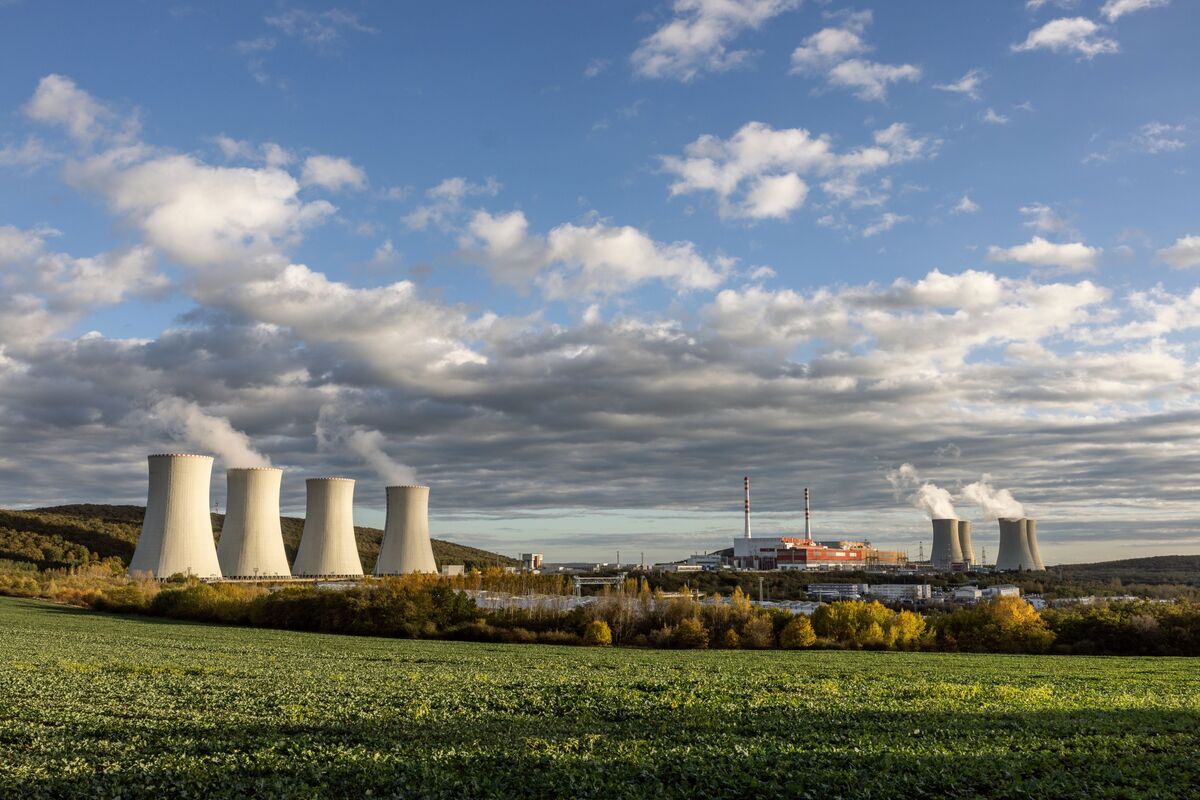
Slovakia’s Mochovce nuclear plant has begun fuel loading on its 4th unit, enabling commercial startup by end-of-summer—39 years after construction started. The new capacity is expected to lift nuclear’s share of Slovakia’s power generation to 77% (above France’s), and export-driven atomic capacity could extend benefits beyond the country. The project also supports Daniel Kretinsky’s operator by de-risking a long-delayed asset amid funding, safety-regulation changes, and a transition away from Russian fuel via Westinghouse and Framatome from 2028.
The investable read-through is less about one Slovak reactor and more about a durable shift in Central/Eastern Europe from Russian-input-dependent baseload toward Western fuel, services, and parts. That favors the nuclear supply chain with the most leverage to fuel qualification and replacement cycles — notably uranium enrichment/fuel-cycle names and component vendors with exposure to life-extension work — while it mildly pressures regional power merchants by incrementally lowering import dependence and peak-price volatility. The bigger second-order effect is that each successful non-Russian fuel transition lowers the political barrier for other Soviet-design units in the region to follow, creating a multi-year aftermarket opportunity even if near-term megawatts are immaterial.
In the next 1-3 months, the startup itself is mostly a sentiment event; the market will likely fade it unless commissioning stays clean and management provides concrete timelines for fuel diversification. The real catalyst path is 6-18 months: if Westinghouse/Framatome qualification advances for 2028 and a second Slovak unit gets approved, the market can begin underwriting recurring revenue for Western nuclear services in VVER-compatible fleets across Slovakia, Czechia, Bulgaria, and Hungary. Watch for any policy pushback or construction slippage — nuclear project execution risk remains high, and one delay would quickly reprice the “regional buildout” narrative.
Consensus may be underestimating how little this changes European power prices, but overestimating the speed of earnings translation. That argues for being selective: own the picks-and-shovels beneficiaries, not the broad utilities complex. The contrarian risk is that the story becomes a geopolitical talking point without measurable capex conversion, in which case the trade should be cut on lack of order flow rather than waiting for headline momentum to compound.
AI-powered research, real-time alerts, and portfolio analytics for institutional investors.
Request DemoOverall Sentiment
mildly positive
Sentiment Score
0.35
Ticker Sentiment
