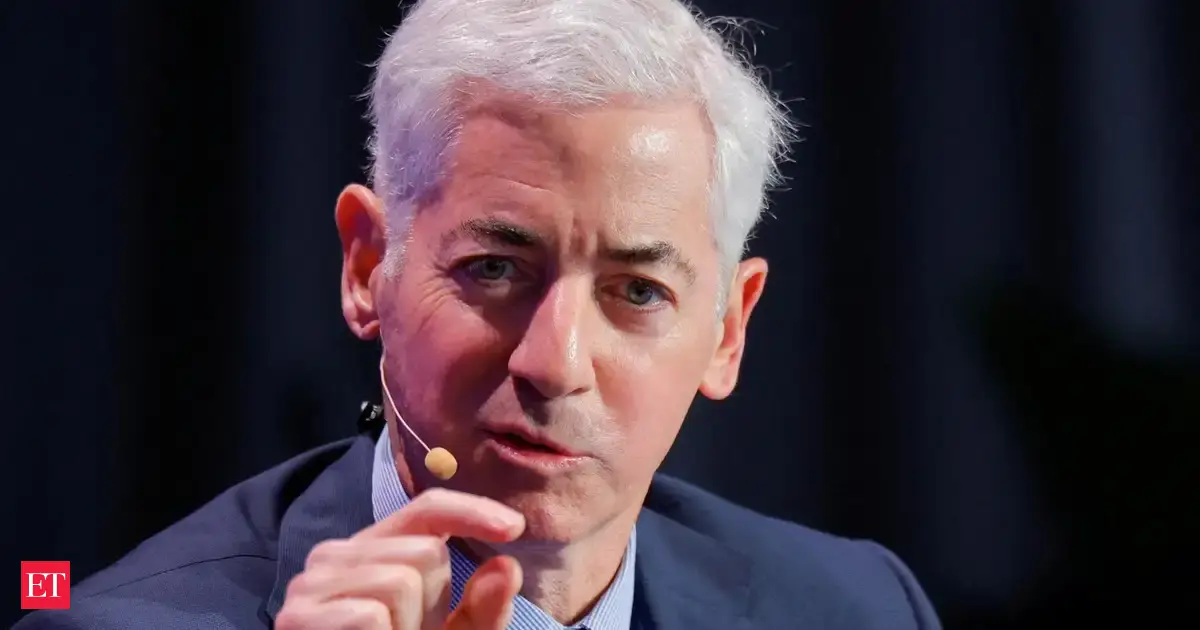
Pershing Square USA (PSUS) is targeting $5 billion to $10 billion in fresh capital at $50 per share, with a rare dual-listing structure that gives retail buyers 20 PS shares for every 100 PSUS shares purchased. The article highlights strong demand from family offices, pension funds, insurers, and ultra-high-net-worth investors, but notes key risks including closed-end fund discounts, a 2% annual management fee, and governance concerns tied to Bill Ackman’s control. Overall, the IPO is positioned as a Berkshire-style permanent capital vehicle that could attract meaningful interest, though returns may be constrained by valuation and fee drag.
The market is likely underpricing the reflexive effect of a public vehicle tied to a celebrity manager: PSUS can become both an asset-gathering machine and a marketing flywheel for the management company. That creates a near-term winner set around the underwritten offering ecosystem, placement agents, and any holding names that get pulled into the “Ackman basket” as the vehicle seeks visible, high-conviction ideas. The more interesting second-order effect is that any early premium in the listed parent could temporarily subsidize a more aggressive capital-raising cadence, but that premium is fragile if the market starts treating the structure like a fee-heavy, discounted closed-end fund rather than a Berkshire analog. For META, the signal is not the position itself so much as what it says about crowded, quality-growth sponsorship. A concentrated public vehicle with a large headline allocation can amplify momentum in mega-cap winners for a few quarters, especially if retail flows chase the perceived endorsement. But that also means META becomes more exposed to positioning unwind risk if PSUS disappoints, because the trade is partly reputational and partly a proxy for “best ideas” factor exposure; that can create 5-10% air pockets around quarterly rebalancing or if the vehicle launches below expectations. The real risk is that the structure invites immediate comparison to public-market closed-end fund discounts, where investor excitement fades once fees, liquidity, and governance become the focus. If PSUS trades at even a mid-teens discount to NAV while charging a 2% fee, the embedded call option on the brand is not enough to support sustained inflows. That setup tends to work best over months, not days: first the IPO pop, then the discount widens, then management has to prove it can compound capital faster than the fee drag. Consensus is too focused on the “free shares” giveaway and not enough on the optionality of permanence. If Ackman uses this as a template, the bigger beneficiary is not the initial IPO but the future ability to raise sticky capital into dislocations; the biggest loser is every other active manager that must keep paying redemption insurance through cycles. The tradeable edge is timing: own the launch momentum, but expect the valuation to mean-revert once the market starts modeling NAV, fees, and discount behavior instead of headlines.
AI-powered research, real-time alerts, and portfolio analytics for institutional investors.
Request DemoOverall Sentiment
mildly positive
Sentiment Score
0.35
Ticker Sentiment
