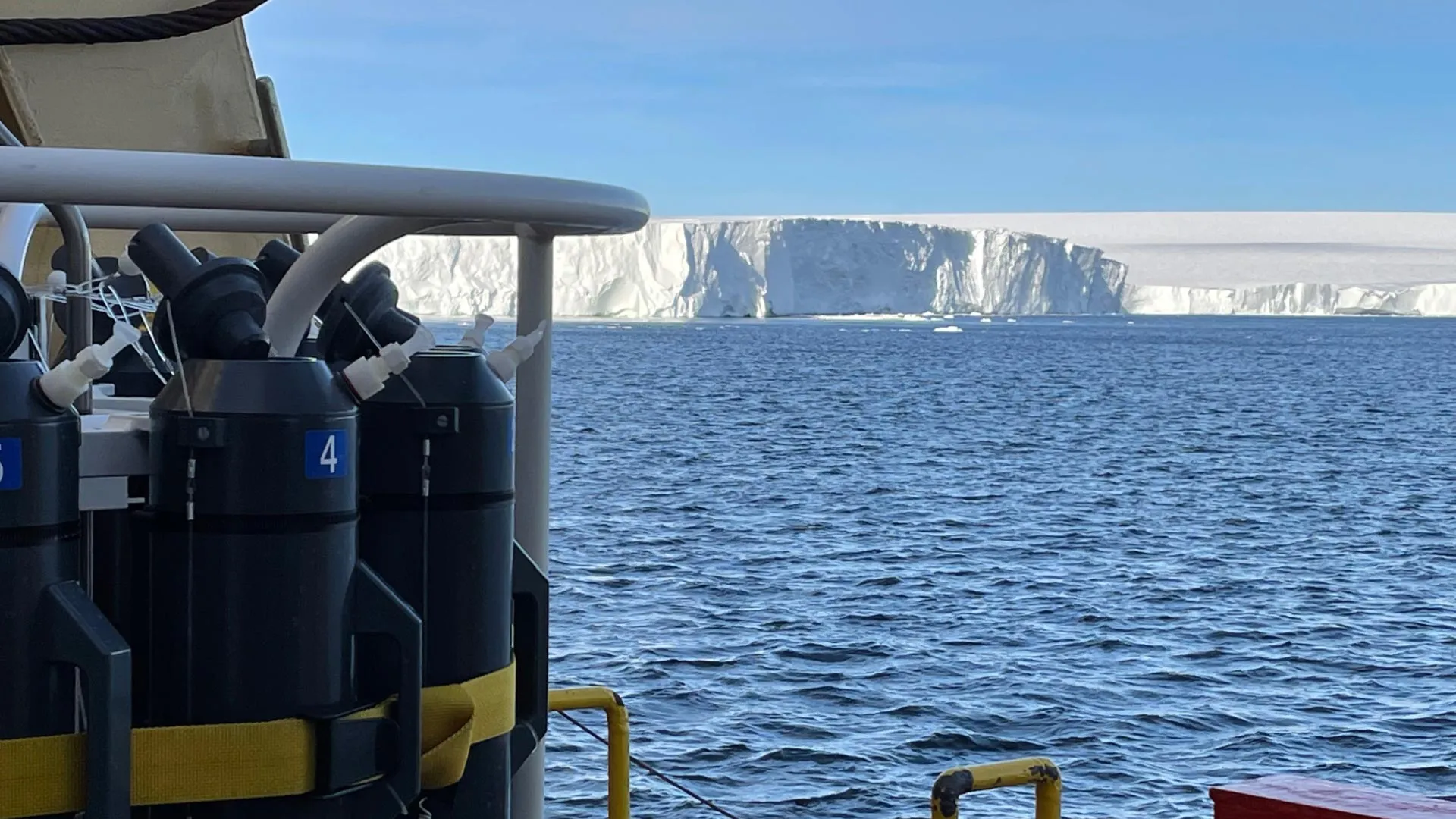
Field measurements beneath the Dotson Ice Shelf (Amundsen Sea) show meltwater supplies only about 10% of dissolved iron exiting an ice‑shelf cavity, while circumpolar deep water supplies ~62% and continental shelf sediments ~28% (Chinni et al., Communications Earth and Environment, 2026). The finding undermines the iron‑fertilization expectation that Antarctic ice melt would substantially boost phytoplankton carbon uptake, suggesting climate models and carbon‑sink forecasts (and thus some ESG/carbon‑market assumptions) should be revised.
Market structure: The Rutgers study reduces the plausibility of natural Antarctic iron fertilization as a scalable carbon sink, shifting the balance toward engineered solutions (CCUS, direct air capture) and adaptation spend (coastal protection, insurers). Expect incremental reallocation of policy and private capital: longer-term demand for clean-energy capex and carbon-removal services should rise by mid-decade if models trim natural sink assumptions by ~0.1–0.5 GtCO2/yr (plausible range from literature), pressuring fossil-intensive sectors.
Risk assessment: Tail risks include a policy shock (fast adoption of stricter carbon budgets and higher carbon prices within 12–24 months) or a counter-study restoring sink estimates; both would move prices >15% in implicated assets. Near-term (days–weeks) market impact is muted; short-term (3–12 months) is driven by ESG fund flows and regulatory guidance; long-term (2–5 years) sees capital reallocation into CCUS, renewables, and adaptation with potential stranded-asset risk for vulnerable coastal real estate.
Trade implications: Favor long exposure to clean-energy ETFs (ICLN/TAN) and selected large-cap utilities with clear transition capex (NEE) while hedging coastal RE via VNQ/IYR puts; consider pair trades long clean-tech vs short thermal-coal (KOL). Use 3–12 month option call spreads to express upside with limited capital; increase allocations if EU EUA breaks above €85 or IPCC updates sink estimates downward.
Contrarian angles: Consensus underweights uncertainty in subglacial biogeochemistry — future work could reveal compensating sinks or geoengineering pathways, so pure long speculative bets on small CCUS names are high-risk. Reaction is underdone for infrastructure/adaptation names (CAT, MMSI) where visible fiscal spending could materialize within 12–36 months; avoid extrapolating this paper into commodity iron demand moves (iron-ore miners unaffected).
AI-powered research, real-time alerts, and portfolio analytics for institutional investors.
Request TrialOverall Sentiment
mildly negative
Sentiment Score
-0.25
