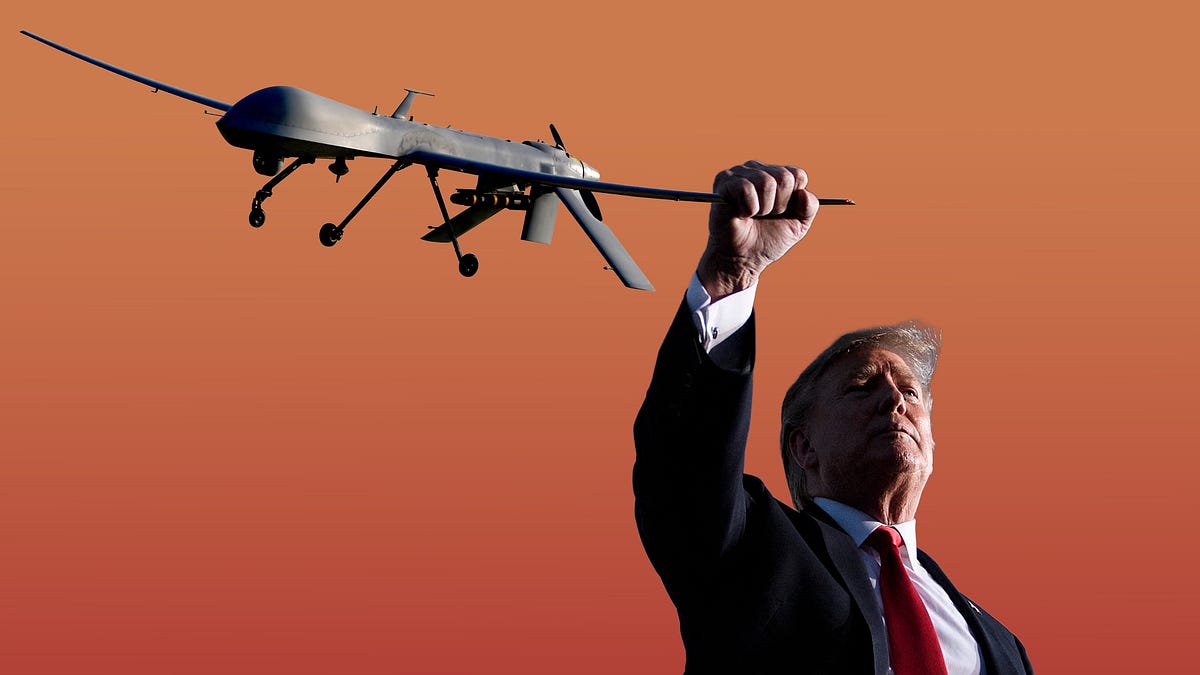
The article argues that low-cost drone warfare has shifted the balance of power in Ukraine, Iran, and broader regional conflicts, and claims the U.S. and Trump administration failed to adapt. It cites major defense spending priorities such as a $20 billion F-47, at least $75 billion for a Golden Dome system, and a potential $1.2 trillion 20-year Golden Dome cost estimate, while asserting that the Strait of Hormuz is now effectively governed by Iran. The piece frames this as a severe strategic setback for the U.S.-led global order and a major geopolitical shock.
The market implication is not just “drones matter more” but that defense budgets are likely to migrate from exquisite platforms toward attritable systems, command-and-control software, EW, sensors, and munitions stockpiles. That creates a multi-year underwrite for primes that can repackage themselves as autonomy/integration vendors, while legacy airframe-heavy names face margin compression as procurement officials demand volume, not prestige. The second-order effect is a procurement reset: once cost-exchange becomes politically visible, every expensive interceptor fired at a cheap drone becomes a headline risk, which should accelerate spending on layered defenses and domestic drone production capacity.
The near-term beneficiaries are less the headline drone OEMs than the picks-and-shovels around them: RF components, secure comms, navigation denial, thermal/EO sensors, and counter-UAS systems. Supply chains for microelectronics, batteries, and propulsion hardware should see incremental demand, but the bigger winner is software-defined warfare—autonomy, targeting fusion, and electronic warfare. If this thesis gains traction, budget dollars should rotate out of platform R&D and into rapid procurement, favoring firms with existing production lines and clear unit economics over companies that require long certification cycles.
The biggest risk is policy whiplash: a single successful counter-drone demonstration or a change in political leadership could slow the narrative, but that would likely only delay rather than reverse the budget mix shift. Time horizon matters: the trade should work first over 3-6 months as defense appropriations and supplemental spending reflect urgency, then over 1-3 years as allies copy the procurement model. The contrarian point is that the move into drones may be over-owned conceptually but under-owned in equities; the actual public market beneficiaries remain sparse, while many expensive-defense losers still trade on obsolete platform-era assumptions.
AI-powered research, real-time alerts, and portfolio analytics for institutional investors.
Request DemoOverall Sentiment
strongly negative
Sentiment Score
-0.82
Ticker Sentiment
