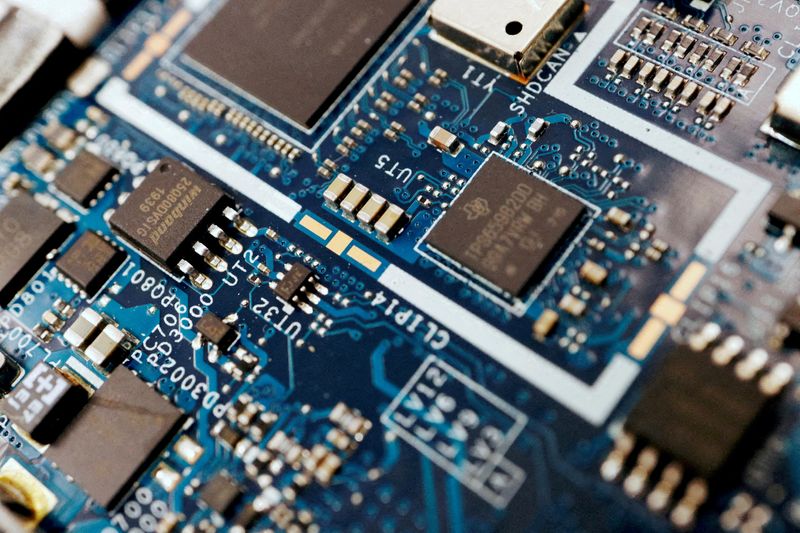
Mizuho’s Jordan Klein said he is "more bullish" on DRAM and memory as AI CPU demand accelerates, citing tight supply and no meaningful new capacity until 2H27. He highlighted Micron at 3-4x buyside EPS and said SanDisk could benefit from rising SSD demand and potential quarterly EPS of $25-30 with 80%+ gross margins. The article also notes stronger CPU attach rates in agentic AI workloads and favors AMD and Nvidia’s ARM-based CPU opportunities over Intel’s more capacity-constrained position.
This is less a generic AI-semiconductor upside story than a re-pricing of memory as the gating factor for AI capex. The second-order effect is that every incremental CPU/agentic deployment increases not just compute demand but the working-capital intensity of the whole stack: more DRAM per server, tighter SSD inventory, and better pricing power for the memory cohort before any meaningful greenfield supply can arrive. That creates a cleaner earnings revision cycle in MU than in the more crowded AI compute names, because memory is moving from “cyclical commodity” to “scarcity premium” over the next 4-8 quarters.
The market is likely underestimating how much agentic AI changes the CPU mix. If orchestration-heavy workloads materially raise CPU attach rates, then AMD and NVDA benefit twice: first through unit demand, then through higher-value platform lock-in around their respective ecosystems. TSM is the quiet structural winner here because it is the bottleneck that monetizes both the accelerator and CPU wave without taking end-demand risk directly; however, that also means any slowdown in AI capex would transmit quickly into foundry utilization sentiment.
The contrarian risk is positioning and timing. The easiest money may already have been made in the obvious AI names, while memory is still cheap enough to rerate if guideposts remain firm into the next print cycle. The reversal case is a digestion phase in AI server orders or any sign that cloud customers are optimizing memory per node rather than expanding footprints, which would hit the trade within days in high-beta names and over 1-2 quarters in the supply chain.
Near term, the highest-risk assumption is that the market extrapolates straight-line demand into 2026/27 without a pause. If memory margins overshoot, expect capital allocation pressure to increase and eventual supply response to cap the upside, but that is a later-cycle issue; the next catalyst set is earnings/guidance, not capacity additions. In other words, this is a “buy the scarcity window” setup rather than a durable secular-growth rerating across all AI semis.
AI-powered research, real-time alerts, and portfolio analytics for institutional investors.
Request DemoOverall Sentiment
mildly positive
Sentiment Score
0.35
Ticker Sentiment
