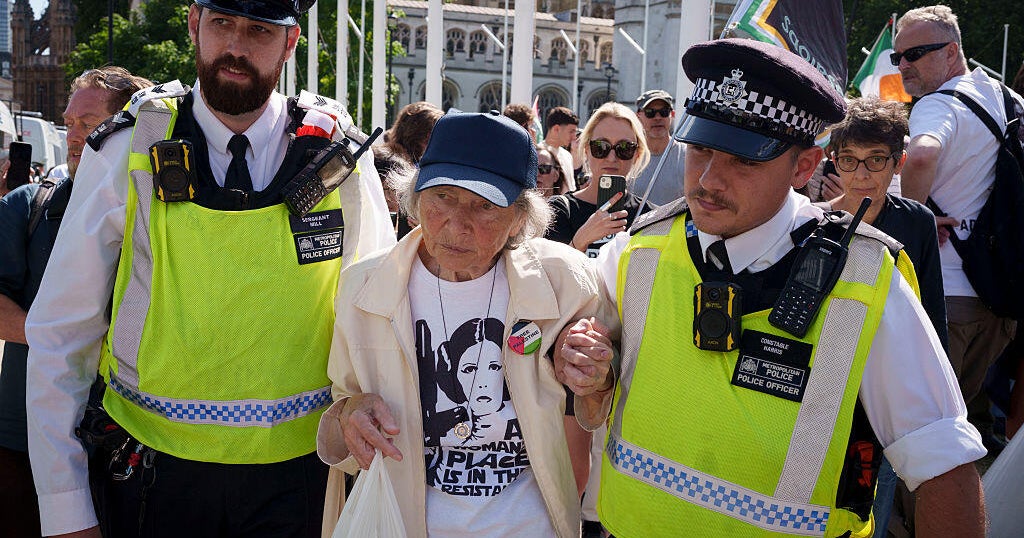
The London Metropolitan and Greater Manchester Police announced an "enhanced" and more assertive enforcement posture to tackle a surge in antisemitic hate crimes, warning they will arrest protestors using slogans such as "globalize the intifada" and rely largely on the Public Order Act; the move follows the Bondi Beach terrorist attack in Australia that killed 15 people and a vehicle-and-knife attack outside a Manchester synagogue in October that left two Jewish people dead. Police leaders said current laws are inadequate and welcomed a government review of public order and hate-crime legislation, while increasing patrols around synagogues and Jewish institutions; pro-Palestinian organisers criticised the approach as a repression of protest rights. Direct market implications are limited, but the actions raise domestic political and security risk and could presage legislative changes affecting civil liberties and policing frameworks.
Market structure: Near-term winners are security/defence contractors and public‑order service providers (expected demand shock for bodyguard/venue protection contracts and surveillance hardware), while consumer-facing leisure, hospitality and small retailers near protest venues face localized revenue downside. Pricing power should shift modestly toward specialist contractors—expect contract volumes up 5–15% in affected boroughs over 6–12 months, boosting small‑cap security names more than large diversified defence primes.
Risk assessment: Tail risks include a major domestic terrorist incident prompting emergency legislation (low probability, high impact) that could widen gilt/FX volatility and push GBP down 2–4% and FTSE 100 down 3–7 within days. Immediate (0–30d) risk is event-driven vol; short term (1–3 months) depends on government review cadence; long term (3–12m) hinges on budget reallocation and legal changes to protest boundaries.
Trade implications: Favor small‑to-mid cap security/service longs and volatility hedges on UK equities; use FTSE/ETF options to monetize event risk rather than large directional equity exposure. Reallocate 2–4% from consumer discretionary into defence/security names and buy short‑dated protection (3M) ahead of legislative milestones.
Contrarian angles: Consensus assumes sustained fiscal uplift to security; reality may be constrained by austerity and legal pushback—if policing suppresses protests markets could calm, compressing vol and penalizing long‑vol bets. Historical parallel: post‑terror spikes in 2017 produced only transient procurement uplifts, so position sizes should be limited and event‑driven.
AI-powered research, real-time alerts, and portfolio analytics for institutional investors.
Request DemoOverall Sentiment
mildly negative
Sentiment Score
-0.25
